
Artemis II Crew Nears High-Stakes Reentry After Record Lunar Flyby
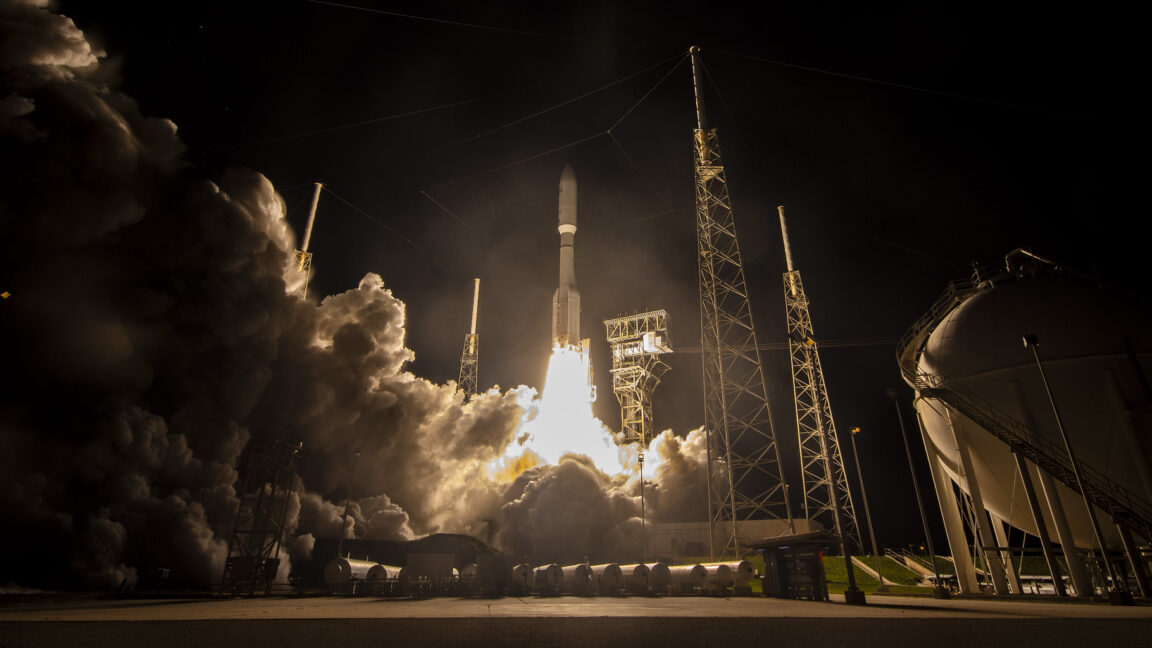
Cover image from arstechnica.com, which was analyzed for this article
NASA's Artemis II crewed lunar mission is nearing its conclusion with the spacecraft set to reenter Earth's atmosphere and splash down in the Pacific Ocean after orbiting the Moon. Despite a helium leak in the Orion capsule requiring future redesigns, officials confirm no threat to the crew's safety during reentry. The mission marks a key milestone in NASA's return to the Moon, generating widespread coverage amid technical updates and live viewing guides.
PoliticalOS
Friday, April 10, 2026 — Tech
Artemis II's safe return would confirm that NASA has addressed the worst problems from its uncrewed test flight and taken humans farther into space than anyone in half a century, yet the helium valve redesign, heat shield adjustments and multi-year program delays show how much work remains before sustained lunar presence is realistic. The mission's real legacy lies in the data gathered for Artemis III and IV, not nostalgia or political symbolism. Readers should recognize that every successful splashdown reduces but does not eliminate the engineering and budgetary hurdles still ahead.
What outlets missed
Most coverage omitted the full scale of Artemis program delays and cost overruns, including the SLS rocket rising from a $5 billion baseline to roughly $20 billion per unit and repeated slips from 2024 landing targets to 2028 under multiple administrations. Outlets underplayed that the helium leak traces to valves in the European-built service module, which is discarded before reentry, and that NASA identified the Artemis I heat shield charring cause as strap deformation and adjusted the trajectory without replacing the shield on this flight. Few connected the mission's restructuring under Administrator Jared Isaacman to the need for an extra Earth-orbit test flight because only one Interim Cryogenic Propulsion Stage remains, forcing reliance on yet-to-be-built hardware for Artemis IV. International contributions, particularly the ESA service module and Canadian crew member, received minimal attention relative to U.S. leadership framing.
Artemis II Crew Nears Moment of Truth in High Stakes Return from Lunar Flyby
The four astronauts aboard NASA’s Orion spacecraft are hours from the most dangerous test of the Artemis II mission, a blistering plunge through Earth’s atmosphere at 25,000 miles per hour that will decide whether the agency’s long-delayed return to the Moon rests on solid engineering. Commander Reid Wiseman, pilot Victor Glover, mission specialist Christina Koch, and Canadian astronaut Jeremy Hansen are scheduled to splash down in the Pacific Ocean off San Diego at 5:07 p.m. Pacific time Friday, ending a 10-day voyage that took them farther from Earth than any humans in history.
The mission, launched April 1 from Florida, has so far unfolded with striking success. The crew conducted a precise lunar flyby, gathered data on the Moon’s far side, and returned photographs that capture the stark beauty and isolation of deep space. Those images have reminded millions of viewers why exploration still stirs the imagination even in an age of political division and institutional skepticism. Yet NASA officials continue to stress that celebration remains premature. As Associate Administrator Amit Kshatriya noted, success cannot be declared until the crew is safely aboard the recovery ship USS John P. Murtha.
The tension centers on Orion’s heat shield. During the uncrewed Artemis I test flight in 2022, the shield eroded more than engineers expected under the extreme temperatures of reentry, which can reach 5,000 degrees Fahrenheit. Rather than replace the shield and accept further delays, NASA adjusted the entry trajectory for Artemis II to reduce the duration of peak heating. The capsule will still endure forces up to 3.9 times Earth’s gravity and a communications blackout lasting roughly six minutes as superheated plasma envelops the vehicle. There is no abort option once the descent begins. “The heat shield has to work,” NASA Administrator Jared Isaacman said bluntly.
Engineers also detected a small internal helium leak in the oxidizer pressurization system during the flight. Flight directors canceled a planned manual piloting demonstration to devote time to additional propulsion tests. Lead flight director Jeff Radigan reported that the leak, while requiring a redesign of certain valves for future missions, poses no threat to Friday’s reentry. The spacecraft is flying itself. The crew will take manual control only in an emergency.
These technical hurdles illustrate a larger truth about progress. Reliable advancement rarely comes from sweeping proclamations or unchecked spending. It emerges from rigorous, iterative testing, learning from failure, and refusing to ignore empirical data. Artemis I exposed weaknesses in the heat shield. Artemis II is now stress-testing the fix under real conditions with human lives at stake. The contrast with the Apollo era is instructive. The last time NASA and the military coordinated a crewed lunar reentry was Apollo 17 in December 1972. That program succeeded because it combined ambitious goals with relentless attention to engineering realities and incremental improvement.
The crew itself embodies competence over symbolism. Wiseman, Glover, Koch, and Hansen represent thousands of hours of training and a deliberate decision to entrust the mission to experienced professionals rather than political favorites. Their calm execution of a complex flight plan, even as they ventured into territory no human had reached in more than half a century, stands as a quiet rebuke to narratives of inevitable national decline. Public reaction has been broadly positive across partisan lines, suggesting that tangible achievement can still foster a sense of shared endeavor in a fractured country.
Success on Friday would validate the Orion capsule for deeper missions, including Artemis III’s planned crewed landing. It would also demonstrate that the United States retains the capacity to solve hard technical problems when it prioritizes evidence over expediency. Yet the broader Artemis program continues to face familiar bureaucratic challenges: rising costs, schedule slips, and dependence on heavy-lift rockets that must fly frequently and reliably if lunar ambitions are to move beyond symbolic flybys.
For now, the immediate drama is elemental. Four astronauts are hurtling home at nearly 24,000 miles per hour, betting their lives on a heat shield refined through prior setbacks and a propulsion system that has performed despite a nagging leak. The coming hours will reveal whether the painstaking work of engineers and the courage of the crew have been sufficient. If the parachutes deploy as designed and the capsule settles safely into the Pacific, Artemis II will mark more than a successful test flight. It will affirm that careful, fact-based problem solving can still carry humanity beyond low Earth orbit and toward the next frontier.
Recovery teams, military aircraft, and helicopters are already positioned. Mission controllers are monitoring every telemetry point. The nation, for a moment at least, is watching with something closer to unity than is common in our daily discourse. The outcome will not solve earthly political problems, but it may remind Americans that greatness is not inherited. It is earned through disciplined effort, one exacting test at a time.
You just read Conservative's take. Want to read what actually happened?