
Artemis II Crew Nears High-Stakes Reentry After Record Lunar Flyby
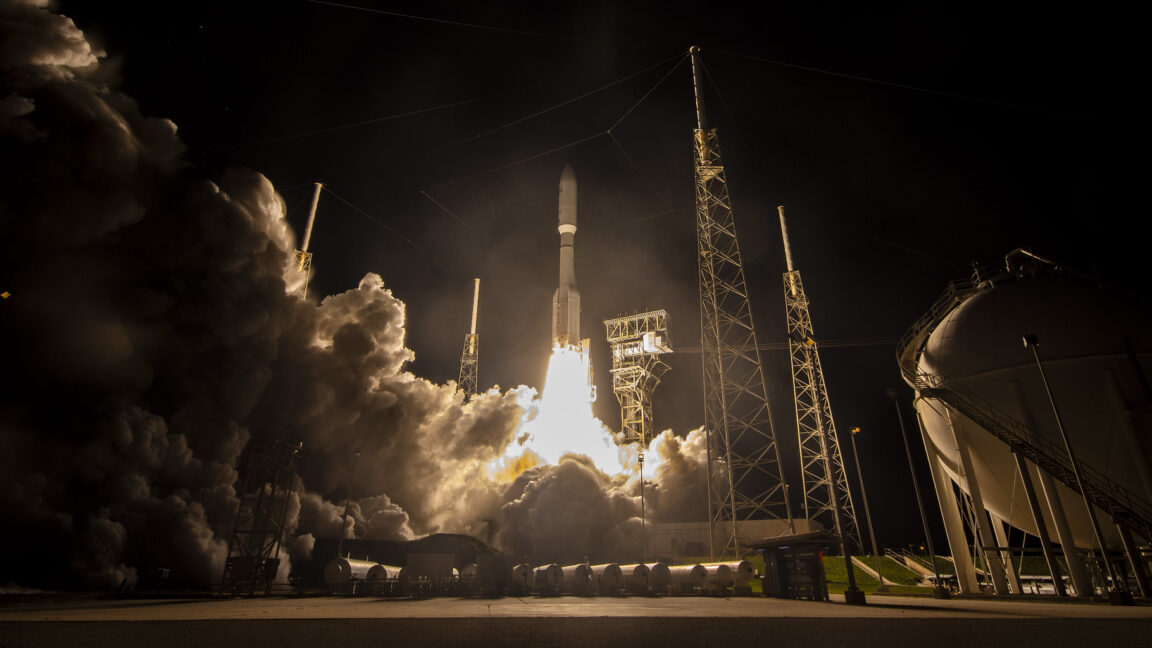
Cover image from arstechnica.com, which was analyzed for this article
NASA's Artemis II crewed lunar mission is nearing its conclusion with the spacecraft set to reenter Earth's atmosphere and splash down in the Pacific Ocean after orbiting the Moon. Despite a helium leak in the Orion capsule requiring future redesigns, officials confirm no threat to the crew's safety during reentry. The mission marks a key milestone in NASA's return to the Moon, generating widespread coverage amid technical updates and live viewing guides.
PoliticalOS
Friday, April 10, 2026 — Tech
Artemis II's safe return would confirm that NASA has addressed the worst problems from its uncrewed test flight and taken humans farther into space than anyone in half a century, yet the helium valve redesign, heat shield adjustments and multi-year program delays show how much work remains before sustained lunar presence is realistic. The mission's real legacy lies in the data gathered for Artemis III and IV, not nostalgia or political symbolism. Readers should recognize that every successful splashdown reduces but does not eliminate the engineering and budgetary hurdles still ahead.
What outlets missed
Most coverage omitted the full scale of Artemis program delays and cost overruns, including the SLS rocket rising from a $5 billion baseline to roughly $20 billion per unit and repeated slips from 2024 landing targets to 2028 under multiple administrations. Outlets underplayed that the helium leak traces to valves in the European-built service module, which is discarded before reentry, and that NASA identified the Artemis I heat shield charring cause as strap deformation and adjusted the trajectory without replacing the shield on this flight. Few connected the mission's restructuring under Administrator Jared Isaacman to the need for an extra Earth-orbit test flight because only one Interim Cryogenic Propulsion Stage remains, forcing reliance on yet-to-be-built hardware for Artemis IV. International contributions, particularly the ESA service module and Canadian crew member, received minimal attention relative to U.S. leadership framing.
Artemis II Crew Speeds Toward Earth as NASA Bets Everything on Risky Reentry
The four astronauts aboard NASA's Orion capsule are barreling back toward Earth at nearly 25,000 miles per hour, preparing for a fiery plunge through the atmosphere that will test every lesson learned from decades of bureaucratic missteps and political neglect. Their scheduled splashdown Friday evening off San Diego marks the end of a ten-day journey that took humans farther from home than anyone since the Apollo era, yet it also underscores how long America allowed its lunar ambitions to wither before rediscovering the will to lead.
Reid Wiseman, Victor Glover, Christina Koch, and Canadian Jeremy Hansen have already delivered what NASA is calling a triumph of engineering and human endurance. They conducted a precise lunar flyby, captured stunning images of the Moon's far side that have captivated people worldwide, and gathered data meant to pave the way for future landings. Launched on April 1 from Florida, the mission has so far run with remarkable smoothness, free of the toilet problems and other annoyances that plagued earlier tests. The crew even adjusted their schedule this week to run extra propulsion tests after detecting a small internal helium leak in the oxidizer system, though officials insist it poses no threat to the critical reentry sequence.
That reentry is the part keeping mission controllers awake. The Orion capsule, named Integrity, must withstand temperatures nearing 5,000 degrees Fahrenheit while hitting the atmosphere at Mach 32. A communications blackout of up to six minutes will leave the crew isolated as plasma builds around the spacecraft. Parachutes must deploy flawlessly to slow the vehicle to a gentle 19 miles per hour before it hits the Pacific. Recovery teams aboard the USS John P. Murtha and supporting aircraft will then extract the astronauts for medical checks. NASA Associate Administrator Amit Kshatriya has been blunt: real celebration begins only when the crew is safely aboard the recovery ship.
The tension is magnified by what happened on Artemis I in 2022. That uncrewed test flight returned with a heat shield far more damaged than engineers expected, charred and pockmarked in unexpected ways. Instead of delaying the program further by replacing the shield on Artemis II, NASA opted to tweak the entry profile to reduce the hottest phase of exposure. Administrator Jared Isaacman has admitted there is no Plan B. The shield simply must work. This is the same agency that lost seven astronauts when the Columbia shuttle disintegrated during reentry in 2003 after a small piece of foam damaged its wing. The memory lingers.
For all the justified concerns about cost overruns and bureaucratic inertia that have plagued NASA since it abandoned the Moon after Apollo 17 in 1972, this mission represents something larger. It is a visible rebuke to the managed decline and institutional timidity that defined too much of American policy in recent decades. While politicians dithered and funding flowed to endless earthly bureaucracies, the idea of American leadership in space faded. Artemis II, for all its delays and expense, shows the country can still do hard things when it chooses to. The crew's success has produced moments of genuine national unity at a time when little else does, reminding Americans that courage, engineering excellence, and frontier spirit are not relics of the past.
The mission also carries political undertones that cannot be ignored. Its ambition aligns with a renewed focus on American greatness and technological dominance rather than endless international apologies or climate obsessions. President Trump's recent blunt warnings about adversaries blocking key shipping lanes, including the Strait of Hormuz, reflect the same instinct: America should lead, not accommodate decline. Space exploration has always been one of the purest arenas for that instinct. Private companies like SpaceX have shown what innovation unleashed from red tape can achieve, putting pressure on the traditional NASA model that relies on massive government rockets and endless studies. Artemis depends on rapid heavy-lift capability, and the program will need to accelerate if it hopes to achieve sustainable lunar presence rather than symbolic flybys.
The helium leak requiring a future redesign of Orion's valves is another reminder that government programs rarely get things perfect on the first try. Yet the astronauts themselves embody the best of the American character: professionals willing to strap into a capsule built by committees and hurtle toward Earth at speeds no human has endured in half a century. Their safe return would not just validate the heat shield changes or the mission profile. It would prove that the United States retains the capacity for bold action even after years of self-doubt.
As the capsule screams toward the Pacific, all eyes remain on those thirteen critical minutes of reentry. Success would reopen the path to actual lunar landings, including at the south pole where ice could support future bases. Failure would set the program back years and fuel fresh doubts about NASA's competence. Either way, the mission has already delivered something scarce in modern America: a reminder that we were once a people who looked up, not inward, and that rediscovering that spirit remains possible when the stakes are clear and the excuses run out.
The coming hours will tell whether the bureaucratic behemoth has finally learned enough from its past mistakes to deliver American astronauts safely home from the Moon. For now, the nation watches, hopes, and remembers what it once took for granted: that pushing boundaries is what great countries do.
You just read America First's take. Want to read what actually happened?