
Artemis II Crew Nears High-Stakes Reentry After Record Lunar Flyby
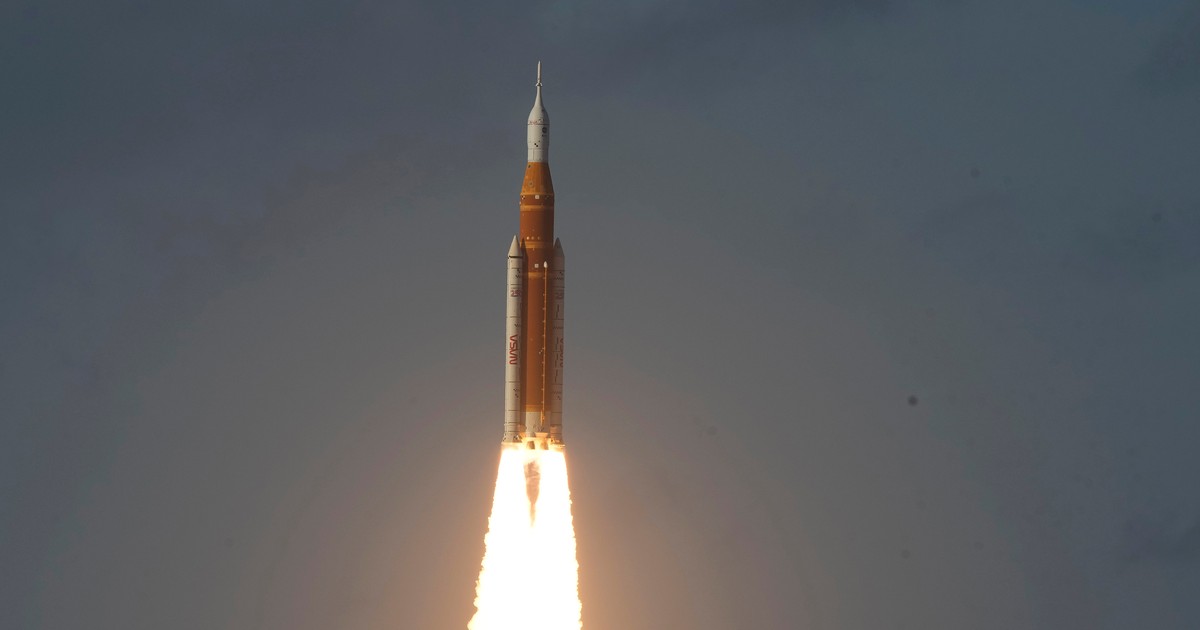
Cover image from townhall.com, which was analyzed for this article
NASA's Artemis II crewed lunar mission is nearing its conclusion with the spacecraft set to reenter Earth's atmosphere and splash down in the Pacific Ocean after orbiting the Moon. Despite a helium leak in the Orion capsule requiring future redesigns, officials confirm no threat to the crew's safety during reentry. The mission marks a key milestone in NASA's return to the Moon, generating widespread coverage amid technical updates and live viewing guides.
PoliticalOS
Friday, April 10, 2026 — Tech
Artemis II's safe return would confirm that NASA has addressed the worst problems from its uncrewed test flight and taken humans farther into space than anyone in half a century, yet the helium valve redesign, heat shield adjustments and multi-year program delays show how much work remains before sustained lunar presence is realistic. The mission's real legacy lies in the data gathered for Artemis III and IV, not nostalgia or political symbolism. Readers should recognize that every successful splashdown reduces but does not eliminate the engineering and budgetary hurdles still ahead.
What outlets missed
Most coverage omitted the full scale of Artemis program delays and cost overruns, including the SLS rocket rising from a $5 billion baseline to roughly $20 billion per unit and repeated slips from 2024 landing targets to 2028 under multiple administrations. Outlets underplayed that the helium leak traces to valves in the European-built service module, which is discarded before reentry, and that NASA identified the Artemis I heat shield charring cause as strap deformation and adjusted the trajectory without replacing the shield on this flight. Few connected the mission's restructuring under Administrator Jared Isaacman to the need for an extra Earth-orbit test flight because only one Interim Cryogenic Propulsion Stage remains, forcing reliance on yet-to-be-built hardware for Artemis IV. International contributions, particularly the ESA service module and Canadian crew member, received minimal attention relative to U.S. leadership framing.
Artemis II Crew Nears Earth After Historic Lunar Flyby Testing the Future of Human Spaceflight
As the four astronauts of NASA’s Artemis II mission hurtled toward the Pacific Ocean on Friday, the space agency confronted the most unforgiving test of its return to the moon: a blistering atmospheric reentry that will decide whether the United States can reliably send humans into deep space again. The Orion capsule, carrying Commander Reid Wiseman, pilot Victor Glover, mission specialist Christina Koch and Canadian astronaut Jeremy Hansen, was on track for a 5:07 p.m. Pacific splashdown off San Diego after a 10-day voyage that took them farther from Earth than any humans in more than half a century.
The mission has already produced moments of genuine wonder. The crew captured striking photographs of the lunar far side and the slender curve of Earth rising above the moon’s horizon, images that quickly circulated across the planet. They conducted a flyby that gathered critical data for future landings, including at the lunar south pole where NASA hopes to establish a sustained presence. Yet as NASA Associate Administrator Amit Kshatriya noted in a briefing Thursday, celebration remains premature. “When we can start celebrating is when we have a crew safely in the medbay of the ship,” he said. Until then, the focus remains on the capsule’s heat shield, the propulsion system and the unforgiving physics of slamming into Earth’s atmosphere at nearly 25,000 miles per hour.
That tension is grounded in hard experience. During the uncrewed Artemis I test flight in 2022, the Orion heat shield eroded in unexpected ways, leaving the capsule’s base pockmarked. Engineers responded by modifying this mission’s reentry trajectory to reduce the duration of peak heating, which can reach 5,000 degrees Fahrenheit. There is no backup plan. “The heat shield has to work,” NASA Administrator Jared Isaacman told reporters. During the six-minute communications blackout that occurs when plasma surrounds the capsule, the crew will be entirely on their own, experiencing forces up to 3.9 times Earth’s gravity after more than a week in weightlessness.
The mission has not been flawless. Controllers identified a small internal helium leak in the oxidizer side of the propulsion system, similar to issues seen on the previous flight. Flight directors canceled a planned manual piloting demonstration to conduct additional tests, confirming the leak poses no threat to reentry. Still, NASA officials said the valves will require redesign before the next Artemis flight, a reminder that complex systems operating in the harsh environment of deep space continue to reveal problems that ground testing cannot fully anticipate.
These technical challenges arrive at a politically charged moment. Public confidence in large institutions is low, and national politics remain fractured. Yet the Artemis program, with its deliberate pace and international partnerships, offers a counterpoint to narratives of inevitable decline. The inclusion of Hansen marks the first time a non-American has flown in a lunar mission under NASA leadership, reflecting the Artemis Accords that have brought more than 40 nations into a framework for peaceful exploration. Canada’s contribution to the program, including elements of the Orion spacecraft, underscores how sustained government investment and diplomatic continuity can produce shared technological achievement even when domestic politics appear dysfunctional.
The contrast with the Apollo era is instructive. Those missions were propelled by Cold War competition and delivered extraordinary results on a compressed timeline. Artemis is proceeding more methodically, in part because the risks of human spaceflight are now better understood and in part because the goals have evolved. The program aims not for flags and footprints but for a sustainable architecture that could eventually support scientific outposts, resource utilization and deeper voyages to Mars. That ambition requires consistent funding, rigorous engineering and public patience, qualities often in short supply in contemporary Washington.
Recovery teams aboard the USS John P. Murtha were standing by to hoist the capsule from the ocean and assist the astronauts, who will undergo immediate medical evaluation after their high-speed plunge. The last time NASA and the military coordinated a crewed lunar return was Apollo 17 in 1972. Much has changed since then, including the rise of commercial spaceflight and growing competition from China, which is pursuing its own lunar program.
For now, the immediate drama centers on those 13 critical minutes of reentry. If the heat shield performs as modified and the parachutes deploy correctly, NASA will have taken a significant step toward certifying Orion for future landings. The photographs beamed back this week have already reminded millions why such efforts matter, not merely as spectacle but as proof that patient, cooperative investment in science can still expand the boundaries of human possibility. The miles between the capsule and the Pacific are now few. Soon the nation, and the world, will learn whether the hardware and the people inside it have passed their sternest test.
You just read Liberal's take. Want to read what actually happened?