
Artemis II Crew Nears High-Stakes Reentry After Record Lunar Flyby
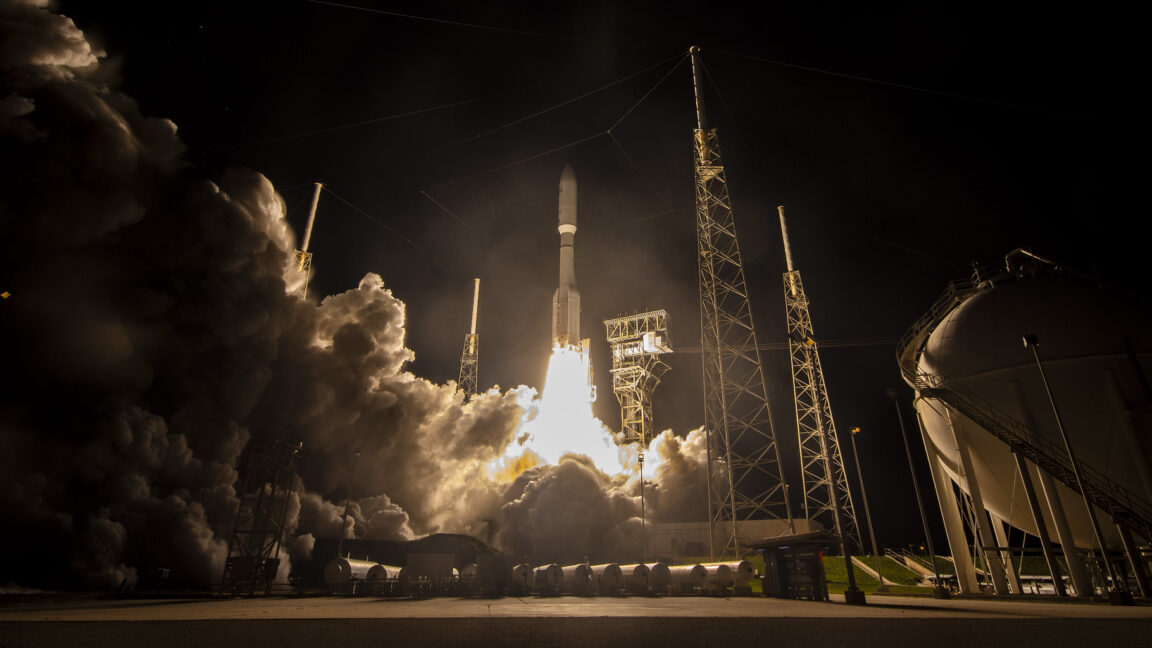
Cover image from arstechnica.com, which was analyzed for this article
NASA's Artemis II crewed lunar mission is nearing its conclusion with the spacecraft set to reenter Earth's atmosphere and splash down in the Pacific Ocean after orbiting the Moon. Despite a helium leak in the Orion capsule requiring future redesigns, officials confirm no threat to the crew's safety during reentry. The mission marks a key milestone in NASA's return to the Moon, generating widespread coverage amid technical updates and live viewing guides.
PoliticalOS
Friday, April 10, 2026 — Tech
Artemis II's safe return would confirm that NASA has addressed the worst problems from its uncrewed test flight and taken humans farther into space than anyone in half a century, yet the helium valve redesign, heat shield adjustments and multi-year program delays show how much work remains before sustained lunar presence is realistic. The mission's real legacy lies in the data gathered for Artemis III and IV, not nostalgia or political symbolism. Readers should recognize that every successful splashdown reduces but does not eliminate the engineering and budgetary hurdles still ahead.
What outlets missed
Most coverage omitted the full scale of Artemis program delays and cost overruns, including the SLS rocket rising from a $5 billion baseline to roughly $20 billion per unit and repeated slips from 2024 landing targets to 2028 under multiple administrations. Outlets underplayed that the helium leak traces to valves in the European-built service module, which is discarded before reentry, and that NASA identified the Artemis I heat shield charring cause as strap deformation and adjusted the trajectory without replacing the shield on this flight. Few connected the mission's restructuring under Administrator Jared Isaacman to the need for an extra Earth-orbit test flight because only one Interim Cryogenic Propulsion Stage remains, forcing reliance on yet-to-be-built hardware for Artemis IV. International contributions, particularly the ESA service module and Canadian crew member, received minimal attention relative to U.S. leadership framing.
Artemis II Crew Faces Fiery Trial as NASA Bets Big on Lunar Return
The four astronauts of NASA’s Artemis II mission are speeding back toward Earth at more than 24,000 miles per hour, their Orion capsule on track for a Pacific splashdown Friday evening that will test whether the agency has truly solved the problems that nearly doomed its last lunar test flight. After a 10-day journey that carried them farther from home than any humans since the Apollo era, Reid Wiseman, Victor Glover, Christina Koch and Canadian astronaut Jeremy Hansen must now survive reentry temperatures approaching 5,000 degrees Fahrenheit and a communications blackout that will leave them utterly alone for six minutes as plasma sheathes their spacecraft.
NASA officials made no effort to hide the stakes. “When we can start celebrating is when we have a crew safely in the medbay of the ship,” Associate Administrator Amit Kshatriya said Thursday. That caution is understandable. The 2022 uncrewed Artemis I flight returned with its heat shield unexpectedly eroded and pockmarked in ways engineers still do not fully understand. Rather than delay the crewed mission for a full redesign, NASA altered the entry profile to reduce the time spent at peak heating. There is, as new NASA Administrator Jared Isaacman put it, “no plan B.” The heat shield must work.
The crew, by contrast, has performed almost flawlessly. Launched on April 1, they completed a precise lunar flyby that sent them looping behind the far side of the Moon, captured stunning imagery that has already circulated around the world, and gathered data that will shape every subsequent Artemis landing. Glover, the first Black astronaut to reach deep space, and Koch, who already holds the record for longest single spaceflight by a woman, have turned what could have been a purely technical mission into a visible symbol of a more inclusive American space program. Hansen’s presence underscores the growing international stake in NASA’s lunar return; the Canadian Space Agency provided key elements of the Orion life-support system.
Yet the mission cannot escape the contradictions of its moment. While the crew hurtled toward the Moon, the Trump administration was once again rattling sabers over the Strait of Hormuz, threatening military escalation even as it claimed credit for a fragile ceasefire. The juxtaposition is hard to ignore: billions spent to send four people around the Moon while earthly crises from climate disruption to geopolitical instability receive halting attention and inconsistent funding. NASA’s own Artemis program has already burned through tens of billions of dollars and years of delays, a reminder that grand national ambitions often prove easier to announce than to sustain.
Still, the engineering achievements are real. The Orion capsule, named Integrity, has flown itself with remarkable precision. A small internal helium leak in the oxidizer system, detected earlier in the flight, prompted controllers to cancel a planned manual piloting demonstration so they could gather more data. Engineers insist the leak poses no threat to reentry, but it will require a valve redesign before Artemis III, the mission that is supposed to actually land humans on the lunar surface near the south pole. That redesign will add yet more cost and schedule pressure to an already strained program.
As the capsule prepares to slam into the atmosphere near Hawaii before slowing to a 19-mph parachute descent off San Diego, the USS John P. Murtha and its squadron of recovery helicopters stand ready. The last time the U.S. military fished astronauts out of the Pacific after a lunar mission was Apollo 17 in December 1972. For more than half a century since, human spaceflight beyond low-Earth orbit had been the stuff of nostalgia and PowerPoint slides. Artemis II changes that, however tentatively.
Success will not erase the deeper questions about why the United States is racing to plant boots on the Moon again while so many problems at home remain unsolved. It will, however, prove that methodical government investment, international partnership, and a diverse crew can still achieve what cynics insist is no longer possible. The next few hours will determine whether that proof comes wrapped in triumph or tragedy.
For now the astronauts are strapped in, the heat shield is untested at crewed scale, and the world is watching. Splashdown is scheduled for 5:07 p.m. Pacific time. Until the capsule bobs safely in the ocean and the crew steps onto the recovery ship’s deck, NASA is right to withhold the applause. The Moon has a way of reminding us that physics does not care about politics, deadlines, or presidential pronouncements. Only engineering, courage, and luck will decide what happens next.
You just read Progressive's take. Want to read what actually happened?