
Artemis II Crew Nears High-Stakes Reentry After Record Lunar Flyby
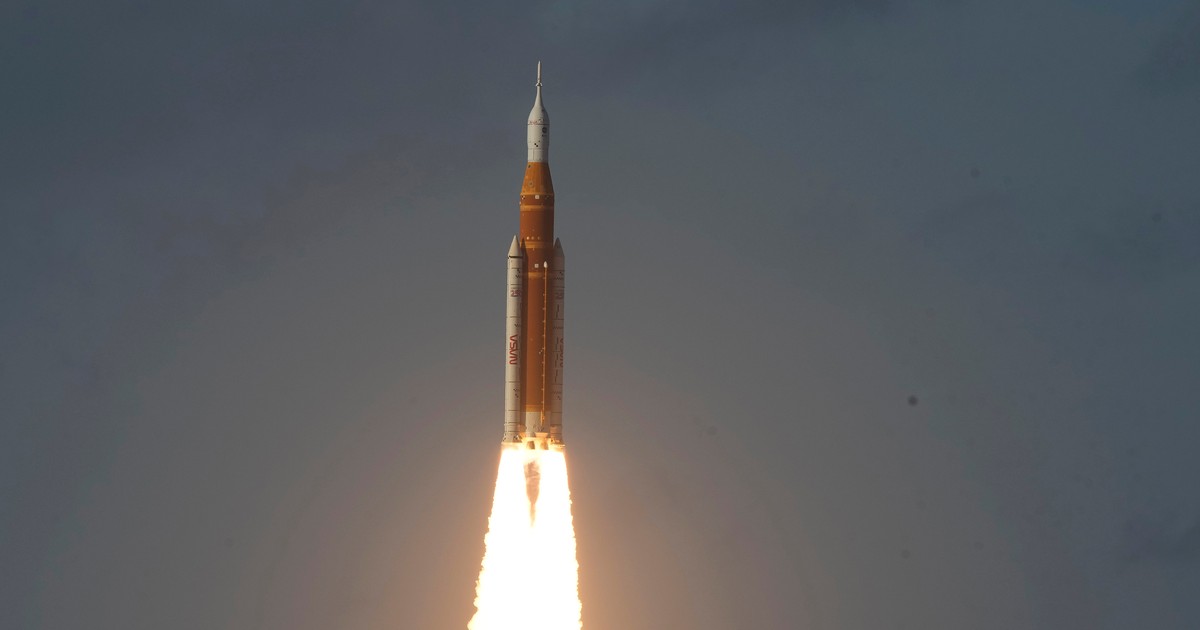
Cover image from townhall.com, which was analyzed for this article
NASA's Artemis II astronauts are preparing for reentry into Earth's atmosphere and a Pacific Ocean splashdown, capping the first crewed lunar mission since Apollo. Despite a helium leak in the Orion spacecraft requiring future redesigns, the issue poses no threat to this mission's conclusion. Coverage emphasizes the historic milestone in America's return-to-Moon program amid national division.
PoliticalOS
Friday, April 10, 2026 — Tech
Artemis II has successfully completed the first crewed lunar flyby in more than 50 years, breaking distance records and gathering data on radiation, surface observations and spacecraft performance. Yet the program remains years behind original schedules, with a helium leak requiring redesign before lunar orbit flights and commercial landers still unproven. The reentry on April 10 will test whether NASA’s adjusted heat shield strategy and international partnerships can convert this milestone into a sustainable path back to the lunar surface ahead of geopolitical rivals.
What outlets missed
Most coverage underplayed the program's explicitly bipartisan and international character: Artemis began under Trump but advanced under Biden with key contributions from the European Space Agency on the service module and Canada on crew. Outlets also gave short shrift to the detailed radiation biology experiments aboard Orion, including organ-on-a-chip systems replicating bone marrow responses to galactic cosmic rays, which NASA designed specifically to inform Mars mission planning. The helium leak's pre-launch characterization and the 60 percent unused propellant margin received inconsistent attention, as did the precise reordering of Artemis III into an Earth-orbit docking test to reduce risk before any landing attempt. Finally, the crater-naming process was sometimes presented as finalized when the crew only proposed names pending International Astronomical Union review.
America's Artemis II Heroes Face Deadly Reentry After Historic Moon Voyage
The four astronauts aboard NASA's Orion spacecraft are barreling toward Earth at nearly 25,000 miles per hour, preparing for the most dangerous moment in a mission that has already pushed humans farther from our planet than ever before. Their scheduled splashdown Friday evening in the Pacific off San Diego comes after a 10-day journey that included a daring flyby of the Moon, stunning photographs that captured the imagination of people worldwide, and a pointed reminder that America still knows how to do big things when it chooses to.
Reid Wiseman, Victor Glover, Christina Koch, and Canadian astronaut Jeremy Hansen have completed what NASA calls a critical stepping stone toward putting boots back on the lunar surface. They traveled beyond the protection of Earth's magnetosphere, exposed to galactic cosmic radiation in ways impossible on the International Space Station. The mission gathered vital data on everything from spacecraft performance to the physical toll of deep space on the human body. NASA placed radiation sensors throughout the capsule, drew blood samples before launch for comparison afterward, and even included computer chips designed to mimic bone marrow to study how this environment affects blood cell production.
Yet success cannot be declared until the crew is safely aboard a recovery ship. NASA's own officials have stressed this point repeatedly. The reentry sequence represents the greatest remaining risk, with the spacecraft enduring temperatures near 5,000 degrees Fahrenheit as it slams into the atmosphere. Communications will black out for roughly six minutes as a plasma shield forms around the capsule, leaving the astronauts isolated as they experience forces up to 3.9 times their body weight after days in microgravity. Parachutes must deploy perfectly for a controlled ocean landing.
This moment carries extra weight because of what happened during the uncrewed Artemis I flight in 2022. The heat shield eroded in unexpected ways, raising serious questions about the spacecraft's design. Rather than replace the shield and endure more delays on an already behind-schedule program, NASA adjusted the reentry profile to reduce the time spent in peak heating. There is no backup plan. As one NASA leader put it, the heat shield simply has to work. The memory of the 2003 Columbia disaster, when a small flaw led to the shuttle's disintegration and the loss of seven lives during reentry, looms large.
Compounding the technical challenges, engineers detected a small helium leak in the propulsion system during the mission. The leak involves the oxidizer side of the pressure system that feeds the main engine and thrusters. Mission managers canceled a planned manual piloting demonstration to run additional tests instead. Officials insist it poses no threat to this reentry, but it will require a redesign of the valves before the next Artemis flight. Add in issues with the spacecraft's toilet system, and the picture emerges of a program still ironing out basic reliability questions after years of development and billions in spending.
These problems matter because the stakes extend far beyond one mission. NASA aims to establish a permanent presence on the Moon and eventually send humans to Mars. Understanding radiation exposure is essential for those goals. The Artemis II crew's health data, including saliva samples collected throughout the flight and monitored with smartwatches, will help scientists compare low-Earth orbit conditions to the deep space environment. Early predictions suggest significantly higher exposure to cosmic rays from distant supernovas.
For all the technical hurdles, the mission has delivered something rarer in modern America: a moment of shared national pride. Public pessimism runs deep these days, with fractured politics and declining trust in institutions. Yet millions have followed the progress of this crew with genuine excitement. The images beamed back from beyond the Moon remind us what a confident nation can achieve. This is not managed decline. It is the frontier spirit that built the country in the first place.
The program itself reflects both ambition and bureaucratic reality. Decades have passed since Americans last walked on the Moon. International partners like Canada are involved, but the heavy lifting falls to American engineering and taxpayer dollars. The successful return of Artemis II would validate the decision to press forward despite the heat shield concerns from the prior test flight. Failure is not an option, not just for the astronauts' sake but for the message it would send about American competence.
Recovery teams stand ready in the Pacific. Once the capsule is down, military and NASA personnel will extract the crew and transport them for medical evaluation. Only then will the celebration begin. For now, the focus remains where it belongs: on four astronauts hurtling home through the fires of reentry, carrying with them not just scientific data but a reminder that America can still reach for the stars when it sets its mind to the task. The nation will be watching tonight, hoping the hardware holds and the crew returns safely to a country that desperately needs more moments like this.
You just read America First's take. Want to read what actually happened?