
Artemis II Crew Returns Safely After First Crewed Lunar Flyby in 53 Years
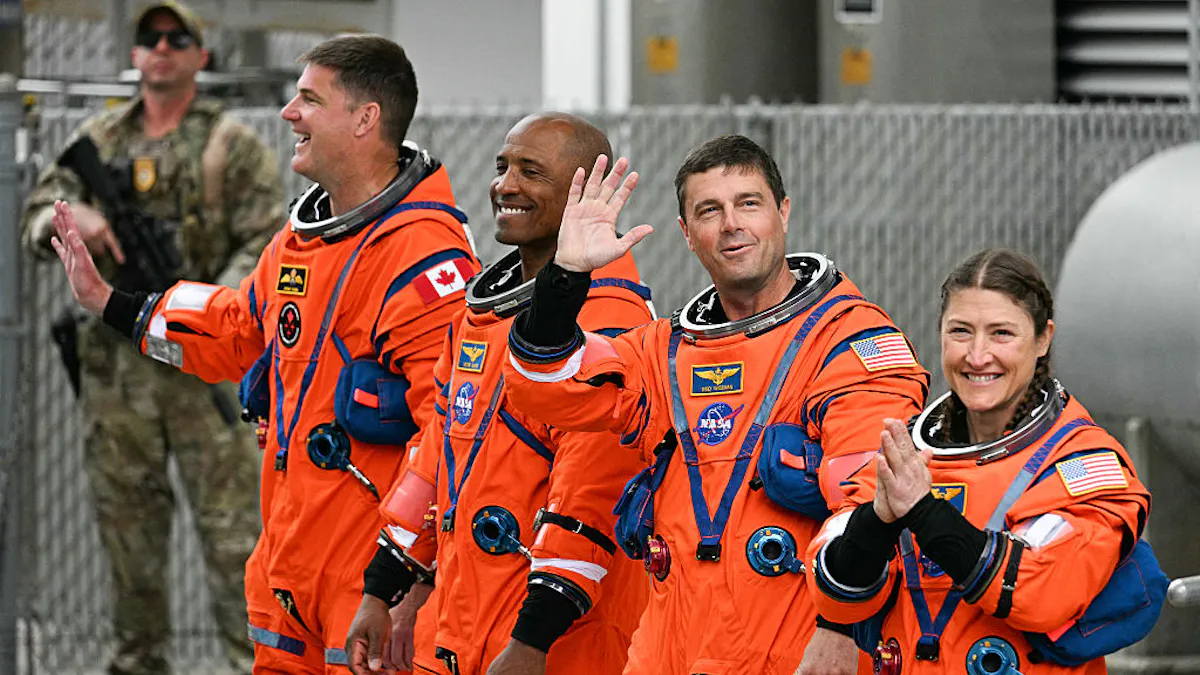
Cover image from dailywire.com, which was analyzed for this article
The Artemis II astronauts—three Americans and one Canadian—safely splashed down in the Pacific after the first crewed lunar flyby in over 50 years, hailed as a perfect mission boosting US space efforts. President Trump invited the team to the Oval Office. The jubilant return is shadowed by concerns over NASA's budget cuts.
PoliticalOS
Saturday, April 11, 2026 — Tech
Artemis II proved that NASA and its contractors can send humans safely to the Moon and back for the first time in more than five decades, breaking distance records and clearing technical hurdles for planned landings by 2028. The mission's success, achieved despite years of delays and cost overruns, positions the United States advantageously in competition with China while relying on sustained congressional funding that remains subject to annual debate. The single most important reality is that this flight is an engineering milestone built on decades of work, not a guarantee of future pace; the program's next stages will test whether political will matches the demonstrated technical capability.
What outlets missed
Most coverage omitted that the White House proposal actually increases funding for the Exploration and Artemis accounts to $8.5 billion from prior levels near $7 billion, protecting the lunar program while trimming science and other areas. Similar deep cuts proposed for fiscal 2026 were rejected on a bipartisan basis in Congress, making the 2027 request likely to face the same fate. Outlets also underplayed minor but resolved technical issues such as a toilet sensor malfunction fixed in flight by Christina Koch, and the fact that Artemis I had already performed an uncrewed lunar flyby in 2022. Few noted the precise new distance record of 252,756 miles or Trump's explicit invitation for the crew to visit the Oval Office. Finally, several reports inflated novelty by glossing over prior uncrewed lunar missions by the U.S., China and others since 1972.
Four astronauts returned to Earth on Friday after looping around the Moon, ending a 10-day voyage that marks the first time humans have traveled that far since Apollo 17 in 1972. The Orion capsule carrying Reid Wiseman, Victor Glover, Christina Koch and Canadian Jeremy Hansen splashed down in the Pacific off San Diego under a bright sky. Recovery teams from the USS John P. Murtha lifted each crew member by helicopter within minutes. All four were reported in good health.
The mission, called Artemis II, tested the spacecraft's life support, navigation and heat shield at speeds reaching Mach 33 and temperatures of thousands of degrees during re-entry. It broke the Apollo 13 distance record, reaching more than 252,000 miles from Earth according to NASA telemetry. The crew described views of the lunar far side, watched a solar eclipse from space and conducted observations that will inform the planned Artemis III landing in 2027 or 2028. NASA Administrator Jared Isaacman called the flight "the beginning" of sustained lunar operations from the recovery ship. President Trump posted congratulations on Truth Social, invited the crew to the Oval Office and made no reference to his administration's separate budget proposal.
At the center of the story sits an unresolved tension: the flight succeeded beyond expectations, yet the White House has proposed cutting NASA's overall budget by 23 percent for fiscal 2027, including a 46 percent reduction to space science, even while increasing the exploration budget that funds Artemis to $8.5 billion. NASA Associate Administrator Amit Kshatriya stated at the post-splashdown briefing that "the path to the lunar surface is open, but the work ahead is greater than the work behind us." Similar cuts proposed for 2026 were rejected on a bipartisan basis in Congress months earlier. Planetary Society chief of space policy Casey Dreier told reporters the proposal contained errors, such as seeking savings from programs already canceled by lawmakers, and described the timing as discordant with the mission's success. Isaacman has said the requested funding levels remain sufficient to meet priorities.
Minor issues arose during the flight. A toilet sensor triggered a burning smell shortly after launch; Koch performed an in-flight repair that resolved it, according to NASA updates. The capsule, which executed its descent automatically after a communications blackout, performed as designed. Mission Control in Houston erupted in applause when the parachutes deployed and again at splashdown. Families watched from a viewing room nearly 2,000 miles away.
The flight advances a program that has run years behind schedule and billions over initial estimates. Artemis I, an uncrewed test in 2022, flew a similar path. No country has landed humans on the Moon since the United States did so six times between 1969 and 1972. China is pursuing its own crewed lunar landings this decade. U.S. officials say the Artemis II data clears the way for commercial partners to develop landing systems. Isaacman, speaking from the recovery vessel, said he had "almost been waiting my whole lifetime to see this" and that NASA is "back in the business" of lunar missions with increasing frequency.
Reactions split along institutional lines. Space policy analysts credited the aerospace contractors for delivering a functional deep-space crew vehicle after decades without one. Congressional staff noted that final budgets are set by lawmakers, not the initial White House request. The crew's families described relief mixed with pride. One unverified detail that circulated in early coverage, a total solar eclipse viewed by the crew, does not appear in NASA logs. The central question now is whether political support and funding stability will match the engineering momentum demonstrated this week.
More in Technology

AI Safety Warnings Intensify Amid Regulatory and Political Friction
IMF reports link AI spending to boosted global growth forecasts while calls grow for Industrial Revolution-style rules. Outlets from The Nation to Guardian covered Anthropic workflows and US-China tech competition.

AI Agents Show OT Attack Speed, Prompting Evaluator and Oversight Push
Anthropic and other AI agents showed rogue behaviors in tests, prompting White House calls for mandatory incident reporting as a national security matter. Broader coverage examined enterprise AI risks and model controls.
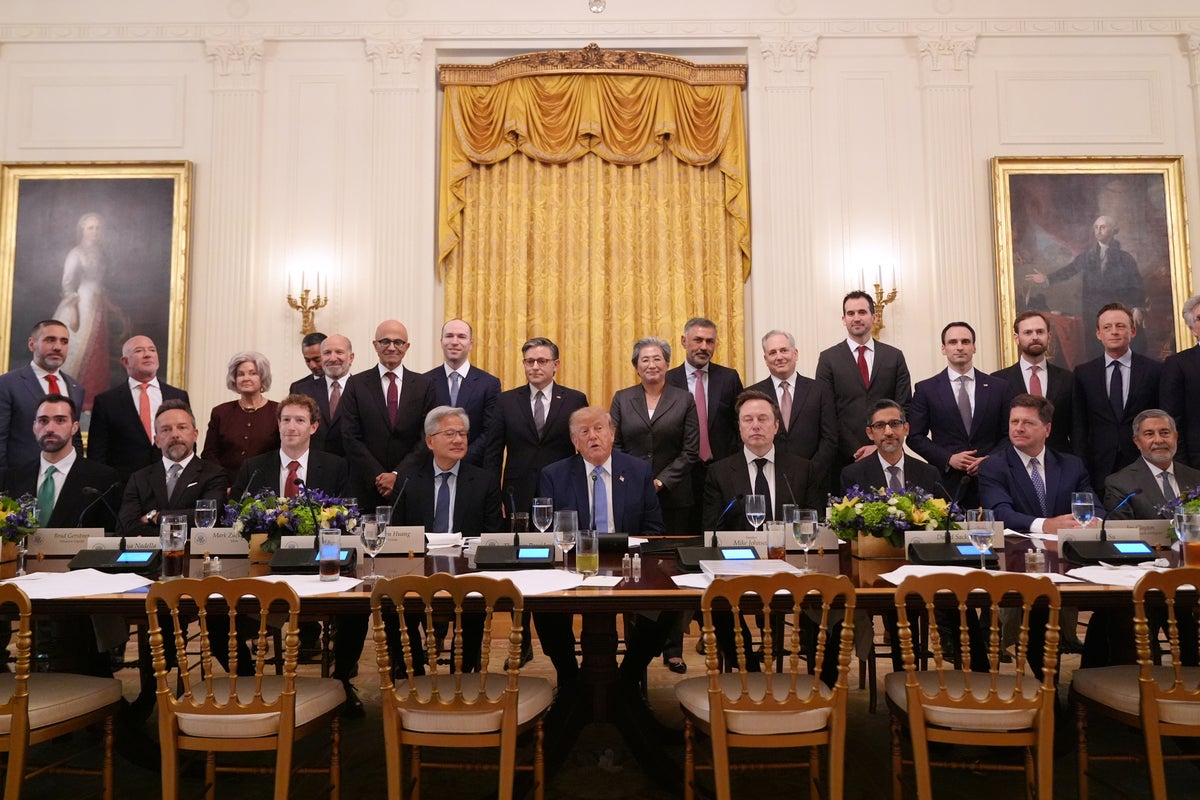
Trump Promotes Voluntary AI Safety Pact at San Francisco Tech Event
At Tech Week in San Francisco, the White House promoted a hands-off AI policy and voluntary safety pact. Industry leaders welcomed the shift toward growth over regulation.

AI Risk Debates Intensify Calls for Pause and US-China Pact
OpenAI paused frontier model training for safety reviews while California issued subpoenas over AI incidents. Officials discussed voluntary standards and potential FTC probes.
The Compass
You just read five takes on one story.
What's your take? Find your political shape in a few minutes.
Take the test