
Artemis II Crew Returns Safely After First Crewed Lunar Flyby in 53 Years
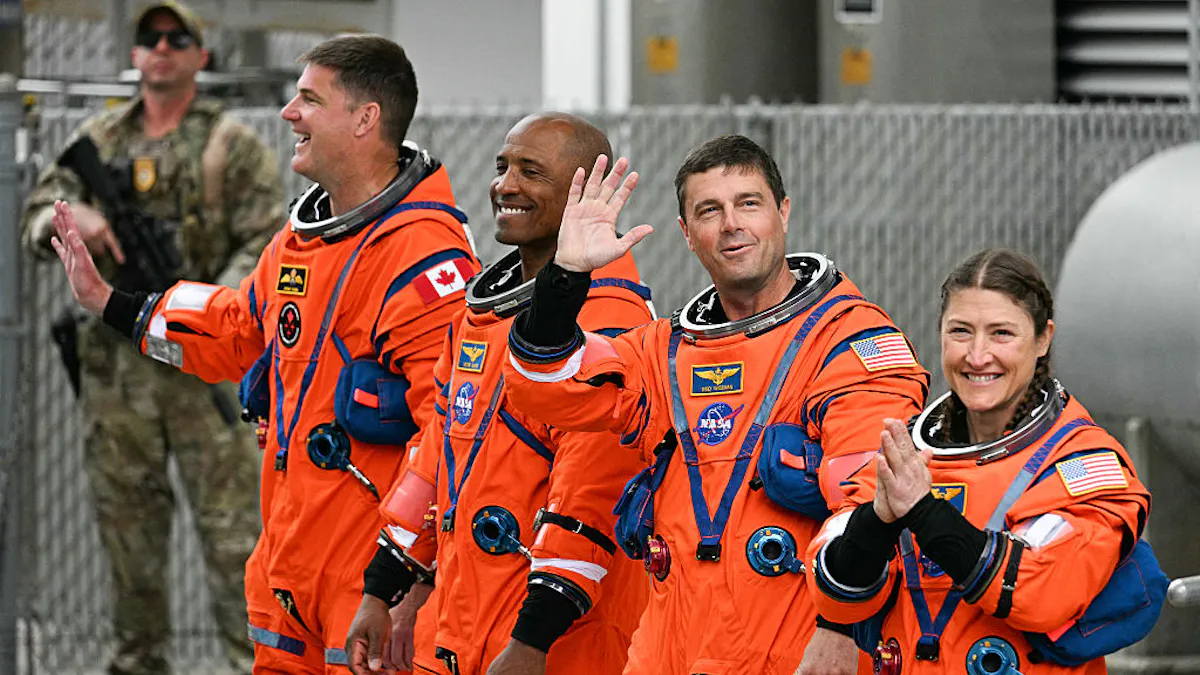
Cover image from dailywire.com, which was analyzed for this article
The Artemis II astronauts—three Americans and one Canadian—safely splashed down in the Pacific after the first crewed lunar flyby in over 50 years, hailed as a perfect mission boosting US space efforts. President Trump invited the team to the Oval Office. The jubilant return is shadowed by concerns over NASA's budget cuts.
PoliticalOS
Saturday, April 11, 2026 — Tech
Artemis II proved that NASA and its contractors can send humans safely to the Moon and back for the first time in more than five decades, breaking distance records and clearing technical hurdles for planned landings by 2028. The mission's success, achieved despite years of delays and cost overruns, positions the United States advantageously in competition with China while relying on sustained congressional funding that remains subject to annual debate. The single most important reality is that this flight is an engineering milestone built on decades of work, not a guarantee of future pace; the program's next stages will test whether political will matches the demonstrated technical capability.
What outlets missed
Most coverage omitted that the White House proposal actually increases funding for the Exploration and Artemis accounts to $8.5 billion from prior levels near $7 billion, protecting the lunar program while trimming science and other areas. Similar deep cuts proposed for fiscal 2026 were rejected on a bipartisan basis in Congress, making the 2027 request likely to face the same fate. Outlets also underplayed minor but resolved technical issues such as a toilet sensor malfunction fixed in flight by Christina Koch, and the fact that Artemis I had already performed an uncrewed lunar flyby in 2022. Few noted the precise new distance record of 252,756 miles or Trump's explicit invitation for the crew to visit the Oval Office. Finally, several reports inflated novelty by glossing over prior uncrewed lunar missions by the U.S., China and others since 1972.
American Heroes Return from the Moon as NASA Faces Long Overdue Budget Reckoning
The Orion capsule carrying four astronauts bobbed in the Pacific off San Diego Friday night after a near perfect ten day journey that marked America's first return to the vicinity of the moon in more than half a century. Commander Reid Wiseman, pilot Victor Glover, mission specialist Christina Koch and Canadian astronaut Jeremy Hansen stepped out healthy and smiling, hoisted one by one by military helicopters onto the deck of the recovery ship. Mission Control in Houston erupted in cheers. NASA called it flawless. For once the hype matched the moment.
These were not remote government functionaries. The crew brought a very American warmth that cut through the usual corporate space talk. Glover told each of his four daughters he loved them before launch. Wiseman's young daughters baked him "moon cupcakes" after he was selected. The astronauts shot a homemade video set to the Full House theme song, grinning like regular people who happened to be flying beyond the orbit of the moon. They spoke of faith, family and the fragile beauty of Earth hanging in the black void. NASA Administrator Jared Isaacman called them "ambassadors for humanity." For a country that has grown tired of polished bureaucratic messaging, the sincerity landed. Americans felt it. The mission, dubbed Integrity, set a new distance record and gave the crew views of the lunar far side, a total solar eclipse and the kind of perspective that tends to reorder priorities.
This was more than nostalgia for Apollo. It was a concrete win in the race back to deep space. China intends to land its own astronauts and build a permanent base. Artemis II puts the United States firmly in front for the first time in decades. A crewed landing is now targeted in two years, followed by a lunar habitat. The engineers delivered. The hardware worked. The splashdown was textbook. In an age when many federal projects bleed money and miss deadlines, this one came in on target and captured the public imagination.
Yet the celebration in Houston carried an edge. Even as the rocket lifted off last week, President Trump signaled his intention to cut NASA's budget by twenty three percent, with a forty six percent reduction in space science funding. The usual voices immediately labeled the move "extinction level." The Guardian called the timing discordant. Some at the agency wrung their hands about the future of their projects. This is the same agency that has watched its budgets swell for years while delivery dates for major programs drifted further into the future. The American taxpayer has every right to ask what all that money actually bought.
The truth is that big government institutions like NASA develop appetites that have little to do with landing on the moon and everything to do with preserving budgets, contractors and internal priorities that often have more in common with academic grant writing than with exploration. Entire divisions pursue climate studies, diversity seminars and long range planning documents that read like corporate consultant speak. Meanwhile the core mission of sending Americans back into space has moved at a glacial pace. The success of Artemis II, built by dedicated engineers who still believe in the old dream, suggests the talent is there. What has often been missing is discipline.
Trump's proposed cuts are not an attack on space exploration. They are a recognition that unlimited money has produced diminishing returns. Private companies, many of them born in America, have shown that innovation accelerates when budgets are tight and accountability is real. The same principle should apply inside the agency. Strip away the layers that do not directly support flying hardware and crews, and what remains might actually move faster. The moon is not going anywhere. Neither is the competitive pressure from Beijing. The United States still possesses the industrial base, the skilled workforce and the national character to lead. What it does not need is another decade of blank check spending that produces more PowerPoint slides than flight hours.
The four astronauts are back on Earth. Their mission proved that America can still do big things when it focuses. Their families, their faith and their obvious affection for this country reminded millions of viewers what the enterprise is supposed to be about. Now the bureaucrats will have to decide whether they want to complain about smaller budgets or roll up their sleeves and deliver the next flight with greater efficiency. The choice is theirs, but the country has already seen what is possible when the focus is on results instead of revenue.
The melody of Artemis II will linger, as the NASA commentator said. It should serve as proof that American competence survives even after years of bureaucratic drift. If the coming budget reforms force the agency to remember why it exists, the cuts will not be discordant at all. They will be overdue. The moon is waiting. So are the taxpayers who have funded the journey.
You just read America First's take. Want to read what actually happened?