
Artemis II Crew Returns Safely After First Crewed Lunar Flyby in 53 Years
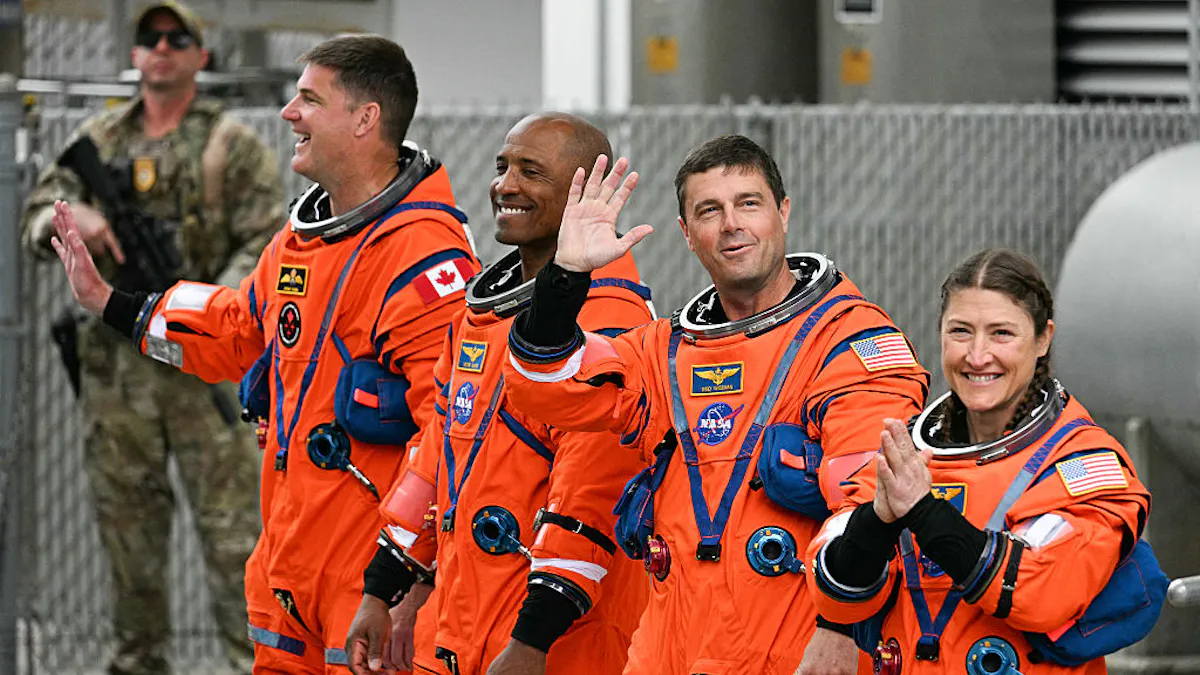
Cover image from dailywire.com, which was analyzed for this article
The Artemis II astronauts—three Americans and one Canadian—safely splashed down in the Pacific after the first crewed lunar flyby in over 50 years, hailed as a perfect mission boosting US space efforts. President Trump invited the team to the Oval Office. The jubilant return is shadowed by concerns over NASA's budget cuts.
PoliticalOS
Saturday, April 11, 2026 — Tech
Artemis II proved that NASA and its contractors can send humans safely to the Moon and back for the first time in more than five decades, breaking distance records and clearing technical hurdles for planned landings by 2028. The mission's success, achieved despite years of delays and cost overruns, positions the United States advantageously in competition with China while relying on sustained congressional funding that remains subject to annual debate. The single most important reality is that this flight is an engineering milestone built on decades of work, not a guarantee of future pace; the program's next stages will test whether political will matches the demonstrated technical capability.
What outlets missed
Most coverage omitted that the White House proposal actually increases funding for the Exploration and Artemis accounts to $8.5 billion from prior levels near $7 billion, protecting the lunar program while trimming science and other areas. Similar deep cuts proposed for fiscal 2026 were rejected on a bipartisan basis in Congress, making the 2027 request likely to face the same fate. Outlets also underplayed minor but resolved technical issues such as a toilet sensor malfunction fixed in flight by Christina Koch, and the fact that Artemis I had already performed an uncrewed lunar flyby in 2022. Few noted the precise new distance record of 252,756 miles or Trump's explicit invitation for the crew to visit the Oval Office. Finally, several reports inflated novelty by glossing over prior uncrewed lunar missions by the U.S., China and others since 1972.
Artemis II Success Celebrates Human Achievement but Exposes Fragility of US Space Ambitions
The four astronauts of Artemis II splashed down safely in the Pacific Ocean off San Diego on Friday evening, completing a flawless 10-day journey that marked humanity’s first return to the vicinity of the moon in more than half a century. Commander Reid Wiseman, pilot Victor Glover, mission specialist Christina Koch and Canadian astronaut Jeremy Hansen emerged from the Orion capsule in good health, lifted one by one by military helicopters to the recovery ship USS John P. Murtha. Their mission, dubbed Integrity, shattered distance records and offered the first human eyes on vast stretches of the lunar far side in generations.
NASA Administrator Jared Isaacman called the crew “ambassadors for humanity” and “almost poets” for the reflections they shared while orbiting the moon. Mission Control in Houston erupted in celebration as the capsule hit the water exactly as planned. “We did it,” said NASA official Lori Glaze. The return capped what officials described as a textbook flight, one that also treated the astronauts to a solar eclipse viewed from deep space and striking images of Earth suspended against the blackness beyond.
The achievement resonates on multiple levels. The Daily Wire captured how the crew’s personal touches, from Victor Glover’s tender messages to his daughters to Christina Koch and Jeremy Hansen sharing laughter with family before launch, created an emotional connection with the public. A lighthearted video the astronauts produced, styled like an 1980s sitcom intro set to the “Full House” theme, underscored the joy and normalcy they maintained even while traveling nearly 250,000 miles from home. These human moments, alongside the technical triumph, reminded Americans why exploration matters beyond geopolitics or scientific data points. As one NASA leader put it, “If you can’t take love to the stars, then what are we doing?”
Yet the jubilation at Johnson Space Center carried an unmistakable undercurrent of unease. Even as the capsule was still ascending last week, President Donald Trump signaled his intention to impose deep reductions on NASA’s budget, including a 23 percent overall cut and a staggering 46 percent reduction to space science funding. The Guardian described these proposed reductions as “extinction-level,” a characterization that several agency veterans echoed privately. The contrast is jarring. A mission that reaffirms American leadership in deep space arrives at the very moment political decisions threaten to undermine the infrastructure, workforce and scientific programs needed to sustain it.
This tension reveals something deeper about how the United States approaches long-term endeavors. Artemis II was not an isolated stunt. It serves as the bridge to Artemis III, a planned crewed landing within two years, and eventually to a permanent lunar habitat that would anchor American and international presence on the moon. Those steps require steady funding for Orion, the Space Launch System, ground systems, science instruments and the growing network of commercial and international partners. Canada’s contribution of Hansen to the crew exemplifies the collaborative framework NASA has built, one that strengthens both diplomatic ties and technical resilience.
The success also sharpens the stakes in the emerging competition with China, which aims to land its own astronauts on the moon and establish a permanent base. Having demonstrated that it can once again send humans into deep space and bring them home safely, the United States holds a meaningful advantage. But advantages erode without consistent support. Budget volatility has long plagued NASA, forcing the agency into cycles of redesign, delay and cost overruns. The proposed cuts arrive just as Artemis is proving the value of sustained investment.
Interviews with engineers and administrators after the splashdown revealed a mix of pride and anxiety. One official described the moment as “discordant,” noting that the same political system capable of marshaling resources for an extraordinary technical achievement seems equally capable of withdrawing them at the moment of greatest promise. The agency’s science programs, already stretched, would face particularly severe pressure. Those programs do more than produce pretty pictures of distant worlds. They deliver concrete advances in materials, computing, medicine and climate understanding that pay dividends on Earth.
The crew is scheduled to hold a news conference in the coming days to share their firsthand accounts. Their words will likely echo the sense of perspective that astronauts have brought back since the Apollo era: a renewed appreciation for Earth’s fragility and humanity’s capacity to reach beyond it. Those reflections feel especially relevant now. The mission’s success demonstrates that the United States retains the talent, ingenuity and ambition to lead in space. What remains uncertain is whether its political institutions possess the steadiness to match that ambition over the decade required to build a lasting lunar presence.
For now, the focus remains on celebration. The capsule performed perfectly. The astronauts are safe. The images and insights they gathered will inform the next steps of the Artemis program. Yet the shadow of proposed budget cuts serves as a reminder that technical victories do not automatically translate into policy continuity. Sustaining momentum will require more than cheering the splashdown. It will demand a commitment to treat deep-space exploration as the multigenerational project it truly is, rather than a political bargaining chip subject to yearly swings. The melody of Artemis II, as NASA’s commentator noted, lingers. The question is whether the country will keep singing it.
You just read Liberal's take. Want to read what actually happened?