
Artemis II Crew Returns Safely After First Crewed Lunar Flyby in 53 Years
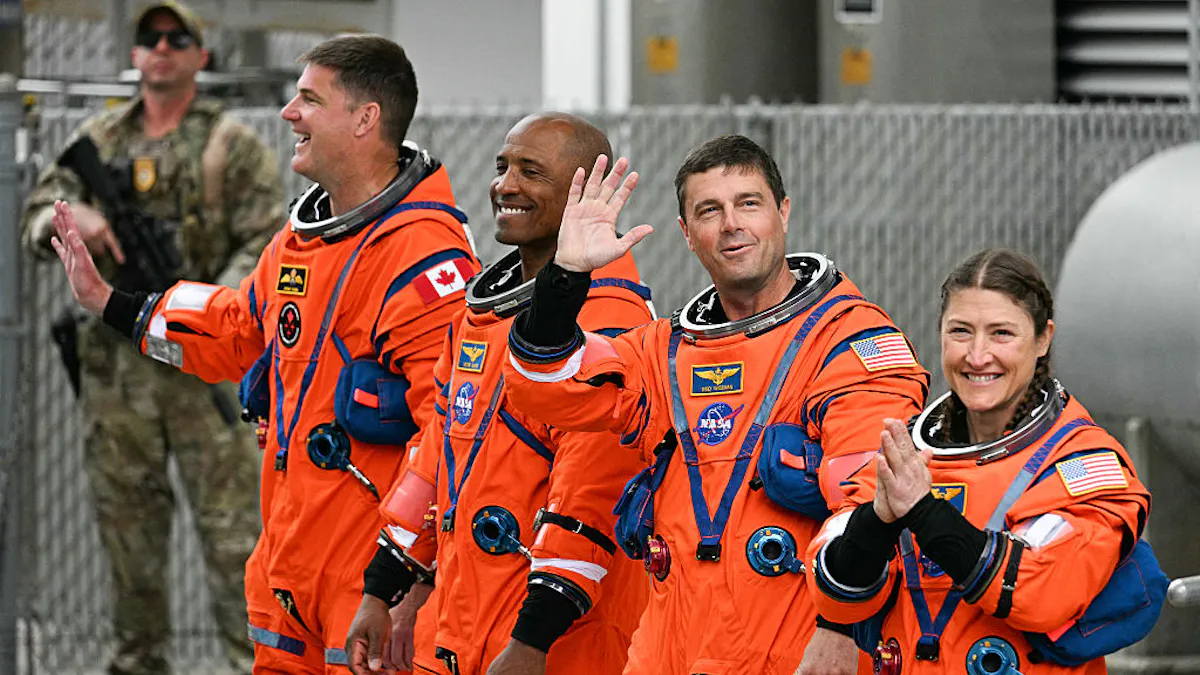
Cover image from dailywire.com, which was analyzed for this article
The Artemis II astronauts—three Americans and one Canadian—safely splashed down in the Pacific after the first crewed lunar flyby in over 50 years, hailed as a perfect mission boosting US space efforts. President Trump invited the team to the Oval Office. The jubilant return is shadowed by concerns over NASA's budget cuts.
PoliticalOS
Saturday, April 11, 2026 — Tech
Artemis II proved that NASA and its contractors can send humans safely to the Moon and back for the first time in more than five decades, breaking distance records and clearing technical hurdles for planned landings by 2028. The mission's success, achieved despite years of delays and cost overruns, positions the United States advantageously in competition with China while relying on sustained congressional funding that remains subject to annual debate. The single most important reality is that this flight is an engineering milestone built on decades of work, not a guarantee of future pace; the program's next stages will test whether political will matches the demonstrated technical capability.
What outlets missed
Most coverage omitted that the White House proposal actually increases funding for the Exploration and Artemis accounts to $8.5 billion from prior levels near $7 billion, protecting the lunar program while trimming science and other areas. Similar deep cuts proposed for fiscal 2026 were rejected on a bipartisan basis in Congress, making the 2027 request likely to face the same fate. Outlets also underplayed minor but resolved technical issues such as a toilet sensor malfunction fixed in flight by Christina Koch, and the fact that Artemis I had already performed an uncrewed lunar flyby in 2022. Few noted the precise new distance record of 252,756 miles or Trump's explicit invitation for the crew to visit the Oval Office. Finally, several reports inflated novelty by glossing over prior uncrewed lunar missions by the U.S., China and others since 1972.
Artemis II Triumph Clouds Over as Trump Eyes Devastating NASA Cuts
The four astronauts of Artemis II splashed down safely in the Pacific Ocean off San Diego on Friday night capping a flawless ten-day voyage that marked humanity’s first return to the vicinity of the moon in more than half a century. Commander Reid Wiseman, pilot Victor Glover, mission specialist Christina Koch and Canadian astronaut Jeremy Hansen emerged from the Orion capsule in good health after a mission that set new distance records, offered unprecedented views of the lunar far side and treated the crew to the rare spectacle of a solar eclipse from deep space.
NASA declared the flight an unqualified success. Administrator Jared Isaacman, speaking from the recovery ship USS John P Murtha, called the crew “ambassadors from humanity to the stars” and said he could not imagine a better team. Mission Control in Houston erupted in applause as the capsule floated under parachutes in daylight. Helicopters lifted each astronaut one by one from an inflatable raft, echoing the recovery images of the Apollo era. The mood at the Johnson Space Center was jubilant, with engineers and officials openly emotional after years of preparation.
The human moments resonated far beyond the control rooms. Glover told his four daughters he loved them before launch. Wiseman’s young daughters baked “moon cupcakes” for their widowed father. The crew produced a light-hearted video edited to the Full House theme song, showing them smiling at the camera during routine tasks. They carried cookies baked at home, a small plush toy in a baseball cap, and spoke in near-poetic terms about the fragile beauty of Earth against the blackness of space. NASA officials said the warmth surprised even them. One manager remarked that if you cannot take love to the stars then the entire enterprise loses its meaning.
Yet the celebration carried a discordant note. As the Orion capsule sped toward the moon last week, President Donald Trump signaled his intention to slash NASA’s budget by 23 percent with cuts to space science reaching 46 percent. Insiders described the proposed reductions as “extinction-level” for large sections of the agency’s research portfolio. The contrast could hardly be sharper. While the world watched four astronauts fly farther from Earth than any humans since Apollo 17 in 1972, the same administration that claims to champion American leadership in space appeared ready to kneecap the programs needed to sustain that leadership.
The stakes are concrete. Artemis II was designed as a dress rehearsal for Artemis III, a crewed lunar landing currently scheduled for 2028. That mission in turn is meant to lay groundwork for a permanent lunar base later this decade. NASA has repeatedly described these steps as essential if the United States intends to maintain its edge in the intensifying competition with China, which aims to land its own astronauts on the moon and eventually build a permanent presence. Senior agency officials have warned that deep budget cuts now would delay or derail those timetables, handing Beijing a strategic opening.
The crew’s diversity added another layer of symbolism that feels newly precarious. Glover is the first Black astronaut to travel this far from Earth. Koch has already set records for longest spaceflight by a woman. Hansen’s participation reflects the strength of international partnership with Canada. Their success demonstrated what a properly funded, inclusive space program can achieve. The looming cuts threaten not only hardware and science but also the talent pipeline that brought such a crew together.
None of this appeared to dampen the immediate elation at splashdown. NASA television commentator Derrol Nail captured the feeling when he said the mission was over but the melody lingers on. The astronauts are scheduled to speak publicly in the coming days about what they saw and felt. Their words will likely be uplifting and reflective, continuing a narrative of exploration that has long served as a rare point of national pride transcending partisan lines.
Still, the larger picture is hard to ignore. A nation that just watched its astronauts break lunar distance records must now confront the possibility that political decisions made on Earth could prevent the next generation from building on this achievement. The budget proposal is not yet law and will face pushback in Congress from both parties with vested interests in space jobs and research. Yet the signal sent by the president only hours before the launch remains unmistakable.
Artemis II proved that NASA can still deliver on its most audacious promises when given the resources to do so. The astronauts’ safe return and the flawless performance of the Orion spacecraft represent a genuine triumph of engineering, international cooperation and human courage. What remains uncertain is whether Washington possesses the political will to protect that momentum or whether short-term fiscal austerity dressed up as toughness will once again starve the very programs Americans cheer when they succeed. The melody may linger, but the resources required to keep the music playing are suddenly in doubt.
You just read Progressive's take. Want to read what actually happened?