
NATO Secretary General Mark Rutte Visits Trump White House Amid Iran Ceasefire and U.S. Warnings on Alliance Burden-Sharing
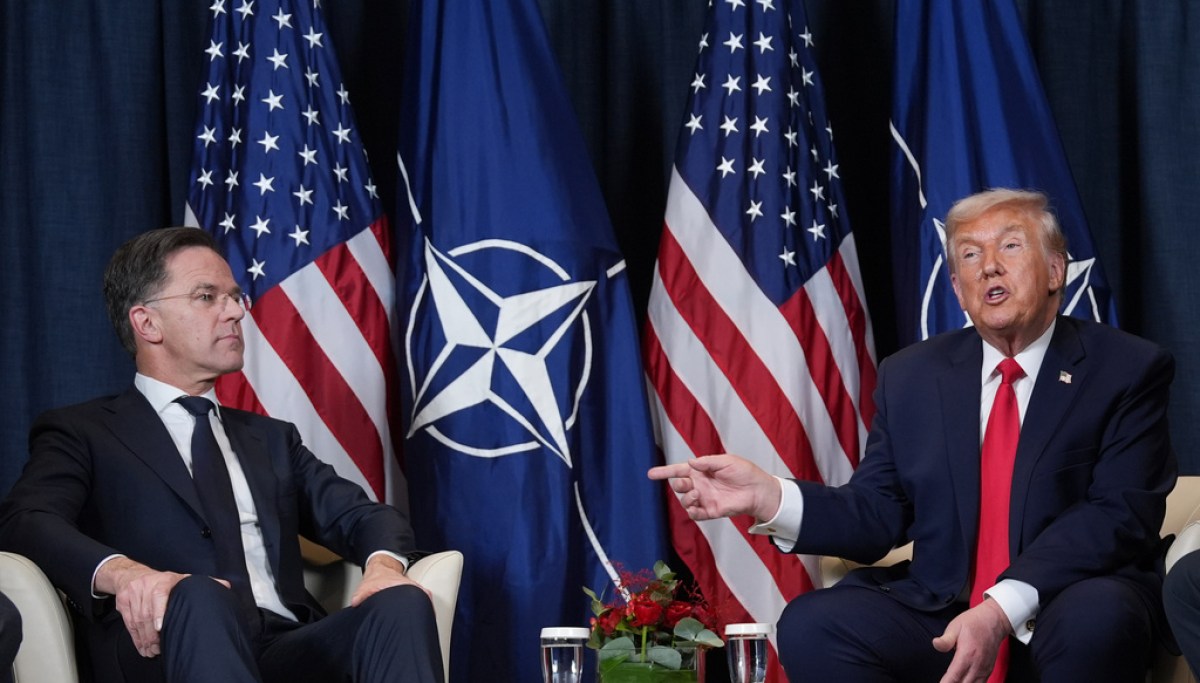
Cover image from washingtonexaminer.com, which was analyzed for this article
NATO Secretary General Mark Rutte visited President Trump at the White House following Trump's threats to exit the alliance and amid the Iran ceasefire. The meeting addresses alliance strains from US foreign policy shifts. It underscores efforts to mend transatlantic ties during volatile Middle East developments.
PoliticalOS
Wednesday, April 8, 2026 — Politics
Rutte's April 8 visit addresses real but contained NATO strains from Iran ops reluctance, tempered by a fresh ceasefire. Unverified quotes like 'paper tiger' proliferate across coverage, warranting caution. Broader context includes treaty limits and U.S. private commitments, suggesting diplomacy over divorce.
What outlets missed
All three outlets downplayed the U.S.-Iran ceasefire announced April 7-8, 2026, which reduced immediate crisis urgency for Rutte's visit and included Hormuz reopening with market stabilization. They omitted NATO Treaty Article 6's geographic limits on operations, framing European non-involvement as betrayal rather than legal constraint. Coverage skipped war origins in U.S.-Israeli strikes killing Khamenei on February 28, 2026, and specific late-March base denials by Spain, Italy, and France, which directly fueled U.S. grievances.
WASHINGTON (AP) — NATO Secretary General Mark Rutte met with President Donald Trump at the White House on April 8, 2026, amid a conditional two-week ceasefire in the U.S.-Israeli conflict with Iran and ongoing U.S. criticisms of alliance members' support for operations in the Middle East. The visit, described by a NATO official in a statement to Spectrum News as 'a long-planned visit' to build on the NATO Summit in The Hague, discuss transatlantic defense industry cooperation, and address security dynamics including Iran and Russia's war in Ukraine, occurs against a backdrop of Trump's public threats to reconsider U.S. participation in the alliance.
The conflict with Iran escalated on February 28, 2026, when U.S. and Israeli airstrikes targeted Tehran and killed Supreme Leader Ayatollah Ali Khamenei, according to Reuters reporting from that date and entries on FactCheck.org and Wikipedia. Iran retaliated by mining and closing the Strait of Hormuz, a vital oil chokepoint, as stated by Iranian officials and confirmed in multiple outlets including Al Jazeera and the Guardian. In late March 2026, several European NATO members, including Spain, Italy, and France, denied U.S. requests for base and airspace access to support strikes under Operation Epic Fury, per Newsweek on March 31 and Al Jazeera on April 1.
Trump has repeatedly criticized NATO allies for insufficient support in the Gulf, including mine-clearing or naval escorts in the Strait of Hormuz. White House spokeswoman Anna Kelly told Al-Monitor on April 8 that Trump 'has been disappointed by NATO and other allies' unwillingness to be helpful throughout Operation Epic Fury, even though his effort to destroy the threat posed by Iran is to their benefit,' adding, 'the United States will remember.' Secretary of State Marco Rubio echoed this on Fox News' Sean Hannity program on April 1, stating, 'If now we have reached a point where the NATO alliance means that we can’t use those bases... then NATO is a one-way street,' according to The Hill.
On April 7-8, 2026, Trump announced via Truth Social a pause in U.S. and Israeli attacks following Iran's agreement, mediated by Pakistan, to a two-week ceasefire and reopen the Strait of Hormuz, leading to drops in global energy prices and rises in stock markets, as reported by BBC, CNN, NPR, Al Jazeera, and the Guardian. Prior to this, Trump issued an April 8 deadline threat that Iran's 'whole civilization will die' without a deal, later extended, per The Hill citing White House statements.
Trump's frustrations extend to other issues: he has criticized allies over Ukraine aid diversion, engagement with Russia, and Denmark's refusal to cede Greenland, as noted in Al-Monitor and The Washington Examiner. The characterization of NATO as a 'paper tiger' is attributed to Trump in Al-Monitor, The Washington Examiner, and The Hill, but no verbatim transcripts or video confirmations were found in White House records or Reuters archives as of April 8; similarly, a reported quip 'Wouldn't you if you were me?' on withdrawal lacks direct sourcing beyond anonymous Reuters reporter accounts.
Rutte, a former Dutch prime minister, has built rapport with Trump, successfully de-escalating a Greenland dispute at the Davos World Economic Forum on January 21, 2026, by proposing negotiations and averting tariff threats on defending NATO members, according to The Hill. Rutte praised U.S. efforts to degrade Iran's nuclear and missile capabilities last month, per The Washington Examiner, though exact quotes remain unverified in NATO press releases. The 'Trump whisperer' label appears across outlets but stems from unnamed European diplomats in Al-Monitor; a purported Rutte analogy of Trump as 'daddy' in a schoolyard brawl with Israel and Iran, cited in Al-Monitor and The Hill, was clarified by Rutte in June 2025 as metaphorical for European reliance on the U.S., not literal.
European responses vary. Italian Defense Minister Guido Crosetto told reporters this week that Trump cannot unilaterally exit NATO without Congress and warned troop withdrawals would weaken Europe, as quoted in The Washington Examiner. Spanish Foreign Minister Jose Manuel Albares told La Sexta TV on April 8 that NATO benefits both sides but prompts European sovereignty steps, floating a pan-European military, per the same outlet. UK Prime Minister Keir Starmer convened Hormuz oil-reliant nations for non-U.S. paths forward, while Spain held firm on base denials after initial U.K. softening, according to The Hill. French President Emmanuel Macron and German Chancellor Olaf Scholz opposed offensive Iran operations.
NATO's role in the Middle East is constrained by Article 6 of its treaty, which limits collective defense to Europe, North America, and islands north of the Tropic of Cancer, as stated on NATO's official website; no European leaders tasked Rutte with Hormuz commitments, per a European diplomat in Al-Monitor. Oana Lungescu, former NATO spokesperson now at the Royal United Services Institute, called this 'a dangerous point for the transatlantic alliance' to Al-Monitor. Matthew Kroenig, vice president at the Atlantic Council's Scowcroft Center, told The Associated Press that Rutte speaks effectively to Trump, keeping the U.S. engaged.
Senior U.S. officials have privately reassured Europeans of commitment to NATO despite public rhetoric, according to a European official involved in such talks cited in Al-Monitor. The White House has not confirmed if the Trump-Rutte meeting was open to press, though such sessions often feature public praise and grievances. Rutte's Washington stay extends through Sunday for a Ronald Reagan Foundation speech and the Bilderberg Meeting, per The Hill.
The Economist's editor Zanny Minton Beddoes told CNN's Fareed Zakaria on April 6 that Trump's insults like calling allies 'cowards' evoke a potential 'divorce,' noting NATO's Article 5 invocation post-9/11 and European Afghanistan service. Experts note Trump can withhold support without exiting formally, damaging trust regardless. Oil-dependent nations face pressure to break Iran's prior Hormuz chokehold, but Europeans cited treaty limits and hostilities in declining missions.
Al-Monitor/Reuters leans alarmist with European-sourced crisis framing, emphasizing NATO peril. Washington Examiner tilts pro-Trump, casting him as justified critic of freeloading allies. The Hill portrays Trump as volatile and erratic, sympathizing with European pushback.
Behind the Coverage
al-monitor.com
Most biased
washingtonexaminer.com
thehill.com
Least biased
What each outlet got wrong
al-monitor.com
Employed alarmist framing with phrases like 'pushed U.S. relations with other members of the military alliance to a crisis point' and 'DANGEROUS POINT FOR THE ALLIANCE' in all caps, while attributing unverified Trump quotes such as 'paper tiger' and 'Wouldn't you if you were me?' without transcripts.
Our version: The neutral version notes that no verbatim transcripts or video confirmations were found for 'paper tiger' or the withdrawal quip, and contextualizes strains without crisis rhetoric.
washingtonexaminer.com
Framed the story to portray Trump as the aggrieved leader with the headline 'NATO’s Rutte heads to White House to make peace with Trump' and unverified claims like Trump calling NATO a 'paper tiger' during a Monday press conference.
Our version: The neutral version attributes 'paper tiger' to Trump across outlets but clarifies lack of direct sourcing, and describes the visit as long-planned without implying appeasement.
thehill.com
Used loaded language to depict Trump as erratic, such as 'volatile moment in Iran war,' 'sent wildly mixed signals,' and 'fumed over the refusal of allies,' while presenting unverified Rutte 'daddy' anecdote despite his own clarification.
Our version: The neutral version uses factual descriptions like 'ongoing U.S. criticisms' and clarifies the 'daddy' analogy as metaphorical per Rutte's June 2025 statement, avoiding emotional portrayals.
Facts outlets left out
U.S. and Israeli airstrikes on February 28, 2026, targeted Tehran and killed Supreme Leader Ayatollah Ali Khamenei, prompting Iran's Strait of Hormuz retaliation
Omitted by: thehill.com
Spain, Italy, and France denied U.S. requests for base and airspace access for Operation Epic Fury in late March 2026
Omitted by: thehill.com
NATO's Article 6 limits collective defense to Europe, North America, and islands north of the Tropic of Cancer, constraining Middle East involvement
Omitted by: al-monitor.com
Trump's April 7-8 ceasefire announcement led to drops in global energy prices and rises in stock markets
Omitted by: washingtonexaminer.com
Framing tricks we caught
Alarmist language
“al-monitor.com: 'the war with Iran has pushed U.S. relations... to a crisis point' and 'This is a DANGEROUS POINT FOR THE ALLIANCE'”
Neutral alternative: Neutral version describes the visit 'amid' tensions and ceasefire without escalating to 'crisis' or all-caps warnings.
Loaded headline
“washingtonexaminer.com: 'NATO’s Rutte heads to White House to make peace with Trump'”
Neutral alternative: Neutral version uses straightforward dateline 'NATO Secretary General Mark Rutte met with President Donald Trump' without implying one-sided appeasement.
Unverified claims as fact
“thehill.com: Trump told The Telegraph it is 'beyond reconsideration' when it comes to withdrawal, calling NATO a 'paper tiger'”
Neutral alternative: Neutral version explicitly states 'no verbatim transcripts or video confirmations were found' for such characterizations.
Source articles
More in Politics

Federal Agents Search Omar Home in Ongoing Immigration Probe
Homeland Security agents searched the Minnesota Democrat's DC residence in a criminal probe, prompting accusations of political intimidation from Omar and Democratic leaders. Coverage spans left-leaning outlets like NPR, BBC, and The Guardian alongside right-leaning criticism from The Federalist and Daily Wire.

Trump Diesel Import Plan Draws Pushback Over Russia Ties
The weekend agreement drew bipartisan congressional pushback and criticism from Ukraine's Zelenskyy, with analysts downplaying US fuel price impacts. Right-leaning outlets like National Review, Dispatch, and Washington Examiner questioned its legality and effectiveness.

Independents Test Voter Appetite for Middle Ground in 2026 Midterms
Nearly 200 independents are running in competitive races as voters weigh ballot measures on housing costs in states like Massachusetts. Left-leaning coverage from NYT, NPR, and Guardian highlights turnout and key races while right outlets focus on GOP strategy.

Trump Rallies in Alaska, Ohio to Bolster GOP Senate Candidates
The president rallied in Wasilla for Sen. Dan Sullivan and faced empty seats at an Ohio event amid midterm concerns. Outlets across the spectrum covered the trips as signals of GOP vulnerability weeks before Election Day.
The Compass
You just read five takes on one story.
What's your take? Find your political shape in a few minutes.
Take the test