
Gas Prices Hold Above $4 as Trump Defends Iran Conflict Costs
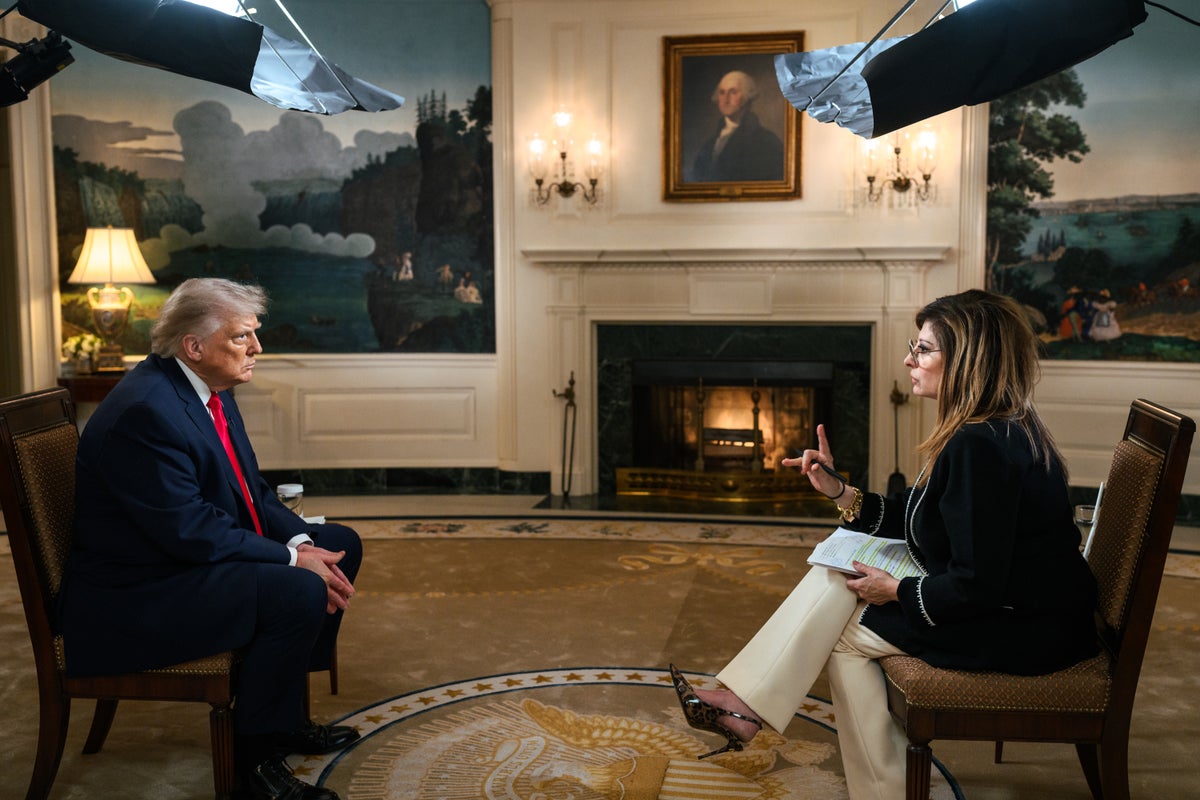
Cover image from independent.co.uk, which was analyzed for this article
Gas prices fluctuate with decreases noted recently, but Trump dismisses concerns at $92/barrel while critics like Bernie Sanders blast rises. Global warnings of shocks persist despite de-escalation hopes. Coverage reflects economic strain and policy responses.
PoliticalOS
Wednesday, April 15, 2026 — Business
Gasoline above $4 a gallon and crude near $92 reflect real, ongoing supply shocks from the Iran conflict and Hormuz blockade that are squeezing budgets and lifting inflation to 3.3 percent. The administration maintains this is a short-term, worthwhile cost to degrade Iran's nuclear capability, with a ceasefire now in place and prices already easing. The single most important variable is whether shipping through the strait resumes quickly; without it, IMF recession warnings could materialize despite optimistic forecasts from Trump and his advisers.
What outlets missed
Most coverage omitted the April 8 ceasefire that appears to be driving the five-day price decline and easing blockade pressure on the Strait of Hormuz. Outlets also underplayed the documented targeting of Iranian nuclear facilities and military sites after failed diplomacy, which supplied the context for administration statements that the sacrifice was worthwhile. Detailed regional price gaps, exact AAA figures showing the post-ceasefire reversal from an early April peak near $4.16, and the full sequence from winter weather disruptions to conflict-driven spikes received inconsistent attention. Finally, few pieces noted Kevin Warsh's prior Fed governorship from 2006-2011 when assessing his credibility as Trump's nominee.
Trump Dismisses Pain at the Pump as Worthwhile Cost of Iran War
As the national average price of regular gasoline settled at $4.11 a gallon this week, President Donald Trump told a national television audience he was “very happy” that crude oil was trading at only $92 a barrel and suggested the financial burden on American families was a price worth paying for degrading Iran’s nuclear program.
The comments, made in an interview taped Tuesday with Fox Business host Maria Bartiromo, come six weeks into a conflict that began on February 28 when the United States and Israel launched strikes against Iran. The fighting has included a U.S. blockade of the Strait of Hormuz, a chokepoint for roughly one-fifth of global oil supply. That disruption, combined with damage to Iranian infrastructure, sent crude prices soaring and pushed pump prices from a five-year low of $2.79 in mid-January to more than $4 in many parts of the country.
Trump was unfazed. “If you told me that we were going to be at only 92 a barrel, $92 a barrel, I would have been very surprised,” he said. “And you know what? I’m very happy, and it’s going to come dropping down very big as soon as it’s over.” He predicted the war would end “very soon,” dismissed any lasting economic damage, and described the current pain as temporary. “We go through it for whatever it is, six weeks, there’s going to be a hit, but it’s going to recover, I think, fully,” he added, forecasting a stock-market boom once fighting stops.
The president’s tone stood in sharp contrast to the experience of millions of Americans living paycheck to paycheck. In Vermont, regular gas now costs more than four dollars a gallon. In California and other Western states, prices remain even higher. Every extra dollar spent filling up a car is one less dollar available for groceries, rent, or medicine at a time when 60 percent of U.S. households report struggling to cover basic expenses.
Sen. Bernie Sanders did not hide his contempt for the administration’s attitude. Appearing on MSNBC after Kevin Hassett, director of the National Economic Council, suggested that falling oil prices could soon drive inflation near zero, Sanders offered a four-word verdict: “God help us all.”
The Vermont independent pointed directly at the human cost. “We’re having 60 percent of our people living paycheck-to-paycheck,” he said. “And now what they’re having to deal with is gas in Vermont, I think it’s over four bucks a gallon, parts of the country, it’s higher than that. And that means less money for food, less money to be able to pay the rent.”
Sanders also connected the conflict to the broader pattern of Middle East wars he has long opposed. He described Israeli Prime Minister Benjamin Netanyahu’s military campaigns in Gaza, the West Bank, Lebanon, and now Iran as “grossly immoral and destructive” while noting they are “impacting billions of people throughout the world.” The senator reminded viewers that Trump had campaigned on avoiding endless Middle East wars and lowering prices, promises now colliding with reality.
The economic fallout is not limited to gasoline. Janet Yellen, who served as Federal Reserve chair under Barack Obama and Treasury secretary under Joe Biden, warned Wednesday that Trump’s repeated demands for lower interest rates carry the hallmarks of a “banana republic.” Speaking at an investor conference in Hong Kong, Yellen noted that the president has publicly called for the lowest interest rates in the world to reduce Washington’s debt-service costs on $39 trillion in federal borrowing.
“How often does the president of a developed country express the view that the interest rate should be set to reduce the debt service cost?” she asked. “This is what you hear in a banana republic.” Yellen argued that allowing politicians to dictate monetary policy to ease borrowing costs historically leads to runaway inflation. Her critique lands as Trump’s choice to succeed Jerome Powell at the Federal Reserve, Kevin Warsh, awaits Senate confirmation. Warsh has argued that artificial-intelligence productivity gains could justify lower rates, a view Yellen suggested might not persuade the broader Federal Reserve board.
Gas prices have fallen for five consecutive days after peaking above $4.16 last week, according to AAA data. The national average is still 41 cents higher than a month ago and 94 cents above the price a year ago. The modest decline offers little comfort to families already absorbing the cumulative shock of the past six weeks. Midwest states such as Oklahoma, Kansas, and North Dakota enjoy the lowest prices, while Pacific Coast drivers continue to pay the highest.
Trump’s dismissal of the price spike echoes his earlier insistence that the war would be short and its economic consequences negligible. Yet the blockade of the Strait of Hormuz, the physical destruction inside Iran, and the resulting uncertainty in global energy markets have already rewritten the economic picture for 2026. Inflation forecasts have risen, growth estimates have been cut, and working families are left to absorb the difference at the pump and the grocery store.
The president’s own economic adviser appeared to treat the current suffering as a temporary statistical anomaly that might even produce a favorable inflation reading if prices eventually fall. Sanders’ blunt response captured the disconnect felt by many voters who heard Trump promise cheap gas and no new wars, only to watch both pledges evaporate within months of his return to office.
Whether the conflict ends as quickly as Trump predicts remains uncertain. What is certain is that American drivers are paying for it today, and the administration’s public reaction has been to shrug and declare itself “very happy” with the price.
You just read Progressive's take. Want to read what actually happened?
More in Business & Economy
CPI Report and Oil Spike at $106 Shape Fed Outlook
Report expected at 3.6% headline and 2.5% core as oil hits $106/barrel from Middle East tensions. Fed rate decisions hang in balance.

Major Banks Deliver Mixed Q3 Results on Trading Beats
JPMorgan, Goldman Sachs, Citigroup, and Wells Fargo reported Q3 figures, with revenue beats in trading but some estimate misses. CNBC provided live updates on the results and market reactions.

Oil Falls on Russian Diesel Outlook Despite Geopolitical Risks
Dow futures rose while Nasdaq faced pressure from tech weakness and elevated oil after geopolitical spikes. CNBC tracked premarket moves tied to earnings and Fed speeches.

Hall and Woodford Win Economics Nobel for Stabilization Models
American economists Robert E. Hall and Michael Woodford won the Nobel memorial prize for their research on managing economies through booms and busts, informing central bank policies on inflation and unemployment.
The Compass
You just read five takes on one story.
What's your take? Find your political shape in a few minutes.
Take the test