
Oil Hits Four-Year High as US-Iran Standoff Chokes Global Energy Flows
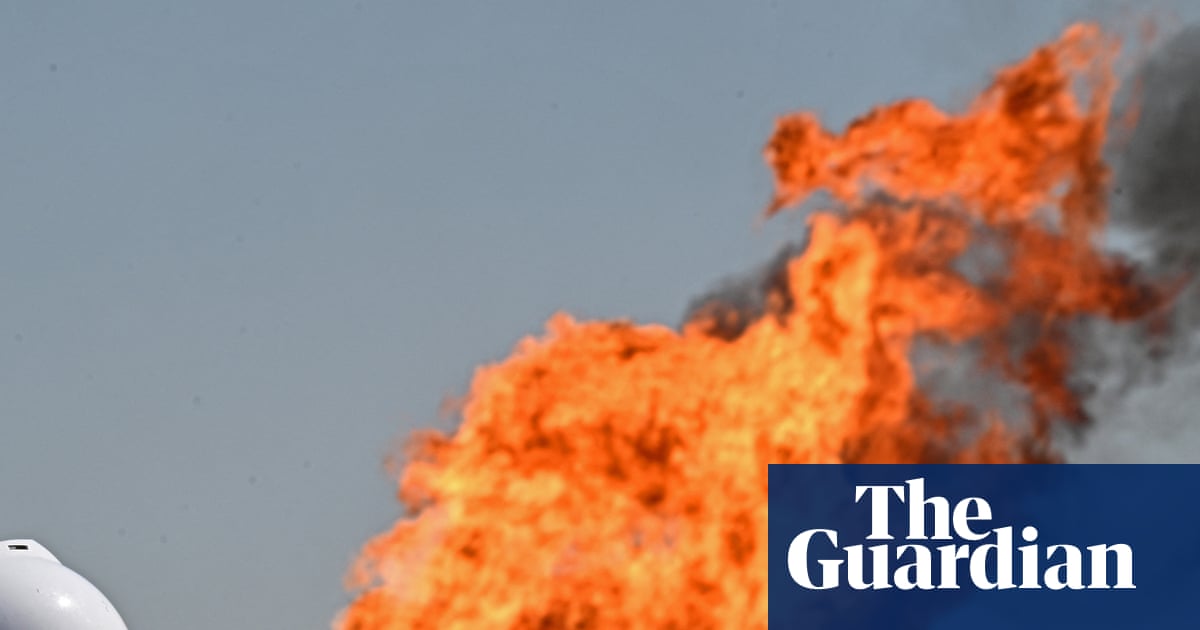
Cover image from theguardian.com, which was analyzed for this article
Brent crude prices climbed above $126 per barrel, the highest in four years, driven by US naval siege of Iranian ports disrupting $6 billion in exports and risks to the Strait of Hormuz. US gas prices reached a national average of $4.30 per gallon, with California topping $6. Markets are warned to better price in prolonged conflict risks.
PoliticalOS
Thursday, April 30, 2026 — Business
The single most important reality is that a narrow diplomatic impasse over whether nuclear limits must precede any reopening of oil routes has already imposed measurable costs on households and businesses worldwide. Both governments believe time favors them, yet each day the strait stays restricted and ports remain blockaded deepens the risk of broader economic damage and renewed combat. Readers should recognize that forecasts of $140 or even $200 oil are no longer fringe scenarios but plausible outcomes if the current test of endurance continues without compromise.
What outlets missed
Most accounts underplayed the scale of Iran's internal crackdown, including the U.N.-reported 21 executions and more than 4,000 national-security arrests since February 28. Few examined the precise sequence of Hormuz restrictions, where evidence from shipping trackers and multiple governments shows mines and drones reduced transits to low single digits while limited toll-based passage continued for some vessels. Internal Iranian dynamics received short shrift: the anonymous official's account of hardliner pressure curtailing Parliament Speaker Ghalibaf's negotiating flexibility appeared in only one outlet and could not be independently verified. The $25 billion Pentagon figure for U.S. war costs surfaced in a single Al Jazeera report without broad corroboration from other defense-budget trackers. Finally, the potential for renewed direct strikes was often reduced to headline color rather than tied to specific contingency briefings that several outlets treated as unconfirmed.
Oil Prices Surge Past 120 Dollars as Iran Conflict Exposes Fragility of Global Energy System
The standoff between the United States and Iran has entered its third month with no resolution in sight, driving international benchmark oil prices to levels not seen since the early days of the war and sending ripples through economies already strained by volatility. Brent crude futures briefly topped 126 dollars per barrel this week before settling around 115 to 119 dollars, while West Texas Intermediate climbed above 107 dollars. The immediate cause is the near-total disruption of flows through the Strait of Hormuz, where Iranian forces have used drones and mines to effectively blockade tanker traffic and the U.S. Navy maintains a siege of Iranian ports and storage facilities.
President Trump has signaled that the blockade could last for months, telling reporters the tactic is “genius” and more effective than bombing at forcing Tehran to “cry uncle.” A White House official confirmed Trump met with U.S. oil executives to discuss mitigating the impact on global supplies, while Trump himself rejected Iranian proposals to reopen the strait without first addressing its nuclear program. Iranian leaders, for their part, appear prepared to endure the pressure, having discovered that low-cost asymmetric tools can impose outsized costs on global shipping. Both sides believe time favors them, even as the economic pain spreads.
The human costs are already visible at gas pumps. The national average for regular gasoline reached 4.30 dollars per gallon Thursday, the highest level in four years and the eighth straight day of increases. In California, prices have hit six dollars per gallon in some areas. These figures come after an unusually turbulent few months in which prices swung from winter lows near 2.80 dollars to over four dollars following the outbreak of hostilities on February 28. Energy Secretary Chris Wright had suggested only weeks ago that prices might have peaked for the year. That prediction now looks optimistic.
Market analysts warn that traders may still be underpricing the risks. Goldman Sachs estimates that exports through the Strait of Hormuz have fallen to just four percent of normal volumes. ING’s head of commodities, Warren Patterson, noted that optimism about a quick diplomatic fix has given way to “the reality of the supply disruption.” Prolonged closure will drain inventories and require either higher prices to destroy demand or significant shifts in global sourcing. U.S. energy exports have meanwhile reached record highs, providing some cushion for American allies but also highlighting how quickly supply chains can reorganize around political fault lines.
The conflict is accelerating other structural changes. The United Arab Emirates has announced its departure from OPEC, a move widely interpreted as a desire for greater flexibility in a fracturing cartel. China, already the world’s largest importer, continues to push aggressively toward renewables, viewing geopolitical instability in fossil fuel regions as an unacceptable vulnerability. Once installed, solar and wind installations generate power immune to blockades and sieges, though they remain subject to weather and the need for grid modernization and storage.
This moment reveals deeper weaknesses in the architecture of global energy. The world remains dangerously dependent on a single chokepoint that a determined actor can close with relatively modest tools. Decades of policy that treated cheap oil as a given have left governments exposed when that assumption collapses. The current price shock is not merely a temporary spike; it is a stress test of systems built around concentrated fossil fuel production in geopolitically unstable regions.
For American consumers and businesses, the pain is immediate but not evenly distributed. Higher fuel costs feed through to everything from groceries to airline tickets, compounding inflation pressures that have lingered since the pandemic. Yet the same forces driving prices upward are also creating incentives that policymakers have long discussed in theory. When fossil fuels become both expensive and unpredictable, the economic case for alternatives strengthens. Solar panels and batteries do not require 18-hour diplomatic flights or naval deployments to function.
The Trump administration’s bet appears to be that maximum pressure, including the novel use of a sustained naval blockade, will force concessions on Iran’s nuclear ambitions and ultimately restore more favorable flows. Tehran’s calculation is that global economic frustration will eventually compel Washington and its partners to ease demands. Both strategies treat energy security as a zero-sum contest rather than a systems problem.
History suggests such contests rarely produce clean winners. The 1970s oil shocks accelerated energy efficiency and early renewable research, even if the momentum later faded. Today’s crisis arrives at a moment when renewable costs have fallen dramatically and battery technology has improved. The question is whether governments will treat this price surge as another cyclical event to be ridden out with increased drilling and short-term deals, or whether it will finally prompt sustained investment in diversified, resilient, and decarbonized systems that are less hostage to any single waterway or regime.
For now, the immediate outlook remains volatile. Oil futures continue to swing on each new report from the White House or Tehran. Shipping insurance rates for the Persian Gulf have skyrocketed. Fertilizer and petrochemical exports are also trapped, threatening food security in import-dependent nations far from the battlefield. What began as a regional military conflict has become, within weeks, a global energy emergency that exposes the limits of treating oil as just another commodity.
The coming weeks will test whether diplomacy can still produce an off-ramp or whether the logic of escalation continues to dominate. Either path carries costs. A prolonged blockade risks deeper economic damage and potential miscalculation. A premature deal that leaves core issues unresolved may simply set the stage for the next crisis. In both cases, the underlying vulnerability remains: a global economy still overly reliant on fuels that can be turned into weapons by those who control their flow. The longer this standoff persists, the harder it becomes to ignore the case for building energy systems that do not depend on the goodwill, or the fear, of any single actor in an increasingly contested world.
You just read Liberal's take. Want to read what actually happened?
More in Business & Economy

Stocks Rise on Earnings as Home Sales Hit Low
Major indices closed mixed to higher, led by healthcare and defensive stocks, as companies like Eli Lilly and UnitedHealth reported strong results. Pending home sales hit record lows.

US Stocks Mixed as Tech Rebounds on AI Optimism
The Dow slipped slightly while the S&P 500 and Nasdaq rose, led by Nvidia, AMD, and Intel gains on renewed AI sector confidence after prior drops. Broader market volatility tied to earnings and data center demand.

Trump Unveils $8 Billion Diesel Relief for Farmers
The Agriculture Department launched the program to offset record diesel prices for farmers, framed as economic aid and a midterm pitch in Kansas amid ongoing inflation and energy cost pressures.

CPI Rises to 3.7 Percent as Energy Costs Climb Amid Iran Conflict
Hotter-than-expected CPI figures fueled rate hike fears and contributed to sharp declines in AI and tech stocks. Left and right economic commentary debates Trump policies versus Fed actions.
The Compass
You just read five takes on one story.
What's your take? Find your political shape in a few minutes.
Take the test