
Oil Tops $114 as Iran Standoff Spurs U.S. Gas Spike and Approval Worries
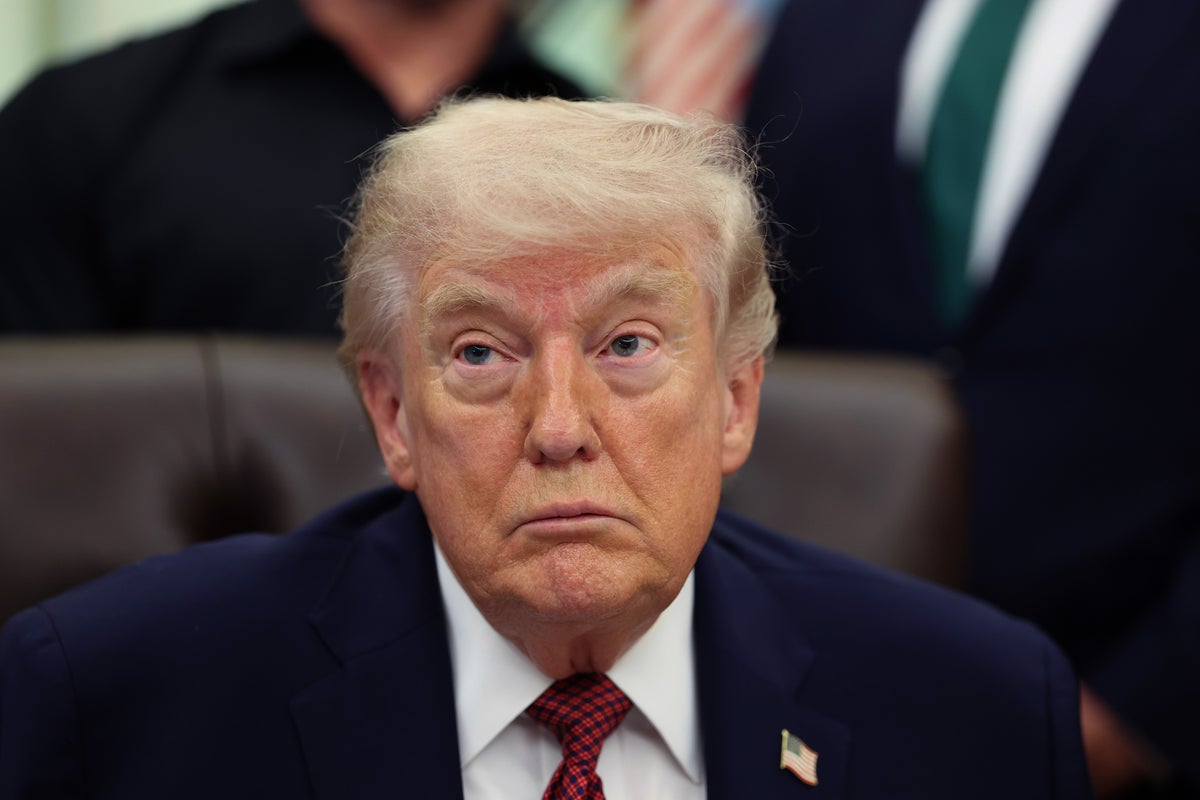
Cover image from independent.co.uk, which was analyzed for this article
Brent crude extended gains topping $114 per barrel on Trump's Iran threats and Hormuz blockade fears, with US gas prices up 20 cents per gallon recently. Affordability concerns sink Trump's approval amid stalled talks. Markets remain volatile ahead of Fed decision.
PoliticalOS
Wednesday, April 29, 2026 — Business
Rising oil and gasoline prices are the tangible domestic consequence of a conflict that began with strikes on Iranian nuclear sites in February, followed by a fragile April ceasefire whose breakdown keeps the Strait of Hormuz contested. Public polls show clear disapproval of the war's economic costs and the president's handling of inflation, yet the path to relief depends on whether stalled talks produce a verifiable agreement on nuclear limits and tanker access. Readers should treat precise poll margins and certain official quotes with caution when they appear in only one outlet.
What outlets missed
Most outlets underplayed the documented nuclear trigger for the February 28 U.S.-Israel strikes: Iran's accumulation of nearly weapons-grade uranium and near-breakout timeline, cited in Arms Control Association and UK parliamentary reports. The April 8 ceasefire, though fragile, predates the latest price spike by three weeks and was conditioned on partial de-escalation that neither side has fully met. Iran's April 27 proposal to reopen Hormuz in exchange for lifting the U.S. blockade and ending the war was referenced by only some outlets and often stripped of its linkage to nuclear deferral. Poll numbers varied across sources; the specific 34/64 and 21/70 figures in one report could not be independently verified against Reuters/Ipsos public trackers that showed slightly higher approval. Finally, the assassination attempt's timing relative to poll fieldwork received minimal attention despite its potential to influence later responses.
Surging Gas Prices from Iran Conflict Expose American Vulnerability to Foreign Energy Dependence
President Donald Trump's approval rating has fallen to a new low amid rising concerns over the economic fallout from the ongoing conflict with Iran. A Reuters/Ipsos poll released this week found just 34 percent of Americans approving of his job performance while 64 percent disapproved, the lowest mark recorded by the partnership since Trump returned to the White House in January 2025. The survey's majority of responses came before Saturday's shooting at the White House Correspondents' Dinner, in which a suspect has been charged with attempting to assassinate the president.
Public sentiment regarding Trump's handling of inflation and rising costs stands even lower, with only 21 percent approval and 70 percent disapproval. These figures reflect the daily reality confronting households as the two-month-old war disrupts global energy markets and drives up fuel prices at a time when many families were hoping for relief after seeing gas dip to five-year lows earlier this year.
The national average for regular gasoline reached $4.229 per gallon on Wednesday according to AAA, a jump of more than 20 cents in the past week and well above the $3.98 seen just a month ago. Diesel prices have climbed to approximately $5.46 per gallon. These increases ripple through the economy, raising costs for shipping, groceries, and consumer goods as truckers and businesses pass on higher expenses. The volatility traces directly to Iran's effective closure of the Strait of Hormuz, the narrow passage that carries about one-fifth of global seaborne oil, combined with the American naval blockade of Iranian ports imposed after U.S. and Israeli strikes began on February 28.
Although a ceasefire currently holds, negotiations between Washington and Tehran remain stalled. Iran has linked any reopening of the strait to the lifting of U.S. blockades and broader concessions, while the Trump administration continues applying pressure. The president posted on Truth Social this week warning that Iran had "better get smart soon" and accusing its leaders of failing to resolve the impasse. Oil markets have reacted sharply to the uncertainty. Brent crude futures rose 2.8 percent to $114.37 per barrel on Wednesday, marking the eighth consecutive session of gains and a more than 49 percent increase since the conflict started. West Texas Intermediate climbed 3.3 percent to $103.18.
Energy Secretary Chris Wright told CNN last week that prices had "likely peaked" for the year, though he stopped short of predicting a quick return to three-dollar gasoline. Trump pushed back, stating publicly that costs would fall back toward three dollars per gallon once the war concludes. The fluctuations follow a pattern seen since January, when regular gas hit $2.79. Winter storms initially disrupted refineries, but the Middle East conflict has now become the dominant driver. The surprise announcement that the United Arab Emirates is leaving OPEC adds further complexity, though analysts suggest its near-term market impact remains limited compared with the Hormuz disruptions.
These developments underscore a basic economic reality: when global energy supplies are vulnerable to political instability halfway around the world, American consumers bear the cost. Working families, independent truckers, and small businesses face tighter budgets as every additional dime at the pump reduces spending power elsewhere. Higher diesel prices threaten to elevate food costs in particular, compounding affordability challenges already evident in the polling data.
The situation highlights the persistent trade-offs involved in relying on distant and often hostile regions for critical resources. Despite America's abundant domestic oil, natural gas, and coal reserves, policy choices over decades have left the nation exposed to supply shocks from the Persian Gulf. Limited tanker movements through the strait and market uncertainty have kept prices elevated even as some oil continues to flow. Brent crude's sharp swings in recent weeks demonstrate how quickly such choke points can translate into higher costs at American gas stations and grocery stores.
Public dissatisfaction appears rooted less in abstract foreign policy debates than in the concrete effects on household finances. The Reuters/Ipsos numbers show broad disapproval of economic stewardship at a moment when the administration argues that decisive action against Iran serves long-term security interests. Yet the immediate burden falls on those least able to absorb it. Small business owners watching diesel expenses climb, farmers paying more to transport goods, and families adjusting budgets all experience the same pressure.
The stalled talks reveal the difficulty of achieving stable outcomes in a region long plagued by conflict and miscalculation. Iran's conditions for easing restrictions suggest leverage derived from controlling a vital energy artery. Meanwhile the U.S. extension of its port blockade, as reported by the Wall Street Journal, signals determination to maintain economic pressure until Tehran yields. This impasse carries real domestic consequences. Gasoline prices have now risen for six straight days after an earlier nine-day decline, erasing hopes of a quick return to pre-conflict levels around three dollars.
Economists have long noted that energy costs function as a tax on productivity. When fuel prices rise sharply and unexpectedly, they reduce real wages, constrain mobility, and slow economic activity. The current episode fits this pattern. The fact that prices climbed from a January low of $2.79 despite record domestic production capacity earlier in the administration illustrates how foreign disruptions can override domestic strengths when dependence on imported oil persists through global markets.
Looking ahead, the trajectory of these prices will likely shape both economic conditions and political sentiment through the remainder of the year. If negotiations remain frozen and the blockade continues, sustained high energy costs could further erode approval numbers. Should a resolution emerge allowing the strait to reopen fully, the relief at the pump might arrive as quickly as the current increases did. For now, the data shows clear strain. Brent above $114 and gasoline above four dollars represent more than statistics. They represent reduced opportunities for American workers and families navigating an economy still recovering from previous shocks.
The episode serves as a practical lesson in the limits of policy that fails to prioritize energy abundance at home. Nations that produce and refine their own resources insulate citizens from the volatility of distant conflicts. Those that do not pay the price in higher costs and diminished living standards. As talks drag on in the Middle East, that distinction has rarely been clearer at gas stations across the United States.
You just read Conservative's take. Want to read what actually happened?
More in Business & Economy

AI Companies Weigh Early IPOs as Risks Mount
Nasdaq fell sharply amid concerns over AI spending sustainability and data center costs; Nvidia, Meta, and others were hit as Meta and Tesla reported earnings.

Stocks Rise on Earnings as Home Sales Hit Low
Major indices closed mixed to higher, led by healthcare and defensive stocks, as companies like Eli Lilly and UnitedHealth reported strong results. Pending home sales hit record lows.

US Stocks Mixed as Tech Rebounds on AI Optimism
The Dow slipped slightly while the S&P 500 and Nasdaq rose, led by Nvidia, AMD, and Intel gains on renewed AI sector confidence after prior drops. Broader market volatility tied to earnings and data center demand.

Trump Unveils $8 Billion Diesel Relief for Farmers
The Agriculture Department launched the program to offset record diesel prices for farmers, framed as economic aid and a midterm pitch in Kansas amid ongoing inflation and energy cost pressures.
The Compass
You just read five takes on one story.
What's your take? Find your political shape in a few minutes.
Take the test