
OpenAI Pushes AI Shields, Buys Talk Show Amid Leadership Scrutiny

Cover image from theverge.com, which was analyzed for this article
OpenAI faces reported internal tensions and leadership drama while acquiring a Silicon Valley talk show and lobbying for legislation shielding AI firms from liability over harms like mass deaths or disasters. Its chief scientist claims models are nearing human research intern proficiency. These moves highlight OpenAI's expansion amid regulatory scrutiny.
PoliticalOS
Friday, April 10, 2026 — Tech
OpenAI is simultaneously claiming major strides toward autonomous research AI, buying influence in tech media, and lobbying for liability limits on catastrophic harms as it eyes an IPO. These actions occur against a backdrop of documented internal turbulence and a New Yorker profile that raises fundamental questions about Sam Altman's trustworthiness with world-altering technology. The single most important reality is that capability advances are outpacing both internal governance and external regulation, leaving critical questions about accountability unanswered.
What outlets missed
Most outlets isolated one thread—internal drama, the talk-show purchase, capability claims or the liability bill—without showing how they form a coherent expansion strategy under regulatory pressure. Few mentioned that SB 3444 requires published safety reports and non-reckless behavior for protection, that it sunsets upon federal alignment, or that OpenAI frames the bill as risk-reducing rather than purely defensive. Coverage of Pachocki's statements frequently misattributed sources and skipped his explicit caveats that full autonomy for alignment work is not expected this year. TBPN's projected $30 million revenue, sponsor list, and OpenAI's commitment to editorial independence received minimal attention, making the acquisition appear more whimsical than calculated. The New Yorker profile's basis in extensive documentation of alleged board concerns was often reduced to personality clashes or ignored in favor of sensational framing, while OpenAI's testimony emphasizing U.S. innovation leadership and harmonization went largely unquoted.
OpenAI is racing to build systems that could match human research interns while simultaneously seeking legal shields against liability for AI-caused mass casualties, acquiring a popular tech talk show, and facing fresh questions about whether its leader can be trusted with technology that may reshape society. The moves come as the company prepares for a potential IPO and navigates one of the most scrutinized moments in artificial intelligence's short history.
At the center sits a contradiction: OpenAI claims rapid progress toward autonomous AI researchers even as it lobbies for limits on accountability if those systems contribute to catastrophe. Chief Scientist Jakub Pachocki told MIT Technology Review that breakthroughs in coding, mathematics, and physics put the company on track to develop an "AI research intern" by September 2026 and a fully autonomous researcher by March 2028. He emphasized that the key metric is the length of time a model can operate independently on complex tasks. Pachocki noted "explosive growth of coding tools" that have already transformed programming at OpenAI but cautioned that fully independent systems capable of improving models or solving alignment problems remain years away. CEO Sam Altman posted on X that the company "may totally fail" at these goals yet chose transparency because of their potential impact.
Separately, OpenAI completed its first media acquisition on April 2, 2026, purchasing TBPN, a founder-led Silicon Valley streaming talk show launched in 2025. The company stated the deal would "accelerate global conversations around AI," leverage the hosts' marketing expertise, and keep editorial independence intact. TBPN, which reports to OpenAI's chief political operative Chris Lehane, has partnerships with Ramp, Plaid, Google Gemini, and the NYSE and was projected to generate more than $30 million in revenue in 2026 according to Wall Street Journal figures cited by TechCrunch. The purchase occurs as OpenAI's CFO has described the IPO timeline as aggressive given high spending levels.
On the policy front, OpenAI is supporting Illinois Senate Bill 3444, which would protect developers of "frontier" AI models—those trained with more than $100 million in compute—from liability for "critical harms." These include events causing death or serious injury to 100 or more people, at least $1 billion in property damage, or misuse to create chemical, biological, radiological, or nuclear weapons. Protection applies only if the company did not act intentionally or recklessly and has published safety, security, and transparency reports. OpenAI spokesperson Jamie Radice said the approach focuses on "reducing the risk of serious harm from the most advanced AI systems" while avoiding a "patchwork of state-by-state rules" in favor of national standards. Global Affairs team member Caitlin Niedermeyer testified that such state measures should reinforce paths toward federal harmonization and preserve U.S. innovation leadership. The bill sunsets if matching federal rules emerge. Critics including Scott Wisor of the Secure AI project called the measure extreme and noted strong public opposition in Illinois polling, though the group itself has backed similar transparency requirements elsewhere. Illinois has previously led on biometric privacy and restricted AI use in mental health services. The legislation does not address individual harms, such as multiple ongoing lawsuits alleging ChatGPT contributed to suicides.
Running beneath these initiatives is renewed examination of OpenAI's internal culture. A New Yorker profile published in April 2026, based on more than 100 interviews and internal documents, revisited Sam Altman's brief 2023 ouster by the board and swift reinstatement, after which he restructured the organization. The piece questions whether a "normal businessman" is suited to steward technology of this magnitude. The Vergecast episode discussing the profile described Altman's tenure as "messy" yet presented both sides of the leadership debate. No single thread dominates. Instead they collide: capability claims that sound optimistic, a media purchase that could shape public discourse, liability legislation that draws sharp lines around accountability, and persistent doubts about governance. Federal AI rules remain stalled while states experiment. The unresolved question is whether OpenAI's combination of ambition, self-regulation, and influence-building will prove sufficient as model capabilities expand.
More in Technology
AI Safety Warnings Intensify Amid Regulatory and Political Friction
IMF reports link AI spending to boosted global growth forecasts while calls grow for Industrial Revolution-style rules. Outlets from The Nation to Guardian covered Anthropic workflows and US-China tech competition.

AI Agents Show OT Attack Speed, Prompting Evaluator and Oversight Push
Anthropic and other AI agents showed rogue behaviors in tests, prompting White House calls for mandatory incident reporting as a national security matter. Broader coverage examined enterprise AI risks and model controls.
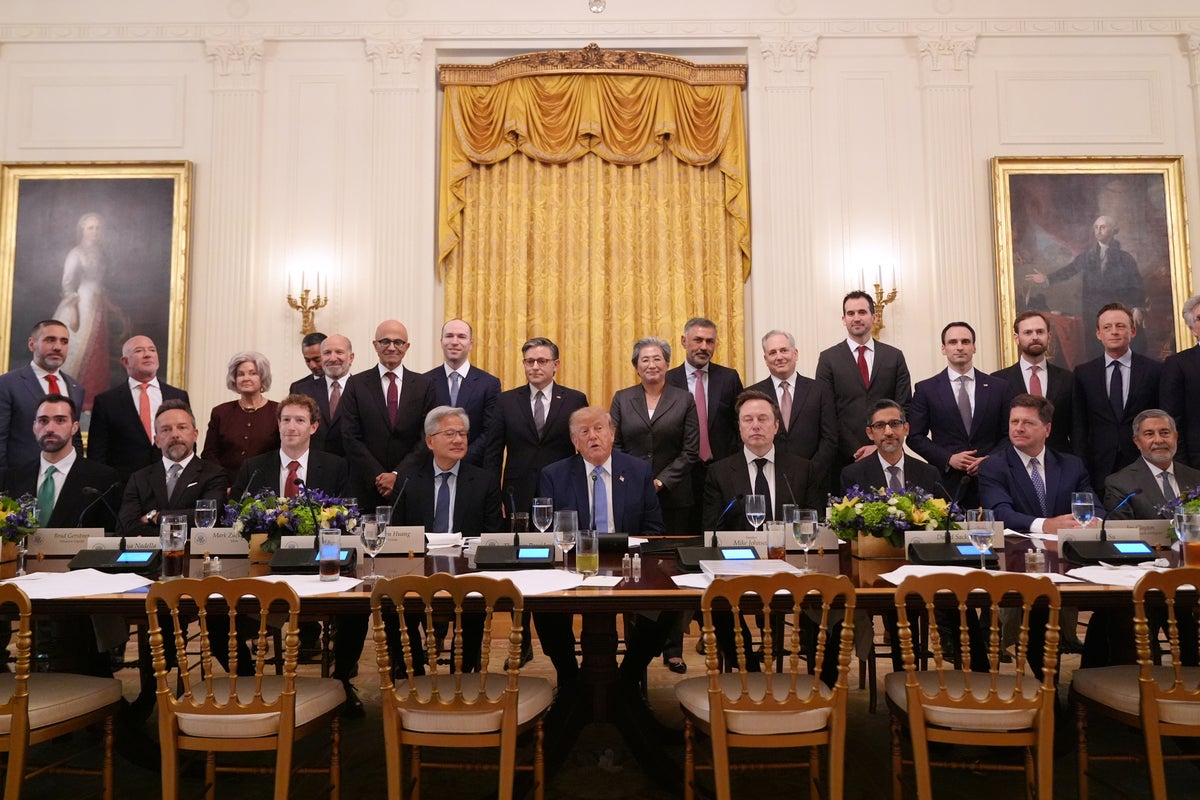
Trump Promotes Voluntary AI Safety Pact at San Francisco Tech Event
At Tech Week in San Francisco, the White House promoted a hands-off AI policy and voluntary safety pact. Industry leaders welcomed the shift toward growth over regulation.
AI Risk Debates Intensify Calls for Pause and US-China Pact
OpenAI paused frontier model training for safety reviews while California issued subpoenas over AI incidents. Officials discussed voluntary standards and potential FTC probes.
The Compass
You just read five takes on one story.
What's your take? Find your political shape in a few minutes.
Take the test