
Judge Orders Pentagon to Restore Reporter Access Amid Iran War
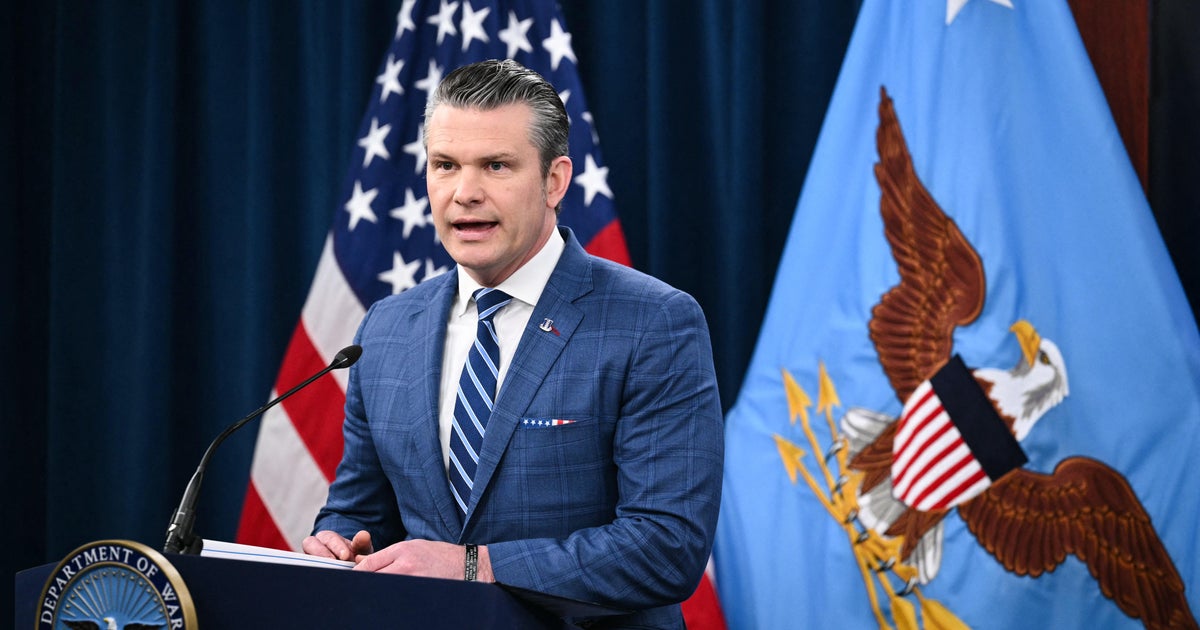
Cover image from cbsnews.com, which was analyzed for this article
A federal judge ruled the Pentagon violated a court order by restricting reporters' access, ordering restoration amid criticism of information control during the Iran conflict. The decision comes as Trump and Defense Secretary Hegseth face scrutiny over war transparency. Pentagon officials must comply to ensure media coverage of operations.
PoliticalOS
Friday, April 10, 2026 — Politics
The single most important reality is that independent access to the Pentagon's inner workings has been partially restored by court order precisely because the United States remains engaged in a high-stakes conflict with Iran whose outcomes are still contested. The Pentagon maintains that tighter rules prevent leaks that endanger operations; the judge ruled those rules went too far in conditioning constitutional rights on compliance. Until appeals conclude, the information Americans receive about military progress, ceasefire fragility and strategic risks will continue to reflect this unresolved tension between security and transparency.
What outlets missed
Most outlets underplayed the specific leaks of classified operational details during early Iran conflict phases that prompted the May 2025 memo, framing the rules instead as pure narrative control. They also omitted that One America News Network signed the agreement and retained full access, undercutting a purely partisan interpretation and showing the policy created a selective rather than total barrier. Few noted that Judge Friedman upheld certain escort requirements for sensitive areas, meaning the ruling was not a blanket rejection of security measures. Coverage largely ignored the shifted composition of the Pentagon press corps, now dominated by compliant conservative outlets, and provided scant detail on the fragile state of the Iran ceasefire, including disputes over Strait of Hormuz tanker traffic and uranium concerns that make transparent reporting especially urgent.
Americans relying on independent reporting to understand a messy, unresolved conflict with Iran just gained ground in a courtroom. A federal judge has now ruled twice that the Pentagon cannot bar credentialed journalists from routine newsgathering inside its headquarters, citing unconstitutional restrictions imposed last year. The decision lands as Defense Secretary Pete Hegseth fields questions about battlefield outcomes, ceasefire durability and oil flows through the Strait of Hormuz.
At the core sits one unresolved tension: how far the military can go to plug leaks of sensitive information without trampling First Amendment rights. U.S. District Judge Paul Friedman first struck down key parts of a 2025 Pentagon policy in March. That policy had labeled reporters who solicited information outside official channels as security risks, called building access a revocable "privilege" rather than a right, and triggered a walkout by more than 40 journalists from dozens of outlets. Friedman ordered reinstatement of New York Times reporters including Julian Barnes. The Pentagon responded with a revised policy requiring escorts for all movement inside the building and relocating news organizations' office spaces outside. On April 9, Friedman ruled again: the revisions still violated his order and the Constitution.
"The department cannot simply reinstate an unlawful policy under the guise of taking 'new' action," Friedman wrote in the 20-page opinion, according to court records. He gave the Pentagon until April 16 to file a sworn declaration from an official with personal knowledge detailing compliance steps. The judge noted dozens of letters from citizens nationwide underscoring the First Amendment's importance. He added that curtailing such rights "is dangerous at any time, and even more so in a time of war."
The Pentagon immediately signaled appeal. Spokesperson Sean Parnell stated the department had reinstated every journalist named in the March order, issued a revised policy addressing the court's concerns, and remained committed to access while meeting its obligation to protect the building's safe operation. Pentagon records show the original rules stemmed from a May 2025 memo after multiple leaks of operational details during early Iran conflict phases. Some limitations survived judicial review, including curbs on unescorted movement in certain areas.
Not every outlet lost access. One America News Network signed the required agreement and retained credentials. Most mainstream organizations, including CBS, the Associated Press and Reuters, declined and shifted coverage outside the building. The result is a current Pentagon press corps weighted toward conservative outlets willing to accept the terms. Friedman rejected the idea that access could be conditioned on avoiding "disfavored" journalists. The New York Times, lead plaintiff in the December lawsuit, called the ruling a vindication of independent journalism and court authority through attorney Theodore Boutrous Jr.
The dispute plays out against sharp exchanges at Hegseth's briefings. ABC's Luis Martinez pressed on whether military goals in Iran constituted a strategic victory and whether risks around the Strait of Hormuz had been mitigated; Hegseth interrupted, labeled the questions an "indictment framed as a question," and pivoted to friendlier reporters. President Trump has repeatedly asserted decisive victory on social media, pushing back against analyses suggesting the Iranian regime retains leverage over oil routes and uranium stockpiles. A fragile ceasefire brokered with Pakistani involvement remains in flux, with questions persisting about Iranian compliance on tanker fees and delegation attendance.
Friedman, appointed by President Clinton, tied the need for transparency to ongoing U.S. military activities. He wrote that the framers understood national security requires an informed public, not suppressed speech. The Pentagon maintains its statutory duty includes preventing unauthorized disclosures that could endanger operations. Higher courts will likely settle whether the revised rules cross the constitutional line. Until then, coverage of the conflict's human and strategic costs will depend on access restored "commensurate" with pre-policy levels for those who hold credentials.
The ruling does not resolve every practical question. Reporters from non-compliant outlets continue filing from outside the building. The precise impact on day-to-day coverage of troop movements, strike assessments and diplomatic follow-through remains unclear. What is clear is the stakes: in an era of drone warfare, rapid information flows and contested battlefields, the mechanisms for informing the public sit under active legal negotiation.
More in Politics

Federal Agents Search Omar Home in Ongoing Immigration Probe
Homeland Security agents searched the Minnesota Democrat's DC residence in a criminal probe, prompting accusations of political intimidation from Omar and Democratic leaders. Coverage spans left-leaning outlets like NPR, BBC, and The Guardian alongside right-leaning criticism from The Federalist and Daily Wire.

Trump Diesel Import Plan Draws Pushback Over Russia Ties
The weekend agreement drew bipartisan congressional pushback and criticism from Ukraine's Zelenskyy, with analysts downplaying US fuel price impacts. Right-leaning outlets like National Review, Dispatch, and Washington Examiner questioned its legality and effectiveness.

Independents Test Voter Appetite for Middle Ground in 2026 Midterms
Nearly 200 independents are running in competitive races as voters weigh ballot measures on housing costs in states like Massachusetts. Left-leaning coverage from NYT, NPR, and Guardian highlights turnout and key races while right outlets focus on GOP strategy.
Trump Rallies in Alaska, Ohio to Bolster GOP Senate Candidates
The president rallied in Wasilla for Sen. Dan Sullivan and faced empty seats at an Ohio event amid midterm concerns. Outlets across the spectrum covered the trips as signals of GOP vulnerability weeks before Election Day.
The Compass
You just read five takes on one story.
What's your take? Find your political shape in a few minutes.
Take the test