
Judge Orders Pentagon to Restore Reporter Access Amid Iran War
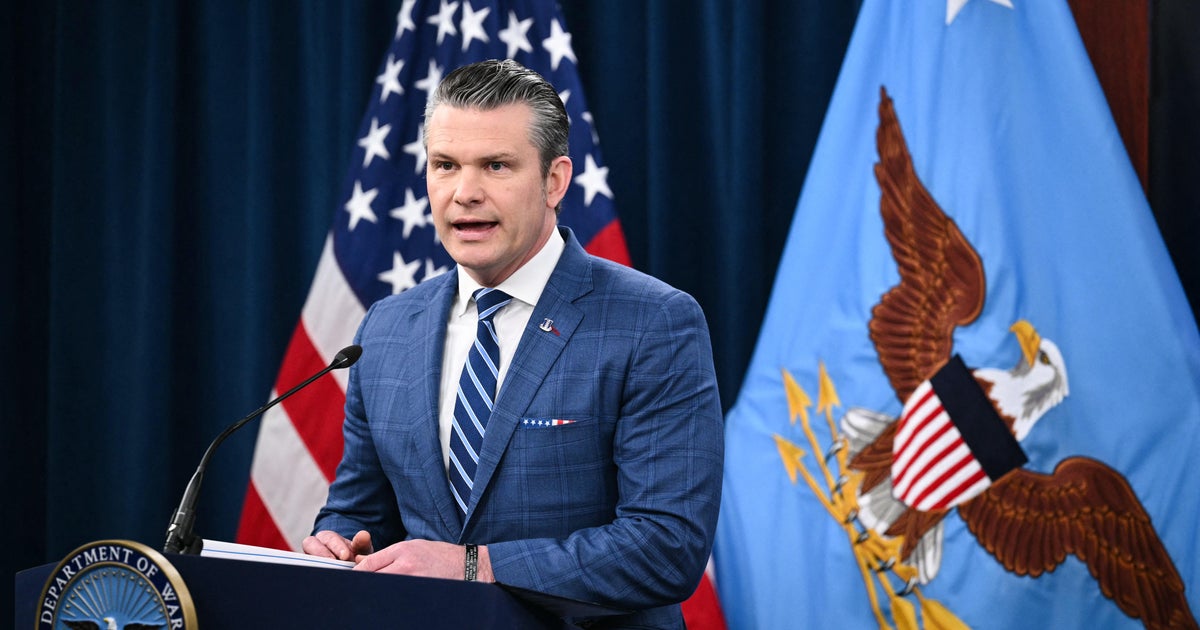
Cover image from cbsnews.com, which was analyzed for this article
A federal judge ruled the Pentagon violated a court order by restricting reporters' access, ordering restoration amid criticism of information control during the Iran conflict. The decision comes as Trump and Defense Secretary Hegseth face scrutiny over war transparency. Pentagon officials must comply to ensure media coverage of operations.
PoliticalOS
Friday, April 10, 2026 — Politics
The single most important reality is that independent access to the Pentagon's inner workings has been partially restored by court order precisely because the United States remains engaged in a high-stakes conflict with Iran whose outcomes are still contested. The Pentagon maintains that tighter rules prevent leaks that endanger operations; the judge ruled those rules went too far in conditioning constitutional rights on compliance. Until appeals conclude, the information Americans receive about military progress, ceasefire fragility and strategic risks will continue to reflect this unresolved tension between security and transparency.
What outlets missed
Most outlets underplayed the specific leaks of classified operational details during early Iran conflict phases that prompted the May 2025 memo, framing the rules instead as pure narrative control. They also omitted that One America News Network signed the agreement and retained full access, undercutting a purely partisan interpretation and showing the policy created a selective rather than total barrier. Few noted that Judge Friedman upheld certain escort requirements for sensitive areas, meaning the ruling was not a blanket rejection of security measures. Coverage largely ignored the shifted composition of the Pentagon press corps, now dominated by compliant conservative outlets, and provided scant detail on the fragile state of the Iran ceasefire, including disputes over Strait of Hormuz tanker traffic and uranium concerns that make transparent reporting especially urgent.
Judge Orders Pentagon to Restore Reporter Access Amid Iran War Coverage
A federal judge ruled Thursday that the Pentagon remains in violation of a court order to restore access for credentialed journalists, rejecting the Defense Department's revised restrictions as an unconstitutional attempt to limit routine reporting during the Trump administration's military operations against Iran.
U.S. District Judge Paul Friedman sided with The New York Times for the second time in a month, concluding that Secretary of Defense Pete Hegseth's team had not complied with his March 20 decision striking down a 2025 Pentagon policy on press credentials. That policy required journalists to acknowledge they could lose access for gathering information outside official channels, which many outlets viewed as equating basic questioning with espionage. Most reporters declined to sign and surrendered their credentials rather than operate under what they called prior restraint.
Friedman had ordered the reinstatement of seven New York Times reporters and made clear the ruling applied to all credentialed journalists at the Pentagon, the headquarters for U.S. military planning. Instead of fully complying, officials introduced an interim policy that moved press workspaces outside the building and required constant escorts for any movement inside. The judge described this as little more than the original unlawful restrictions dressed up as reform.
"The department simply cannot reinstate an unlawful policy under the guise of taking 'new' action and expect the court to look the other way," Friedman wrote in a 20-page opinion. He found the Pentagon continued to block "the routine, lawful journalistic activity of asking questions," which he said violated both his prior order and the First Amendment.
The ruling lands in the middle of heightened tensions over coverage of the Iran conflict. President Trump and Hegseth have repeatedly criticized what they describe as defeatist and selectively negative reporting that undercuts troop morale and portrays necessary strikes against Iranian targets as reckless. In the administration's view, the flow of information about ongoing operations requires careful management to avoid alerting adversaries or compromising tactics that have degraded Iran's military capacity.
Pentagon spokesman Sean Parnell pushed back sharply, saying the department "has at all times complied with the Court's Order" by reinstating credentials and revising its guidance to meet the judge's stated concerns. "The Department disagrees with the Court's ruling and intends to appeal," Parnell said. He emphasized that officials remain committed to press access while meeting their legal duty to protect the security of the Pentagon reservation, where sensitive planning for the Iran campaign continues daily.
The case, formally New York Times v. Department of Defense, began last year after the Pentagon tightened rules for holders of Pentagon Facility Access Credentials. Officials argued the changes were needed to prevent leaks of classified details at a time when the military was preparing and then executing operations against a regime that has long threatened American forces and allies. The New York Times contended the policy chilled legitimate newsgathering and gave the government unchecked power to punish reporters for doing their jobs.
Friedman appeared to accept the Times' argument that the true goal was narrative control. In language that went beyond the narrow question of building access, he described the dispute as "the attempt by the Secretary of Defense to dictate the information received by the American people, to control the message so that the public hears and sees only what the Secretary and the Trump Administration want."
Legal observers note the decision underscores perennial friction between wartime governments and the press. The Pentagon has long maintained that not every conversation in its hallways constitutes protected journalism if it risks exposing operational plans. Supporters of the administration's approach argue that major outlets, led by the Times, have shown consistent skepticism toward conservative-led military efforts, framing defensive actions as escalatory while downplaying threats from Tehran.
Yet the judge's order requires access "commensurate" with what the Times enjoyed before the policy, potentially forcing the Pentagon to allow unescorted movement and informal interviews once again. How officials implement this while guarding against disclosure of troop movements or targeting data remains to be seen. The department has already signaled it will seek a stay pending appeal, suggesting the practical effect of Thursday's ruling could be delayed.
This is not the first time courts have intervened in Pentagon press policies, but the current friction carries added weight because it involves active combat. Hegseth, a combat veteran and former Fox News host tapped to lead the department, has made clear he believes large segments of the national press view successful military outcomes under Trump as politically unwelcome. The administration points to strikes that have crippled Iranian proxy networks and nuclear infrastructure as evidence of progress, even as some reporting focuses on casualties, costs, and diplomatic fallout.
For its part, the Times and supporting news organizations insist independent access is essential to prevent the government from presenting an unchallenged version of events. Their lawyers argued that escorts and external office space effectively prevent the kind of day-to-day contact with mid-level officers and civilians that has traditionally informed accurate coverage.
Friedman's opinion left little ambiguity about his view of the Pentagon's good faith. He warned that continued defiance would undermine constitutional protections at a moment when public understanding of the Iran war depends on reporters' ability to gather information beyond carefully scripted briefings.
The Pentagon's appeal will likely argue that national security imperatives during armed conflict justify reasonable time, place, and manner restrictions on access. How higher courts balance those claims against press freedoms could shape reporter-government relations for years. In the meantime, the practical reality at the Pentagon is one of continued legal wrangling at a time when the military's focus should be on executing the mission against Iran.
As both sides prepare their next moves, the ruling serves as a reminder that even in an era of heightened threats, institutional disputes over information control persist. The Trump administration has prioritized decisive action to deter Iranian aggression. Whether courts will allow it sufficient latitude to manage the accompanying flow of information will be tested in the weeks ahead.
You just read Conservative's take. Want to read what actually happened?