
Millions Bet on War Outcomes as Prediction Markets Face Ethics Scrutiny
Cover image from theguardian.com, which was analyzed for this article
Gamblers bet millions on Polymarket for Iran war outcomes, called abhorrent by critics. Lawmakers and staffers wager on markets without disclosure requirements. The trend raises ethical concerns amid conflicts.
PoliticalOS
Saturday, April 11, 2026 — Business
Prediction markets now move hundreds of millions on war and political outcomes, offering faster signals than polls in some cases yet operating with thin oversight for public officials and resolution rules vulnerable to influence. The central unresolved issue is whether the profit motive sharpens accuracy or incentivizes distortion of events and information. Readers should weigh the platforms' documented forecasting successes against legitimate risks of manipulation and ethical concerns over monetizing conflict.
What outlets missed
Both outlets underplayed the documented performance edge of prediction markets: Polymarket's accurate 2024 election forecast outperformed many polls, and a Harvard study from 2024-2026 identified $143 million in profits by informed traders, indicating meaningful information aggregation rather than pure speculation. Coverage also gave short shrift to the full legislative picture, with at least ten bills introduced in Congress addressing prediction markets, including CFTC regulatory reviews and a House companion to the Young-Slotkin measure with 30 co-sponsors. Finally, neither fully explored how financial institutions are already integrating this data into formal analysis, nor the counter-risk that overly restrictive rules could push activity into unregulated offshore venues where transparency is even lower.
Washington Insiders Cash In on Carnage as Prediction Markets Bet on American Wars
While Ukrainian families huddle in basements under relentless Russian shelling, a parallel economy is thriving thousands of miles away. Anonymous traders on the prediction platform Polymarket have wagered more than half a million dollars on whether Moscow will capture the embattled city of Kostyantynivka before the end of the year. The bet does not hinge on battlefield reality or human cost. It settles when a Washington think tank draws a line on a map.
The Institute for the Study of War produces daily updates that shape television coverage and congressional talking points. Bettors in private Discord servers dismiss those maps as childish scribbles when they do not suit their financial interests. One frustrated gambler called the work "a disjointed, incoherent mess." These are not casual observers. They are participants in a growing industry that treats war like a horse race, complete with sophisticated research and cold calculations about human lives.
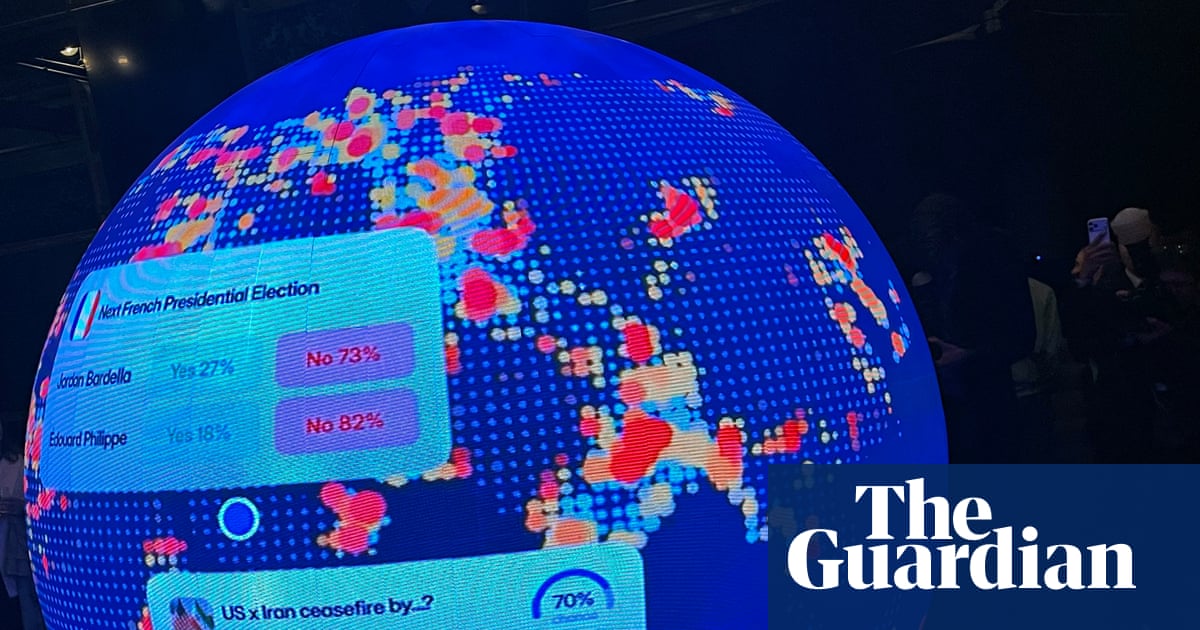
The sums involved are staggering. Two hundred eighty million dollars were at play on the now-resolved question of a United States-Iran ceasefire. Another seven and a half million sits on whether America will invade Iran outright. In the same chat rooms where these bets are debated, participants casually discuss scenarios that include World War Three. One user with money riding on strikes against Iranian oil terminals wrote that "shit can go really wrong." Another responded that American control of Iran's uranium would make the ensuing "peacefulness" worthwhile. The language is clinical. The stakes are not.
This phenomenon exposes something deeply rotten in how elites approach foreign policy. War has always had profiteers. Defense contractors build the weapons. Think tanks provide the intellectual cover. Now a new layer has been added: digital speculators who bet on outcomes with the same detachment that Wall Street applies to soybean futures. The suffering of Ukrainian conscripts or Iranian civilians registers only insofar as it moves the probability needle. When the Institute for the Study of War's maps become contested territory, it reveals how even the propaganda apparatus is now subordinated to market forces.
The situation grows more troubling when Congress enters the picture. Lawmakers and their staffers are not currently required to disclose bets placed on these prediction markets. Government ethics rules that demand transparency for stock trades somehow do not apply here. This creates an obvious invitation for insider trading on a grand scale. A senator briefed on classified Iran scenarios could quietly position themselves on Polymarket before the public learns anything. The same staffer who helps draft aid packages for Ukraine could bet on specific territorial outcomes that those packages will influence.
The potential for abuse should alarm anyone who remembers how official narratives about foreign conflicts have shifted over the years. We were told certain wars were necessary, limited, and morally clear. Markets like Polymarket strip away the rhetoric and reveal the raw probability assessments of people with money at risk. When those same people include individuals with access to intelligence briefings, the entire enterprise begins to resemble a rigged casino where the house is Washington itself.
Senators Todd Young and Elissa Slotkin recently introduced legislation that would close this disclosure loophole. Their bill would amend ethics rules to treat prediction market bets like other financial transactions. On paper this sounds reasonable. Yet it arrives years after these platforms exploded in popularity and after hundreds of millions have already flowed through them. The timing raises familiar questions about whether Washington is serious about reform or simply creating the appearance of oversight while the games continue.
The Polymarket traders represent a logical endpoint of decades of policy that treats foreign conflicts as abstract strategic puzzles rather than human catastrophes. For years the foreign policy establishment has insisted that endless engagement abroad makes America safer. The prediction markets suggest a different motivation. When hundreds of millions swing on whether the United States bombs another country, it becomes clear that war has become just another asset class for sophisticated players.
Ordinary Americans watching their tax dollars fund these conflicts might reasonably ask who benefits. The defense industry certainly does. So do the think tanks that produce the maps and analysis that guide policy. Now we can add the growing class of prediction market participants who view drone strikes and territorial advances as opportunities rather than tragedies. Their Discord conversations read like depraved fantasy football drafts, except the players are real people dying in real time.
The Guardian obtained access to these private groups and found a consistent pattern. Bettors display remarkable emotional distance from the violence they wager upon. They parse casualty reports and satellite imagery with the precision of day traders studying earnings calls. When Ukrainian troops hold a position at great cost, it is not a story of courage but a data point that might invalidate their position on whether Russia reaches a certain train station by December.
This is not healthy discourse about foreign policy. It is the financialization of tragedy. Prediction markets may provide useful information about collective wisdom on future events. When those events involve American military power and the destruction of foreign cities, however, the spectacle becomes grotesque. The fact that our own representatives might be participating without any requirement to tell their constituents only compounds the outrage.
As tensions with Iran fluctuate and the Ukraine conflict grinds into another year of attrition, these markets will only grow larger. The question is whether anyone in positions of authority will address the deeper problem. Betting on war is not a sign of a serious republic. It is the behavior of a ruling class that has lost all sense of restraint and proportion. The body counts become data. The rubble becomes research. And the profits flow to those positioned to exploit both.
Americans have watched for years as their leaders pursue policies that seem disconnected from public opinion and national interest. The rise of massive prediction markets on foreign conflicts offers a clarifying glimpse into why. When war becomes a betting opportunity for insiders, the incentive to prolong it rather than resolve it becomes obvious. The only surprise is that it took this long for the gambling tables to appear in plain sight.
You just read America First's take. Want to read what actually happened?