
Millions Bet on War Outcomes as Prediction Markets Face Ethics Scrutiny
Cover image from theguardian.com, which was analyzed for this article
Gamblers bet millions on Polymarket for Iran war outcomes, called abhorrent by critics. Lawmakers and staffers wager on markets without disclosure requirements. The trend raises ethical concerns amid conflicts.
PoliticalOS
Saturday, April 11, 2026 — Business
Prediction markets now move hundreds of millions on war and political outcomes, offering faster signals than polls in some cases yet operating with thin oversight for public officials and resolution rules vulnerable to influence. The central unresolved issue is whether the profit motive sharpens accuracy or incentivizes distortion of events and information. Readers should weigh the platforms' documented forecasting successes against legitimate risks of manipulation and ethical concerns over monetizing conflict.
What outlets missed
Both outlets underplayed the documented performance edge of prediction markets: Polymarket's accurate 2024 election forecast outperformed many polls, and a Harvard study from 2024-2026 identified $143 million in profits by informed traders, indicating meaningful information aggregation rather than pure speculation. Coverage also gave short shrift to the full legislative picture, with at least ten bills introduced in Congress addressing prediction markets, including CFTC regulatory reviews and a House companion to the Young-Slotkin measure with 30 co-sponsors. Finally, neither fully explored how financial institutions are already integrating this data into formal analysis, nor the counter-risk that overly restrictive rules could push activity into unregulated offshore venues where transparency is even lower.
Prediction Markets Turn War Into a High Stakes Game as Lawmakers Resist New Scrutiny
The war in Ukraine has ground on for more than three years, but on online prediction platforms it has become something else entirely: an asset class. More than $500,000 is now riding on whether Russian forces will capture the eastern Ukrainian city of Kostyantynivka before the end of 2026. Settlement will not hinge on battlefield footage or official government statements. It will be decided by a map published by the Institute for the Study of War, a Washington think tank whose daily updates have become de facto scoreboards for thousands of anonymous bettors.
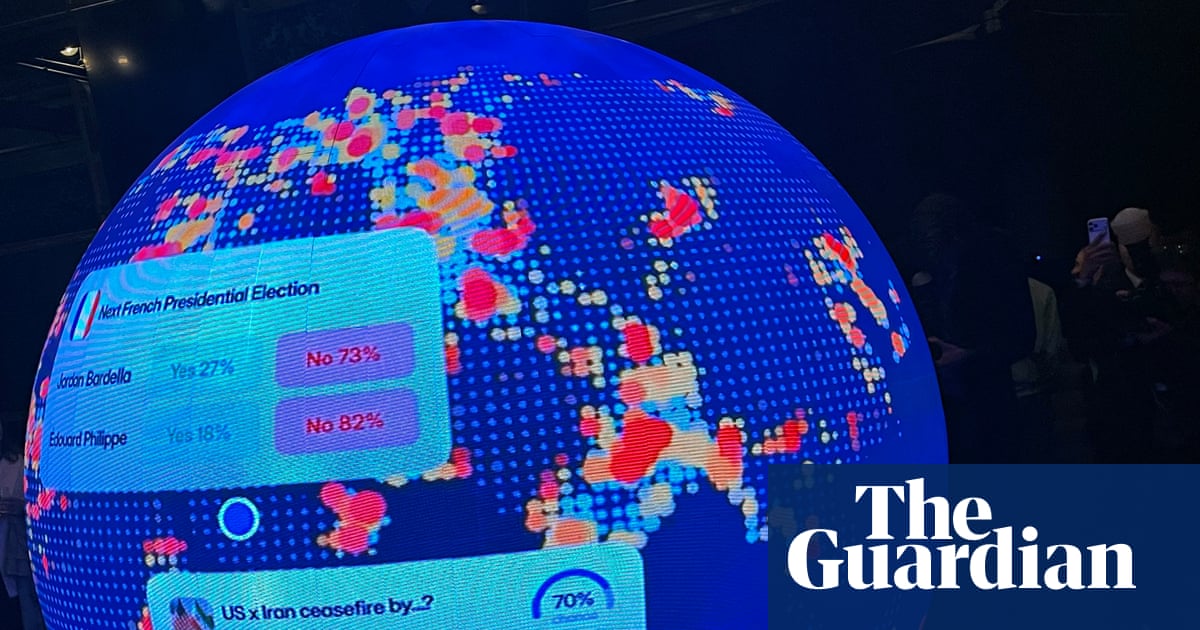
On Discord servers dedicated to these wagers, users dissect those maps with the intensity of day traders reviewing earnings reports. One recent complaint called the institute’s rendering of Kostyantynivka “a disjointed, incoherent mess, like the painting of a five-year-old.” The frustration is practical. Bettors need clear, verifiable criteria because large sums of real money are at stake. Similar logic applies to the Middle East. In recent weeks, $280 million was wagered on the now-implemented U.S.-Iran ceasefire, while another $7.5 million remains active on the question of whether American forces will launch a full invasion of Iran.
The platform at the center of this activity is Polymarket, a blockchain-based prediction market that has exploded in popularity during an era of overlapping global crises. What began as a niche tool for forecasting election results has matured into a sophisticated arena for betting on armed conflict, diplomatic breakthroughs, and potential escalation toward wider war. Participants range from professional traders to hobbyists who speak casually about “WW3” in the same breath as they debate whether the United States will seize Iranian uranium stockpiles.
This commodification of human suffering has drawn sharp criticism. The prospect of individuals profiting from accurate predictions about death and displacement strikes many as morally grotesque. Yet the markets continue to grow, fueled by the belief that collective betting wisdom can sometimes forecast events more accurately than traditional intelligence assessments or media analysis. The same mechanisms that once predicted presidential election outcomes with notable precision are now being trained on drone strikes, front-line advances, and the likelihood of oil terminal attacks.
The ethical discomfort deepens when the participants potentially include people with access to non-public information. A new report highlights that members of Congress and their staff are not currently required to disclose bets placed on prediction markets, even as concerns mount about possible insider trading. Government ethics rules that mandate reporting of stock trades do not yet cover these platforms, creating what some view as a dangerous loophole. Lawmakers routinely receive classified briefings on Ukraine aid packages, Iran negotiations, and military contingencies. If even a small number placed wagers on related outcomes, the integrity of both the markets and democratic institutions could be compromised.
Sens. Todd Young, a Republican from Indiana, and Elissa Slotkin, a Democrat from Michigan, have introduced legislation to close that gap. Their bill would amend existing ethics rules to require disclosure of prediction market trades, treating them with the same transparency demanded of stock portfolios. The proposal has bipartisan sponsorship, reflecting a rare area of agreement that the current system is unsustainable. Yet the measure also faces pushback. Critics worry that broad disclosure requirements could deter talented staffers from public service or expose lawmakers to harassment over personal financial decisions that have no direct policy link.
The tension reflects larger questions about how society should treat information markets during times of crisis. Prediction platforms can serve as valuable aggregators of dispersed knowledge, incorporating signals from satellite imagery analysts, regional experts, and supply-chain watchers that formal institutions sometimes miss. During the early phases of the Ukraine war, certain Polymarket contracts moved in ways that anticipated Russian logistical failures before they became conventional wisdom. Similar dynamics have played out around Iranian responses to Israeli strikes.
But turning war into a betting parlor carries risks that extend beyond insider trading. It can incentivize the spread of unverified rumors that move markets. It may desensitize participants to the human cost of the events they wager upon. The Discord conversations captured in recent reporting reveal a jarring detachment, with users weighing the odds of “peacefulness materializing” after American military action as if discussing a corporate merger.
Polymarket itself has attempted to navigate these controversies by emphasizing that its contracts are settled according to objective, publicly available criteria rather than subjective judgment. The reliance on the Institute for the Study of War maps for Ukrainian territorial questions illustrates both the strength and weakness of this approach. The think tank is respected for its detailed tracking, yet its maps are interpretive documents produced by analysts, not neutral satellite data. When gamblers argue over whether a particular rail station falls under Russian control, they are debating cartography as much as geography.
This phenomenon arrives at a moment when trust in traditional arbiters of fact is already strained. If prediction markets become primary mechanisms through which people understand and engage with global conflict, the incentives shift. Accuracy becomes financially rewarded. Nuance can become expensive. The human stakes risk being reduced to line items on a ledger.
The Young-Slotkin legislation represents one modest attempt to impose guardrails without dismantling the underlying technology. Whether it passes, and whether similar rules extend to other areas of government, will help determine if these markets remain a specialized financial tool or evolve into something closer to a parallel foreign policy apparatus, one where bets speak louder than briefings. For now, the gamblers keep placing their orders, the maps keep updating, and the wars continue, indifferent to how precisely their outcomes have been priced.
You just read Liberal's take. Want to read what actually happened?