
Millions Bet on War Outcomes as Prediction Markets Face Ethics Scrutiny
Cover image from theguardian.com, which was analyzed for this article
Gamblers bet millions on Polymarket for Iran war outcomes, called abhorrent by critics. Lawmakers and staffers wager on markets without disclosure requirements. The trend raises ethical concerns amid conflicts.
PoliticalOS
Saturday, April 11, 2026 — Business
Prediction markets now move hundreds of millions on war and political outcomes, offering faster signals than polls in some cases yet operating with thin oversight for public officials and resolution rules vulnerable to influence. The central unresolved issue is whether the profit motive sharpens accuracy or incentivizes distortion of events and information. Readers should weigh the platforms' documented forecasting successes against legitimate risks of manipulation and ethical concerns over monetizing conflict.
What outlets missed
Both outlets underplayed the documented performance edge of prediction markets: Polymarket's accurate 2024 election forecast outperformed many polls, and a Harvard study from 2024-2026 identified $143 million in profits by informed traders, indicating meaningful information aggregation rather than pure speculation. Coverage also gave short shrift to the full legislative picture, with at least ten bills introduced in Congress addressing prediction markets, including CFTC regulatory reviews and a House companion to the Young-Slotkin measure with 30 co-sponsors. Finally, neither fully explored how financial institutions are already integrating this data into formal analysis, nor the counter-risk that overly restrictive rules could push activity into unregulated offshore venues where transparency is even lower.
Prediction Markets Let Insiders and Speculators Gamble on Human Misery in Ukraine and Iran
As Russian forces press toward the eastern Ukrainian city of Kostyantynivka, thousands of civilians remain trapped amid relentless shelling, drone swarms, and collapsing buildings. Ukrainian troops have held the city for five months. Yet on the prediction platform Polymarket more than half a million dollars has already been wagered on whether Russian troops will seize it before the end of the year. The bet will be settled not by battlefield reality but by when the Institute for the Study of War, a Washington think-tank, publishes a map marking the city’s train station as under Russian control.
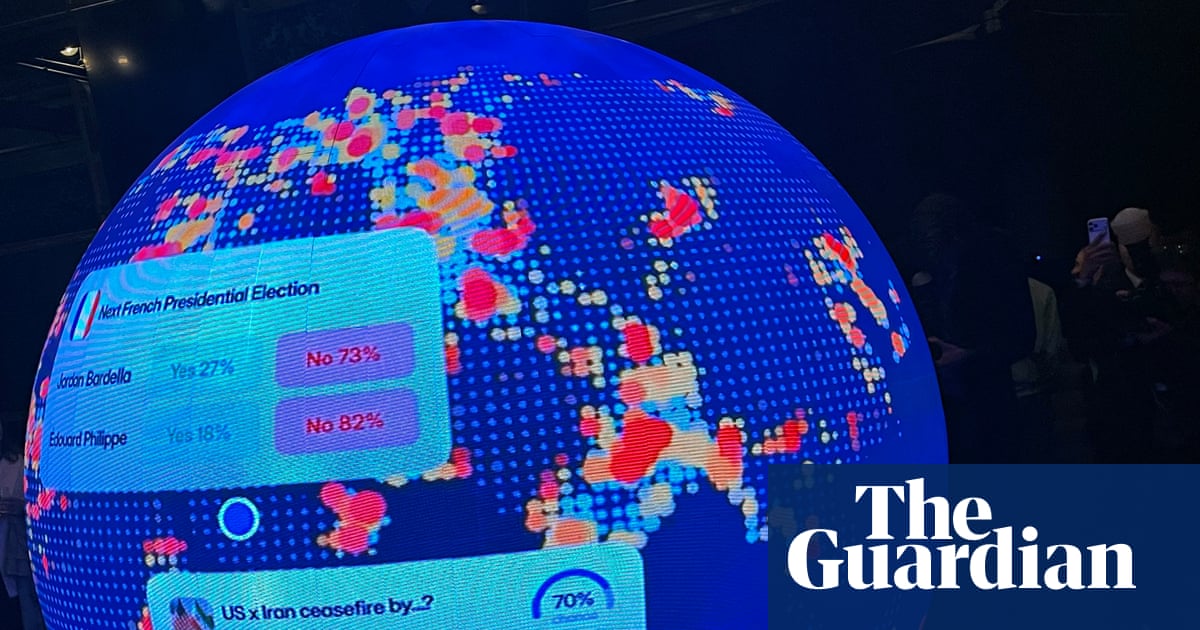
The episode captures a larger, deeply unsettling trend. An online economy has sprung up in which anonymous traders treat war as an asset class. They pore over maps, intelligence leaks, and satellite imagery in Discord servers, debating the precise conditions under which American missiles might strike Iranian oil terminals or whether a fragile ceasefire between Washington and Tehran will hold. More than 280 million dollars were bet on the recent US-Iran ceasefire. Another 7.5 million dollars sits on the question of whether the United States will launch a full invasion of Iran. The tone in these chat rooms is often chillingly detached. One participant worried that “shit can go really wrong, WW3 may happen.” Another responded that the destruction would be acceptable “as long as America gets Iran’s uranium.”
This is not fringe activity. Polymarket has become a major platform since the 2024 US election, attracting hundreds of millions in wagers on everything from political races to military outcomes. Its users include crypto traders, former intelligence analysts, and, apparently, people with access to information that could move markets. The platform insists it prohibits insider trading, yet the absence of meaningful oversight has alarmed ethicists and some lawmakers.
That alarm is heightened by the fact that members of Congress and their staff are currently under no obligation to disclose bets placed on prediction markets. Government ethics rules require disclosure of stock trades above certain thresholds, but prediction contracts fall into a gray zone. The result is a system in which officials with access to classified briefings on Ukraine aid packages or Iran nuclear talks could theoretically place bets on those very outcomes without ever having to tell the public.
Two senators, Republican Todd Young of Indiana and Democrat Elissa Slotkin of Michigan, have introduced legislation to close the loophole. Their bill would amend ethics rules to treat prediction-market wagers as reportable financial transactions. The proposal has drawn bipartisan interest from those concerned about the appearance of insider trading, but it also faces resistance. Critics argue that forcing disclosure could chill legitimate political forecasting or expose lawmakers to harassment. Others quietly note that prediction markets can sometimes prove more accurate than polls or pundits, raising the awkward question of whether Congress should be discouraged from engaging with them at all.
The deeper problem, however, is not technical. It is moral. While Ukrainian families huddle in basements in Kostyantynivka and Iranian civilians brace for potential strikes, wealthy gamblers in Discord channels treat the carnage as a puzzle to be solved for profit. They dissect think-tank maps with the fastidiousness of day traders examining balance sheets. When the Institute for the Study of War’s daily Ukraine update fails to meet their standards of clarity, they complain it resembles “the painting of a five-year-old.” The suffering of actual human beings rarely enters the conversation.
This phenomenon reflects a broader cultural shift in how elites view conflict. Decades of post-9/11 wars have already distanced the American public from the human cost borne by soldiers and civilians abroad. Prediction markets accelerate that detachment, turning geopolitics into a speculative game in which the house almost always wins and the losers are the people on the ground. The same officials who vote on weapons packages and sanctions regimes can now potentially hedge or profit from the outcomes without public scrutiny.
Polymarket’s defenders point out that the platform provides useful forecasting data and that most traders are simply expressing informed opinions with their own money. Yet the scale of the wagers on active war zones should give pause. When hundreds of millions of dollars ride on whether American forces will bomb an Iranian oil terminal, the incentive structure tilts toward escalation rather than diplomacy. Traders do not profit from peace.
The Young-Slotkin bill represents a modest first step toward accountability. Whether it passes, and whether enforcement follows, will reveal how seriously Washington takes the problem of public officials gambling on the very conflicts they help shape. In the meantime, the Discord channels continue to buzz. Another map is released, another city’s fate is priced, and the gamblers move on to the next opportunity while the rubble keeps falling. The wars may be distant, but the bets are getting richer.
You just read Progressive's take. Want to read what actually happened?