
Pope Leo XIV Condemns Iran War, Citing Catholic Peace Imperative
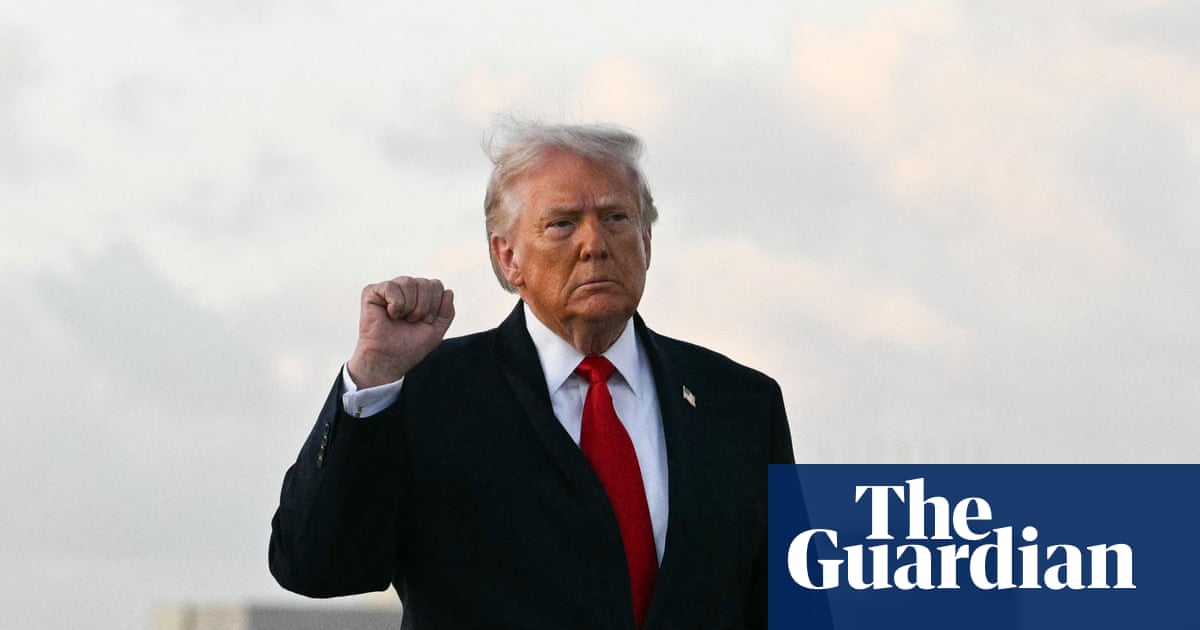
Cover image from theguardian.com, which was analyzed for this article
Pope Leo XIV issues sharp rebuke against the US-involved Iran war, urging an end to hostilities. Seen as implicit criticism of Trump administration. Coverage emphasizes the moral stance transcends politics.
PoliticalOS
Sunday, April 12, 2026 — Politics
Pope Leo XIV's intervention reiterates a consistent Catholic teaching that peace requires more than battlefield victory and that even defensive wars must meet narrow moral criteria modern weapons often violate. The brief conflict, its ceasefire and the papal critique together underscore that military success against a repressive regime does not automatically confer moral legitimacy. Readers should weigh both Iran's documented aggressions and the human and strategic costs before accepting any side's claim of clean hands.
What outlets missed
Most coverage omitted Iran's brutal suppression of nationwide protests from December 2025 to January 2026, which killed hundreds and helped trigger the collapse of nuclear talks that preceded the strikes. Outlets also underplayed the precise mechanics and fragility of the Pakistan-brokered ceasefire, including Iran's retention of significant missile capacity and the partial reopening of the Strait of Hormuz under monitored conditions. Few noted Leo XIV's status as the first U.S.-born pope adds a layer of domestic political complexity that neither the Vatican nor the White House has publicly addressed. Casualty figures remained vague across reporting; U.S. Central Command confirmed 13 American deaths while Iranian and regional sources claim more than 2,000 civilian and military losses, numbers independently verified only in fragments by the UN Human Rights Office.
Pope Leo XIV's Iran Comments Grounded in Theology Amid Stalled Diplomacy
Pope Leo XIV's recent remarks on the United States and Israeli military actions against Iran reflect a consistent application of Catholic just war doctrine rather than an intrusion into partisan politics. As the conflict pauses following direct strikes and a breakdown in high-level negotiations, the pope's statements highlight enduring moral questions about the use of force that transcend any single administration or news cycle.
The Vatican has maintained a measured but clear line on the campaign, which began with targeted operations against Iranian nuclear facilities and proxy forces. Pope Leo XIV has questioned whether the effort fully satisfies the traditional criteria for justifiable war, including whether it represents a last resort, maintains proportionality between harm inflicted and good achieved, and offers a realistic prospect of lasting success. These principles, refined over centuries by thinkers from Augustine to Aquinas, form a framework that previous popes have applied to conflicts involving both Western democracies and authoritarian regimes. Analysts at The Dispatch note that reading political motivation into the comments misreads their foundation in settled teaching. Popes from John Paul II to Francis have similarly evaluated military actions on moral grounds without regard for the ideological leanings of the combatants.
This theological assessment arrives at a delicate moment. Vice President JD Vance departed Islamabad on April 11 after several days of indirect talks with Iranian officials mediated through Pakistani channels. The discussions collapsed primarily over Tehran's insistence on continuing its nuclear program, which Vance described as the core impasse. "The bad news is that we have not reached an agreement, and I think that’s bad news for Iran much more than it’s bad news for the United States of America," he said before boarding Air Force Two. The United States had sought verifiable commitments to dismantle key enrichment capabilities and restrict ballistic missile development. Iran, backed by economic and military ties to both China and Russia, offered no meaningful concessions.
The military phase of the conflict has already produced tangible costs. Thirteen American service members have died in operations that included airstrikes and special forces actions against Iranian Revolutionary Guard targets. No formal congressional authorization preceded the initial strikes, raising procedural questions under American constitutional practice. The administration has provided limited public briefings on objectives, timelines, or metrics for success, leaving both lawmakers and citizens to parse presidential statements that swing between vows of overwhelming force and suggestions of imminent de-escalation.
President Trump's rhetorical approach has compounded the uncertainty. In an April 7 address, he warned that "a whole civilization will die tonight" if Iran continued certain activities, language that evoked existential stakes while offering few operational details. Such phrasing aligns with the president's long-established style of using maximum pressure as leverage. Yet in a shooting war involving a nuclear-threshold state, the absence of steady, clarifying communication has unsettled even supportive observers. The National Review has argued that in this instance the press's evident unease is understandable, given the body count, the proxy nature of Iran's relationship with Beijing and Moscow, and the lack of a clearly defined end state. The story, that outlet contends, is not media reaction but the president's handling of a conflict against a barbaric theocracy.
Iran's regime has spent decades building both its nuclear infrastructure and a network of militant proxies stretching from Lebanon to Yemen. Its leaders routinely threaten Israel's existence and fund attacks on American interests. These facts are not in serious dispute. Yet just war considerations demand more than identifying a genuine threat. Prudence requires weighing whether the chosen means match the ends, whether civilian harm can be minimized, and whether the post-conflict environment is likely to improve on the status quo. The pause in hostilities offers time to evaluate these questions, but the window may prove brief if Iran accelerates its weapons program in response to the strikes.
The diplomatic failure in Pakistan underscores deeper challenges. For years, Western policy toward Iran has alternated between sanctions, incentives, and occasional kinetic action. Each approach has encountered the same problem: the regime's survival depends on ideological confrontation and regional disruption. Economic pressure has at times slowed nuclear progress, but Tehran has adapted through evasion, enrichment advances, and alliances with adversarial great powers. Military strikes can destroy known facilities but risk entrenching hardliners and scattering covert programs.
Against this backdrop, the pope's intervention serves as a reminder that moral reasoning about war cannot be outsourced to security analysts alone. Catholic teaching does not prohibit all force. It insists that decisions to wage war meet objective standards rather than flow from anger, political calculation, or vague notions of sending messages. Whether the current campaign ultimately satisfies those standards remains a legitimate subject of debate among reasonable people of differing political persuasions.
Separately, the administration has signaled plans for additional clemency actions. Having issued unconditional pardons to 1,500 participants in the January 6, 2021, Capitol events early in his term, President Trump has spoken privately about extending broad protections to advisers and associates before leaving office. White House press secretary Karoline Leavitt described reports of sweeping statements on pardons as jokes but reaffirmed the constitutional scope of the power. While legally unassailable, such moves inevitably invite questions about consistency in applying the rule of law, particularly when public trust in institutions already sits at low levels.
The Iran situation ultimately turns on empirical realities rather than rhetorical framing. A nuclear-armed theocratic regime that exports terror presents a serious danger to international order. Responses to that danger carry their own risks, including escalation, unintended civilian consequences, and the erosion of domestic support when objectives remain opaque. Pope Leo XIV's application of just war principles does not resolve these strategic dilemmas, but it does insist that they be examined through the lens of moral tradition rather than transient political convenience. As the pause holds for now, both policymakers in Washington and moral authorities in Rome appear to recognize that prudent statecraft and ethical reasoning should not be treated as opposing forces.
You just read Conservative's take. Want to read what actually happened?
More in Politics

Federal Agents Search Omar Home in Ongoing Immigration Probe
Homeland Security agents searched the Minnesota Democrat's DC residence in a criminal probe, prompting accusations of political intimidation from Omar and Democratic leaders. Coverage spans left-leaning outlets like NPR, BBC, and The Guardian alongside right-leaning criticism from The Federalist and Daily Wire.

Trump Diesel Import Plan Draws Pushback Over Russia Ties
The weekend agreement drew bipartisan congressional pushback and criticism from Ukraine's Zelenskyy, with analysts downplaying US fuel price impacts. Right-leaning outlets like National Review, Dispatch, and Washington Examiner questioned its legality and effectiveness.

Independents Test Voter Appetite for Middle Ground in 2026 Midterms
Nearly 200 independents are running in competitive races as voters weigh ballot measures on housing costs in states like Massachusetts. Left-leaning coverage from NYT, NPR, and Guardian highlights turnout and key races while right outlets focus on GOP strategy.
Trump Rallies in Alaska, Ohio to Bolster GOP Senate Candidates
The president rallied in Wasilla for Sen. Dan Sullivan and faced empty seats at an Ohio event amid midterm concerns. Outlets across the spectrum covered the trips as signals of GOP vulnerability weeks before Election Day.
The Compass
You just read five takes on one story.
What's your take? Find your political shape in a few minutes.
Take the test