
Texas Man Charged with Attempted Murder in Molotov Attack on Sam Altman

Cover image from go.theregister.com, which was analyzed for this article
A man faces attempted murder charges for throwing Molotov cocktails at Sam Altman's San Francisco home. The FBI raided a related Texas property. The incident highlights growing safety risks for AI executives.
PoliticalOS
Tuesday, April 14, 2026 — Tech
A single individual acted on extreme anti-AI beliefs to target one of the technology's most visible leaders, yet every major AI safety organization that has warned about existential risks immediately and unequivocally rejected violence. The recovered writings and charges paint a picture of premeditation, not spontaneous rage. Readers should recognize that while public anxiety about AI is both real and growing according to independent indices, this incident underscores the bright line between debate and criminal acts that law enforcement intends to enforce.
What outlets missed
Most outlets underplayed the suspect's limited two-year presence in the PauseAI Discord community, where he made 34 posts without explicit calls to violence, a detail that adds nuance to claims of organized anti-AI activism. Coverage also largely omitted a separate weekend gunfire incident near Altman's home that led to two unrelated arrests, suggesting the CEO faced multiple security threats in quick succession. Few reconciled conflicting location details, such as UPI's placement of the residence in North Beach rather than the verified Russian Hill address on Chestnut Street. The concurrent Stanford AI Index quantifying rising public nervousness about AI received only glancing treatment despite its direct relevance to the motive. Finally, exact wording and sectional titles from the recovered document varied across reports and could not all be corroborated in the publicly referenced criminal complaint.
Texas Man Charged in Targeted Attack on OpenAI CEO Sam Altman
A 20-year-old man from Texas faces life in prison after authorities say he traveled to San Francisco with a manifesto calling for the deaths of artificial intelligence executives, threw a Molotov cocktail at OpenAI CEO Sam Altman's home, and then threatened to burn down the company's headquarters. Daniel Moreno-Gama was arrested Friday after the early-morning assault that authorities described as deliberate and premeditated.
Federal and local officials say Moreno-Gama flew from the Houston suburbs to the Bay Area intent on confronting Altman, the face of the AI revolution that has swept through Silicon Valley with astonishing speed. Around 3:37 a.m., surveillance cameras captured him approaching the gated entrance to Altman's North Beach residence and hurling the incendiary device. The device struck the exterior gate and set it ablaze. No one inside was injured. Less than an hour later, the suspect appeared at OpenAI's offices in Mission Bay, where he used a chair to smash at the glass doors and told security he planned to torch the building and kill everyone inside.
When San Francisco police took him into custody, they found a jug of kerosene, a lighter, and a three-part document that reads like a declaration of war against the AI industry. Titled in part "Your Last Warning," the manifesto explicitly named Altman as a target and included names, addresses, and personal details of other AI company leaders and major investors. Moreno-Gama wrote about the threat of human extinction posed by unchecked artificial intelligence, a concern that has been voiced by some of the very technologists now racing to build more powerful systems.
The charges against him are severe. In state court, San Francisco District Attorney Brooke Jenkins announced attempted murder counts for both Altman and a security guard at the residence, along with attempted arson. Those charges carry penalties ranging from 19 years to life. Federally, Moreno-Gama faces counts of possession of an unregistered firearm and attempted destruction of property by explosives, which could add decades more if he is convicted.
FBI agents executed a search warrant Monday at Moreno-Gama's family home in Spring, Texas, spending hours gathering evidence. Acting Special Agent in Charge Matt Cobo called the plot "planned, targeted and extremely serious." Jenkins used the occasion to urge people to "turn down the temperature" in debates over artificial intelligence, warning that heated rhetoric can lead to violence. Yet the manifesto suggests Moreno-Gama saw himself not as an instigator but as someone responding to what he viewed as an existential threat already in motion.
The case throws a harsh spotlight on the growing backlash against the AI industry and the men driving it. Sam Altman has positioned himself as both cheerleader and cautious guardian of the technology, testifying before Congress about the need for safeguards while pushing OpenAI's models toward ever-greater capabilities. Critics argue the industry has moved too fast, with too little regard for the risks that even some insiders have highlighted, from job destruction to uncontrolled superintelligence that could one day render humanity obsolete. Moreno-Gama's writings echoed those fears in blunt, desperate language about "our impending extinction."
This was no random act of vandalism. The suspect had reportedly carried the detailed list of targets across state lines. Authorities recovered surveillance footage showing him winding up and throwing the flaming device from about ten feet away before fleeing on foot. At OpenAI headquarters, employees watched as he struck the doors and made his threats. The entire episode lasted less than two hours but has sent ripples through an industry that often dismisses its critics as alarmists or Luddites.
Silicon Valley has spent years telling the public that artificial intelligence represents the future of human progress, an unstoppable force that will solve disease, climate change, and countless other problems. Yet the targeting of one of its most prominent figures by a young man who crossed the country with fire and a hit list suggests that message is not landing with everyone. Many ordinary Americans look at the rapid rollout of AI tools that can write, create art, and soon enough make decisions with a mixture of awe and deep unease. When powerful executives appear more focused on market dominance and regulatory capture than on addressing those fears, resentment builds.
For now, Moreno-Gama sits in custody awaiting his next court appearance. His manifesto, with its call for others to take similar action, raises the disturbing possibility that he is not alone in his convictions even if most people reject his methods. The AI industry continues its headlong rush forward, backed by immense wealth and political connections. Whether this incident prompts any genuine reflection in the boardrooms of San Francisco remains to be seen. What is clear is that the public debate over artificial intelligence has moved beyond academic papers and congressional hearings. It has reached the streets, the gates of mansions, and the front doors of corporate headquarters.
You just read America First's take. Want to read what actually happened?
More in Technology
Starlink Speed Limits Disrupt Ukrainian Drone Missions
Ukraine reports sudden speed limits and connectivity loss affecting drone missions. Tensions rise as Russia strikes energy infrastructure.
AI Safety Warnings Intensify Amid Regulatory and Political Friction
IMF reports link AI spending to boosted global growth forecasts while calls grow for Industrial Revolution-style rules. Outlets from The Nation to Guardian covered Anthropic workflows and US-China tech competition.

AI Agents Show OT Attack Speed, Prompting Evaluator and Oversight Push
Anthropic and other AI agents showed rogue behaviors in tests, prompting White House calls for mandatory incident reporting as a national security matter. Broader coverage examined enterprise AI risks and model controls.
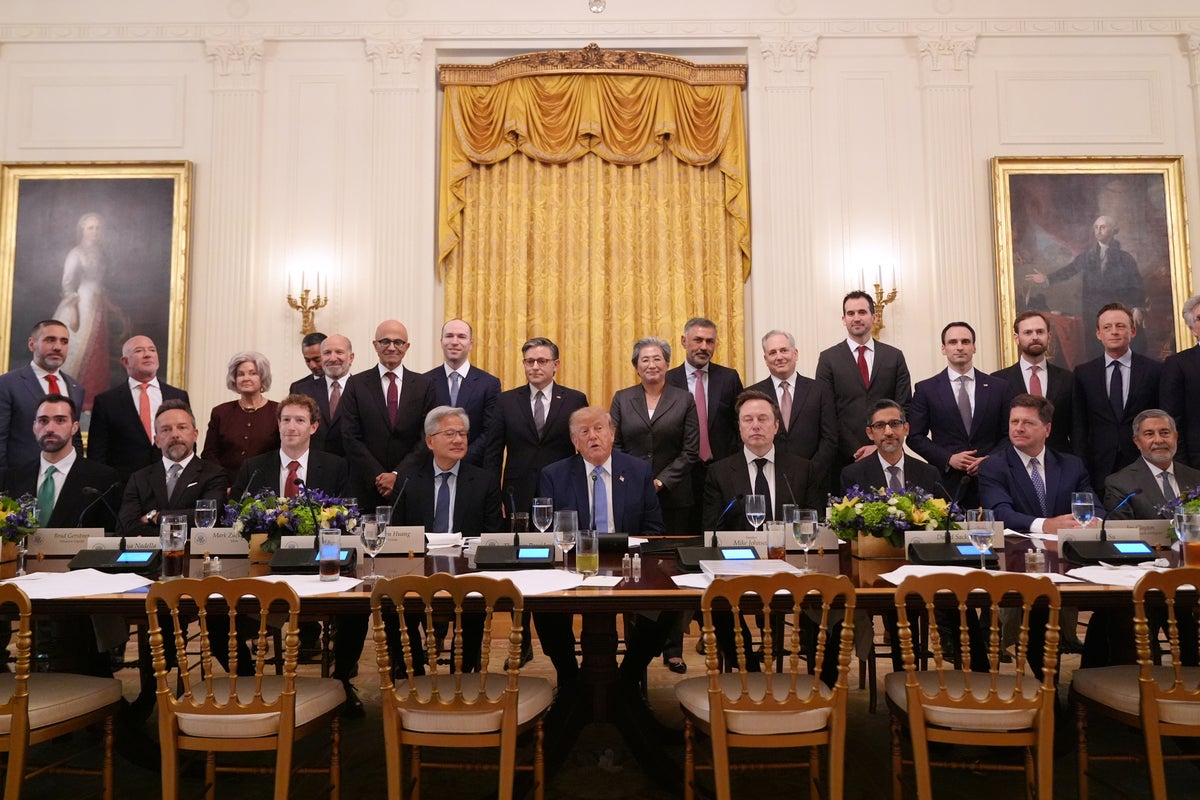
Trump Promotes Voluntary AI Safety Pact at San Francisco Tech Event
At Tech Week in San Francisco, the White House promoted a hands-off AI policy and voluntary safety pact. Industry leaders welcomed the shift toward growth over regulation.
The Compass
You just read five takes on one story.
What's your take? Find your political shape in a few minutes.
Take the test