
Falcon 9 Stage to Strike Moon at 2:35 a.m. ET Wednesday
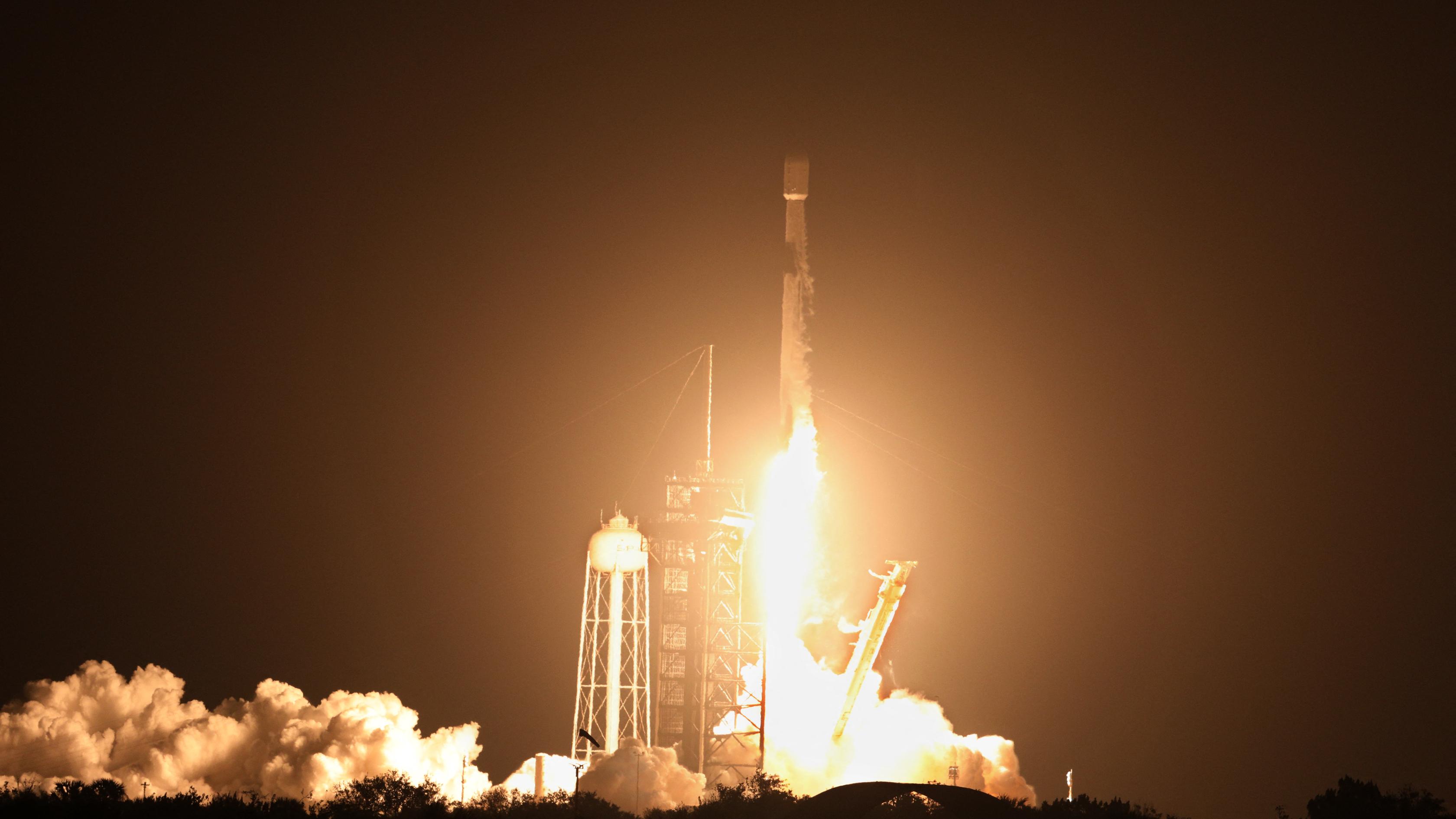
Cover image from time.com, which was analyzed for this article
A SpaceX rocket stage is set for a high-speed impact with the lunar surface, drawing analysis on the implications for space debris and future missions.
PoliticalOS
Tuesday, August 4, 2026 — Tech
The uncontrolled reentry of a 45-ton Falcon 9 stage demonstrates that even planned deep-space hardware can become persistent lunar debris. Observers will gain new data on impact physics and regolith behavior, yet the episode underscores the absence of routine end-of-life disposal for lunar-transfer stages.
What outlets missed
Neither outlet supplied an independent mass or velocity verification beyond the 45-ton and 2.43 km/s figures already circulating in public orbital analyses. Long-term implications for crewed landing safety zones under NASA’s Artemis program and China’s parallel timeline were not quantified. The precise selenographic coordinates of the impact site remain unstated, limiting readers’ ability to assess visibility geometry from Earth. No comparison was drawn to the 2022 Chinese stage impact energy or crater size for context on cumulative surface alteration.
SpaceX Upper Stage Heads for Unplanned Lunar Impact
A Falcon 9 upper stage launched by SpaceX in January 2025 is set to strike the Moon early Wednesday morning, adding one more piece of hardware to the lunar surface after a 19-month drift through space. The booster, which carried two lunar landers on a mission from Kennedy Space Center, will hit at roughly 2:35 a.m. Eastern time, according to tracking data reviewed by NASA and independent astronomers.
The launch on January 15, 2025, deployed Firefly Aerospace's Blue Ghost lander and ispace's Resilience spacecraft. Blue Ghost achieved a successful touchdown in March 2025, marking the first fully successful private lunar landing. Resilience attempted its descent in June but crashed after a sensor failure. Once the payloads separated, the Falcon 9 second stage was expected to enter a decaying Earth orbit and burn up on reentry. Instead, it remained in a trajectory that carried it toward the Moon.
NASA's Center for Near-Earth Object Studies confirmed the impact path using public orbital data. Officials stated there is no risk to Earth and that the agency will monitor the event both for training and to study the resulting dust plume. The stage travels at about 2.43 kilometers per second, fast enough to produce a visible cloud of ejected material that could rise tens of kilometers above the surface before settling.
Private companies have shouldered most of the recent progress in lunar missions. SpaceX's Falcon 9 has delivered reliable lift capacity for years, enabling commercial operators to reach the Moon without direct government funding for each flight. The current booster's path shows the limits of precise prediction once hardware leaves controlled orbits, yet it also underscores how routine access to space has become under market-driven development. Government programs historically relied on tightly managed trajectories and extensive oversight, while commercial vehicles operate with fewer constraints and faster iteration.
Astronomers expect the strike to create a noticeable plume visible through ground telescopes. The Moon's lack of atmosphere means the debris will travel farther and remain suspended longer than any comparable event on Earth. Observers have described the upcoming collision as a straightforward spectacle rather than a hazard. Past missions, from Soviet probes in 1959 onward, have left dozens of craft and stages on the surface through both planned and accidental landings.
The event arrives as multiple private firms continue testing lunar delivery systems. Firefly's success with Blue Ghost demonstrated that smaller companies can complete end-to-end missions when launch costs drop and hardware reuse improves. SpaceX's contribution to those lower costs stems from repeated flights and incremental engineering rather than large-scale public appropriations. The booster now approaching the Moon simply followed the physics of its release orbit after fulfilling its primary task.
Tracking continues through public catalogs and NASA assets. Scientists plan to examine the fresh crater and dust distribution for insights into surface composition once the plume settles. For the public, the passage represents another instance of commercial space activity producing observable results without requiring new regulatory frameworks or taxpayer-funded recovery efforts.
You just read Conservative's take. Want to read what actually happened?
More in Technology

Democratic Wins Heighten Scrutiny of Data Center Expansion
Newly empowered Democrats signaled opposition to rapid AI data center growth on public lands and elsewhere. This contributed to market pressure on chipmakers and infrastructure firms.
Nvidia Faces Added Scrutiny on AI Shipments After Midterms
Nvidia faces increased monitoring of accelerator shipments amid smuggling concerns to China. Broader regulatory uncertainty from the election weighed on the sector.

Google Ties Search Access to AI Opt-In for K-12 Schools
Google will turn its AI tools off by default for K-12 students starting in 2027 and will restrict Search access for schools that fully block AI. The policy reflects deeper integration of AI into core products. Right-leaning New York Post and tech coverage noted the changes.

FBI Ties $6.3 Billion Binance Hack to North Korea; Pyongyang Fires Missiles
The FBI linked the theft of over $6 billion in cryptocurrency from Binance to North Korea's Lazarus Group, citing social engineering. Laundering the funds is expected to take months. Engadget, New York Post, and other outlets reported on the investigation.
The Compass
You just read five takes on one story.
What's your take? Find your political shape in a few minutes.
Take the test