
Falcon 9 Stage to Strike Moon at 2:35 a.m. ET Wednesday
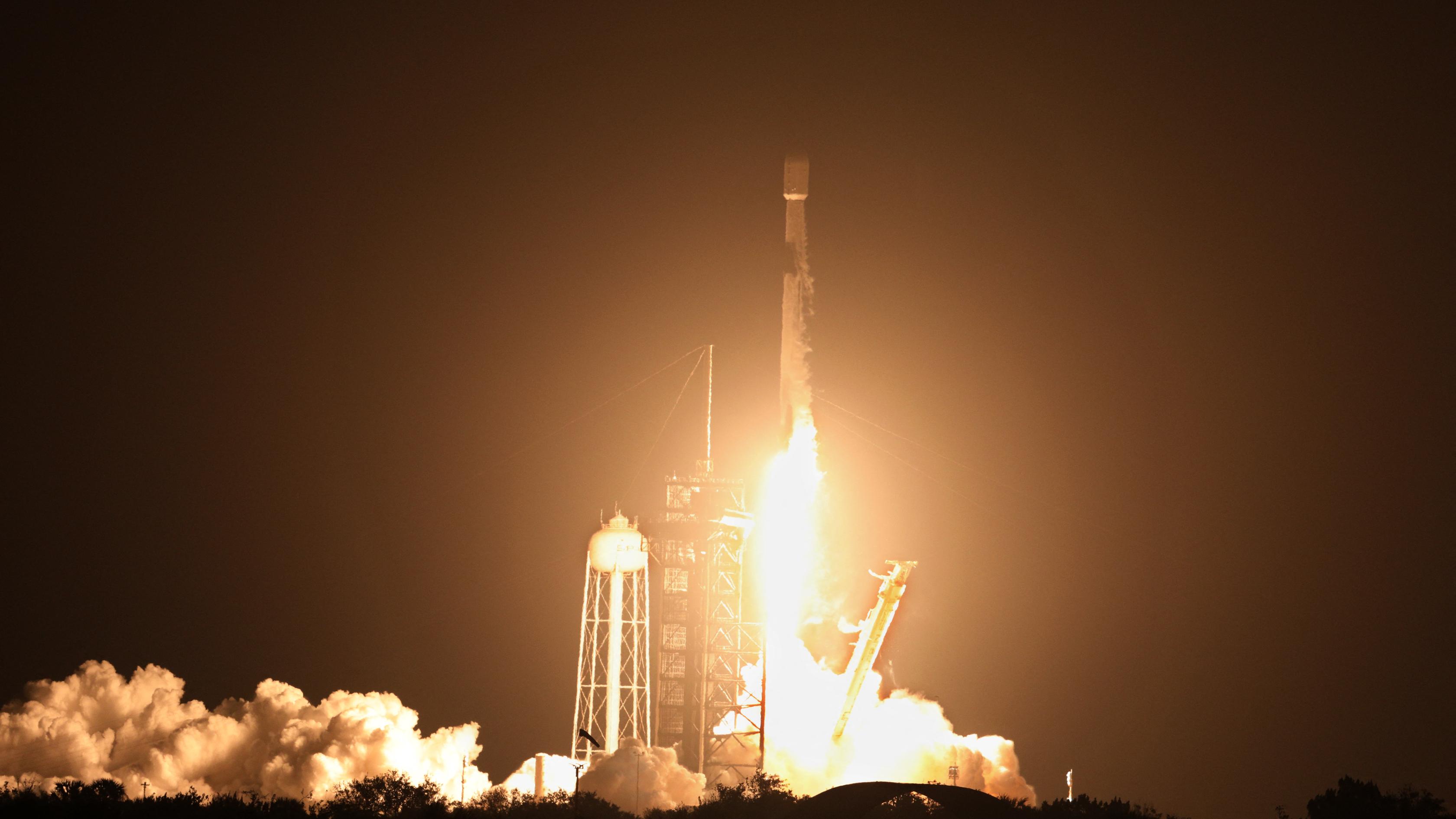
Cover image from time.com, which was analyzed for this article
A SpaceX rocket stage is set for a high-speed impact with the lunar surface, drawing analysis on the implications for space debris and future missions.
PoliticalOS
Tuesday, August 4, 2026 — Tech
The uncontrolled reentry of a 45-ton Falcon 9 stage demonstrates that even planned deep-space hardware can become persistent lunar debris. Observers will gain new data on impact physics and regolith behavior, yet the episode underscores the absence of routine end-of-life disposal for lunar-transfer stages.
What outlets missed
Neither outlet supplied an independent mass or velocity verification beyond the 45-ton and 2.43 km/s figures already circulating in public orbital analyses. Long-term implications for crewed landing safety zones under NASA’s Artemis program and China’s parallel timeline were not quantified. The precise selenographic coordinates of the impact site remain unstated, limiting readers’ ability to assess visibility geometry from Earth. No comparison was drawn to the 2022 Chinese stage impact energy or crater size for context on cumulative surface alteration.
SpaceX Falcon 9 Booster on Collision Course With the Moon
A spent upper stage from a SpaceX Falcon 9 rocket launched in January 2025 is barreling toward an unintended impact with the lunar surface early Wednesday morning. NASA confirmed the timing at roughly 2:35 a.m. Eastern Time on August 5, with the booster traveling at about 5,400 miles per hour after spending more than a year and a half in a chaotic orbit. Independent astronomers first spotted the trajectory using public tracking data, and the space agency later verified it through its Near-Earth Object program.
The stage lifted off from Kennedy Space Center carrying two lunar landers. Firefly Aerospace's Blue Ghost touched down successfully in March 2025, marking one of the first fully private soft landings on the Moon. The Japanese ispace Resilience craft crashed during its attempt. Once the payloads separated, the Falcon 9 upper stage was expected to enter a long, elliptical Earth orbit that would eventually decay into a fiery reentry. Instead it drifted outward and now heads straight for the Moon with no further commands possible.
Officials stress there is no threat to Earth or any satellites. The impact will kick up a dust plume tens of kilometers high that scientists plan to observe for data on lunar surface composition. Amateur astronomers are also preparing to watch the event, though it will appear only as a brief flash from ground telescopes.
This episode comes as private companies continue to outpace traditional government programs in actual hardware delivery. SpaceX has flown dozens of successful missions while NASA still relies on decades-old contracting habits and shifting political priorities. The booster's failure to follow its planned path raises basic questions about pre-launch trajectory modeling for deep-space hardware. Engineers at both the company and the agency will study the debris field after the strike, but the episode shows how even routine upper-stage disposal can slip into unplanned territory when margins are tight.
Past lunar impacts have come from probes and stages sent by multiple nations. The Moon's surface already carries hardware from Soviet, American, Chinese, Indian, and private efforts. Each strike adds to the record of human activity beyond low Earth orbit. Wednesday's event will simply add one more crater to a body that has absorbed far larger strikes over billions of years.
Tracking continues through public orbital catalogs. The booster remains visible to radar and optical systems, allowing ongoing refinement of the predicted impact coordinates near the Moon's far side. No recovery or deflection options exist at this point. The episode serves as another data point in the growing catalog of objects that escape Earth's immediate grip only to meet the Moon instead.
You just read America First's take. Want to read what actually happened?
More in Technology

Democratic Wins Heighten Scrutiny of Data Center Expansion
Newly empowered Democrats signaled opposition to rapid AI data center growth on public lands and elsewhere. This contributed to market pressure on chipmakers and infrastructure firms.
Nvidia Faces Added Scrutiny on AI Shipments After Midterms
Nvidia faces increased monitoring of accelerator shipments amid smuggling concerns to China. Broader regulatory uncertainty from the election weighed on the sector.

Google Ties Search Access to AI Opt-In for K-12 Schools
Google will turn its AI tools off by default for K-12 students starting in 2027 and will restrict Search access for schools that fully block AI. The policy reflects deeper integration of AI into core products. Right-leaning New York Post and tech coverage noted the changes.

FBI Ties $6.3 Billion Binance Hack to North Korea; Pyongyang Fires Missiles
The FBI linked the theft of over $6 billion in cryptocurrency from Binance to North Korea's Lazarus Group, citing social engineering. Laundering the funds is expected to take months. Engadget, New York Post, and other outlets reported on the investigation.
The Compass
You just read five takes on one story.
What's your take? Find your political shape in a few minutes.
Take the test