
Trump Weighs Spirit Airlines Rescue as Conservatives Warn of Taxpayer Trap
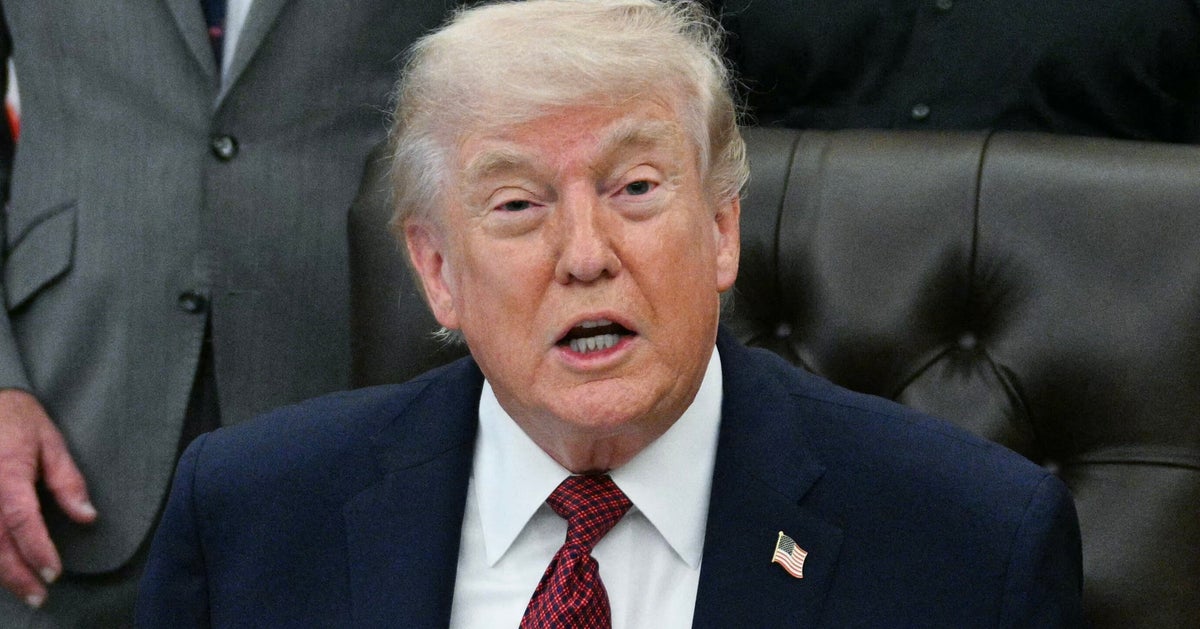
Cover image from huffpost.com, which was analyzed for this article
Trump eyes government bailout or resale of bankrupt Spirit Airlines amid fuel crisis, slammed as 'Trump Shuttle' repeat by WSJ. Conservatives warn against federal cockpit control and industry ripples. Liquidation fears spread.
PoliticalOS
Friday, April 24, 2026 — Business
Spirit's crisis stems from a toxic mix of regulatory decisions, mechanical failures, repeated bankruptcies and an external fuel shock, not any single cause. A government equity stake would break long precedent and likely prove difficult to unwind, yet pure liquidation carries immediate costs for workers and some consumers on budget routes. The episode ultimately tests whether Washington can resist inserting itself when a politically visible company fails, even after earlier intervention helped shape that failure.
What outlets missed
All three outlets underplayed the severity of the Pratt & Whitney engine recalls that grounded dozens of Spirit aircraft starting in 2023, well before the final JetBlue ruling, and generated over $1 billion in documented losses according to SEC filings and Reuters. They also gave minimal attention to Spirit's March 2026 private restructuring support agreement with creditors designed to slash $5.3 billion in debt without taxpayer funds, which showed the market was still attempting solutions. The fuel price surge to over $4 per gallon triggered by Strait of Hormuz disruptions received only glancing references despite its role as an immediate catalyst that upended restructuring math for the entire sector. Finally, coverage largely ignored the DOJ's detailed consumer-harm predictions from the merger block, including specific route-by-route analyses showing Spirit's elimination would raise fares 10-30 percent in many leisure markets.
Trump Weighs Risky Rescue of Struggling Spirit Airlines
The Trump administration is considering a federal loan of up to $500 million for Spirit Airlines, a move that could result in the government acquiring equity warrants for as much as 90 percent of the carrier and reignite long-standing concerns about political interference in the marketplace. President Trump, who once owned the short-lived Trump Shuttle, told reporters the airline holds valuable aircraft and assets that could be sold for a profit once oil prices decline, adding that he knows a capable executive to manage the operation.
The proposal has drawn sharp criticism from outlets and figures usually aligned with free-market principles. The Wall Street Journal editorial board called the idea economically unjustified and warned it would create moral hazard by shielding investors and managers from the consequences of poor decisions. “Letting Spirit fail would be a useful lesson in market discipline,” the board wrote, even while noting the potential loss of up to 14,000 jobs if the carrier liquidated. The Journal also reminded readers of Trump’s earlier airline venture, asking whether this represented “the revival of the Trump Shuttle, circa 1989.”
Senator Ted Cruz of Texas labeled the bailout “an absolutely TERRIBLE idea,” joining a chorus of conservatives who argue that government ownership of an airline would distort competition and burden taxpayers. Steve Forbes, writing in The Daily Wire, described the plan as turning Americans into unwilling owners of a failing business. “Americans do not want a boarding pass on Government Airlines,” he said. “They want safe flights, low fares, and real competition.”
The current troubles trace directly to earlier government decisions. In 2022, Spirit faced severe financial strain and agreed to be acquired by JetBlue in a private-sector deal that offered a realistic path to stability. The Biden administration’s Justice Department, supported by Transportation Secretary Pete Buttigieg, blocked the merger in 2023. Regulators claimed the combination would harm consumers by reducing competition from Spirit’s ultra-low-cost model. At the time, the merged company would have ranked only fifth in market share, well behind the dominant four carriers.
That intervention, which broke with decades of precedent, left Spirit isolated in an industry defined by high labor costs, volatile fuel prices, and relentless pressure from larger competitors. The airline filed for Chapter 11 bankruptcy protection in 2024, reemerged after recapitalization, and then filed again months later. Market signals that shareholders had already recognized in 2022 proved correct twice over: Spirit could not survive as an independent entity.
National Review’s editors pointed to the bitter irony. A misguided antitrust decision helped push the airline toward collapse, and now another round of government involvement is offered as the remedy. Taxpayers, the editors noted, would be forced to finance the second error after suffering the consequences of the first. Commerce Secretary Howard Lutnick has sketched terms that include the equity warrants, effectively giving Washington a controlling stake if exercised.
Critics from across the conservative spectrum argue this approach repeats a familiar pattern. When government first prevents a market solution and then steps in to rescue the resulting wreckage, it undermines the price signals and accountability that allocate capital efficiently. Forbes observed that bureaucrats have now twice substituted their judgment for that of investors and customers, first by killing the JetBlue transaction and second by preparing to nationalize losses.
Spirit’s ultra-low fares have benefited millions of price-sensitive travelers, particularly those who might otherwise be priced out of air travel. Yet preserving one carrier through political favoritism risks raising costs across the industry. Larger airlines that avoided such missteps would face subsidized competition, while future entrepreneurs would learn that failure can be transferred to the public balance sheet. The Wall Street Journal editorial correctly observed that such rescues erode the discipline essential to a functioning market.
Trump’s personal history with the airline business adds another layer. The Trump Shuttle, launched with high expectations in 1989, struggled with debt and competition before being sold and eventually shuttered. Supporters of the current plan insist the president’s business experience equips him to extract value from Spirit’s fleet. Skeptics counter that turning the airline into a quasi-federal entity repeats the very pattern of political management that has weakened other government-influenced enterprises.
The debate occurs against broader concerns about federal spending and the proper role of Washington. With Spirit’s second bankruptcy confirming its structural weaknesses, many economists and policymakers question whether propping up the carrier serves the long-term interests of consumers or simply delays an inevitable reallocation of resources. If the government assumes ownership, decisions about routes, fares, and labor agreements could become subject to political calculation rather than market demand.
Whether the administration proceeds remains unclear. What is evident is the broad agreement among market-oriented voices that placing taxpayers in the cockpit of a failing airline sets a dangerous precedent. The episode illustrates a recurring lesson: interventions intended to protect competition or save jobs often produce the opposite result, leaving the public to absorb costs that private participants would otherwise bear. As Spirit’s trajectory shows, repeated government fixes tend to compound rather than resolve underlying economic realities.
You just read Conservative's take. Want to read what actually happened?
More in Business & Economy

AI Companies Weigh Early IPOs as Risks Mount
Nasdaq fell sharply amid concerns over AI spending sustainability and data center costs; Nvidia, Meta, and others were hit as Meta and Tesla reported earnings.

Stocks Rise on Earnings as Home Sales Hit Low
Major indices closed mixed to higher, led by healthcare and defensive stocks, as companies like Eli Lilly and UnitedHealth reported strong results. Pending home sales hit record lows.

US Stocks Mixed as Tech Rebounds on AI Optimism
The Dow slipped slightly while the S&P 500 and Nasdaq rose, led by Nvidia, AMD, and Intel gains on renewed AI sector confidence after prior drops. Broader market volatility tied to earnings and data center demand.

Trump Unveils $8 Billion Diesel Relief for Farmers
The Agriculture Department launched the program to offset record diesel prices for farmers, framed as economic aid and a midterm pitch in Kansas amid ongoing inflation and energy cost pressures.
The Compass
You just read five takes on one story.
What's your take? Find your political shape in a few minutes.
Take the test