
Trump Weighs Spirit Airlines Rescue as Conservatives Warn of Taxpayer Trap
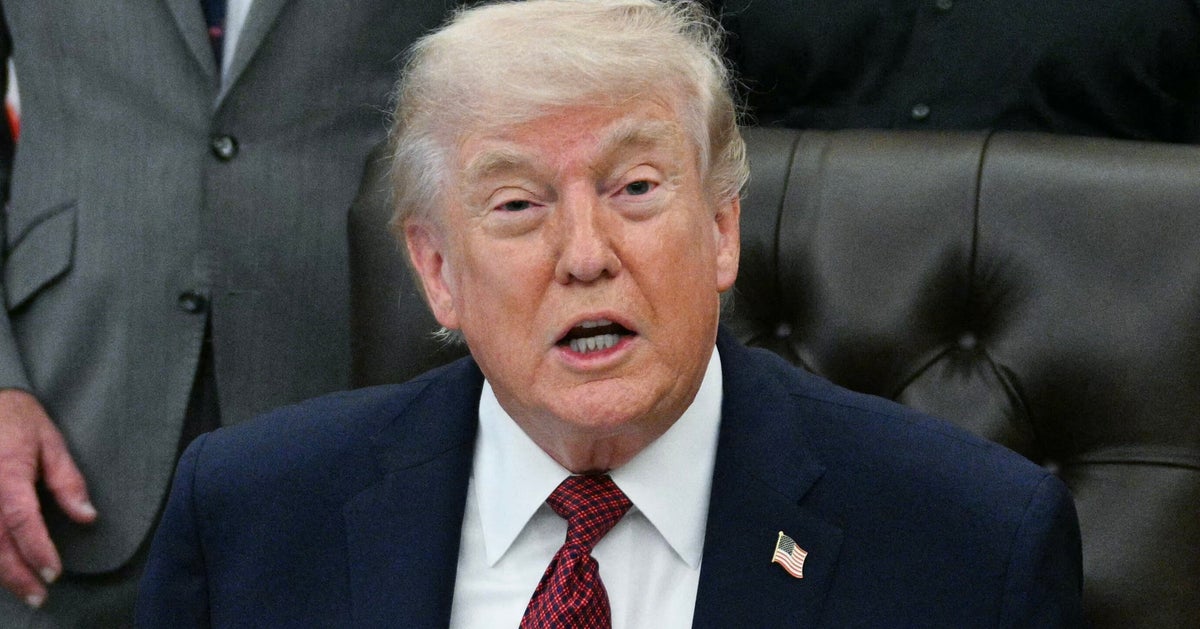
Cover image from huffpost.com, which was analyzed for this article
Trump eyes government bailout or resale of bankrupt Spirit Airlines amid fuel crisis, slammed as 'Trump Shuttle' repeat by WSJ. Conservatives warn against federal cockpit control and industry ripples. Liquidation fears spread.
PoliticalOS
Friday, April 24, 2026 — Business
Spirit's crisis stems from a toxic mix of regulatory decisions, mechanical failures, repeated bankruptcies and an external fuel shock, not any single cause. A government equity stake would break long precedent and likely prove difficult to unwind, yet pure liquidation carries immediate costs for workers and some consumers on budget routes. The episode ultimately tests whether Washington can resist inserting itself when a politically visible company fails, even after earlier intervention helped shape that failure.
What outlets missed
All three outlets underplayed the severity of the Pratt & Whitney engine recalls that grounded dozens of Spirit aircraft starting in 2023, well before the final JetBlue ruling, and generated over $1 billion in documented losses according to SEC filings and Reuters. They also gave minimal attention to Spirit's March 2026 private restructuring support agreement with creditors designed to slash $5.3 billion in debt without taxpayer funds, which showed the market was still attempting solutions. The fuel price surge to over $4 per gallon triggered by Strait of Hormuz disruptions received only glancing references despite its role as an immediate catalyst that upended restructuring math for the entire sector. Finally, coverage largely ignored the DOJ's detailed consumer-harm predictions from the merger block, including specific route-by-route analyses showing Spirit's elimination would raise fares 10-30 percent in many leisure markets.
Government Bailout of Spirit Airlines Would Stick Taxpayers With the Bill
The same Washington machine that spent years meddling in the airline business now wants to own one. Donald Trump has confirmed reports that his administration is considering a bailout of Spirit Airlines, the perpetually struggling low-cost carrier that has filed for bankruptcy protection twice in the past year. According to details sketched out by Commerce Secretary Howard Lutnick, the plan could involve up to a $500 million government loan with equity warrants that, if exercised, would hand Uncle Sam ownership of as much as 90 percent of the company.
Trump, who once owned the short-lived Trump Shuttle, sounded optimistic about the idea. He told reporters Spirit has “some good aircraft and good assets” and suggested that once oil prices drop the government could sell it for a profit. He even claimed to have “a smart person” lined up to run the operation. The comments immediately drew sharp criticism from the very corners of the conservative movement that usually form Trump’s strongest base of support.
The Wall Street Journal’s editorial board delivered one of the most withering rebukes. In a piece published Thursday, the board argued there is “no economic justification” for rescuing a company whose business model has collapsed under market pressure. “Letting Spirit fail would be a useful lesson in market discipline,” the editors wrote, even while acknowledging that as many as 14,000 workers could lose their jobs if the airline is liquidated. They warned the bailout would “fuel moral hazard” and asked pointedly whether this amounted to “the revival of the Trump Shuttle, circa 1989.”
Senator Ted Cruz of Texas was equally blunt, calling the entire notion “an absolutely TERRIBLE idea.” The Texas Republican’s reaction reflects a growing unease among conservatives who see this as the return of corporate welfare dressed up as strategic investment. After years of rhetoric about draining the swamp and getting government out of the way, the prospect of Washington literally sitting in the cockpit of a failing airline strikes many as a betrayal of basic free-market principles.
The irony is impossible to ignore. Spirit’s troubles trace directly back to earlier government intervention. Three years ago the airline had a private-sector solution on the table. JetBlue agreed to buy Spirit in a deal that would have provided capital, route structure, and operational stability. The Biden Justice Department, backed enthusiastically by Transportation Secretary Pete Buttigieg, blocked the merger. Regulators claimed they were protecting consumers by preserving Spirit’s ultra-low-cost model. They insisted that without Spirit flying its bare-bones planes at rock-bottom prices, fares would soar and competition would vanish.
Reality has been less kind. Left as a standalone business in an industry hammered by high labor costs, volatile fuel prices, and cutthroat competition from larger carriers, Spirit spiraled. It filed Chapter 11 in 2024, restructured, then filed again months later. The market delivered its verdict not once but twice: Spirit cannot survive on its own. The very regulators who said they were saving the airline’s unique model have instead delivered its obituary.
Now the proposed solution is more intervention. First block the private merger, then nationalize the losses when the company collapses. This is the same pattern that has defined too much of federal economic policy for decades. Bureaucrats pick winners and losers, shield certain businesses from market consequences, and when those consequences arrive anyway, taxpayers are told they must absorb the damage to prevent some larger catastrophe.
Steve Forbes warned in a column for The Daily Wire that Americans do not want a boarding pass on “Government Airlines.” They want safe flights, low fares, and genuine competition. What they do not want is politicians and career officials deciding which carriers live or die while dumping the losses onto the public balance sheet. Forbes noted that the same interventionist mindset that killed the JetBlue deal is now being recycled as the cure. The results speak for themselves.
National Review’s editors made a similar point, describing the bailout as an “expensive mistake” that would force taxpayers to pay for two rounds of misguided government decisions. The Biden administration’s aggressive antitrust posture in 2023 helped push Spirit into its current death spiral. Rescuing it now with hundreds of millions in loans and potential majority government ownership simply compounds the error. The Trump administration, which campaigned on reducing regulatory overreach and putting America first, now risks repeating the same errors in the name of preserving jobs or assets.
There is no question that Spirit’s failure would be painful for employees, suppliers, and the airports that rely on its routes. But the alternative is turning the federal government into an airline operator with all the efficiency and innovation that implies. History offers plenty of examples of what happens when Washington tries to run businesses. The Trump Shuttle itself lasted only a few years before collapsing under debt and operational problems. Amtrak, the Postal Service, and countless other government-managed enterprises routinely lose money while providing subpar service.
Conservatives have spent decades arguing that markets, not bureaucrats, should allocate capital and determine which companies survive. The Spirit case tests whether that conviction still holds when a high-profile company with visible assets and a politically connected buyer is on the brink. Trump’s own history with airlines makes the current deliberations especially awkward. His suggestion that the government can flip the assets for a profit once oil prices fall assumes a level of commercial foresight that federal agencies have rarely demonstrated.
The broader lesson should not be lost. When government first blocked a reasonable private-sector merger in the name of consumer protection, it set in motion the very crisis it now proposes to solve with taxpayer funds. This is how moral hazard spreads. Companies and investors begin to assume that Washington will ride to the rescue, weakening the discipline that makes markets function. Eventually the public ends up owning pieces of failing enterprises while the original problems remain unsolved.
Spirit Airlines may have good planes and some valuable routes. But ownership by the federal government is not a business plan. It is a political fix that creates long-term dependency and transfers risk from shareholders to every American taxpayer. The Wall Street Journal, Ted Cruz, and a growing chorus of market-oriented voices are right to sound the alarm. Before any boarding pass is issued for this particular flight, someone in the administration should consider whether Washington really belongs in the cockpit at all.
You just read America First's take. Want to read what actually happened?
More in Business & Economy

AI Companies Weigh Early IPOs as Risks Mount
Nasdaq fell sharply amid concerns over AI spending sustainability and data center costs; Nvidia, Meta, and others were hit as Meta and Tesla reported earnings.

Stocks Rise on Earnings as Home Sales Hit Low
Major indices closed mixed to higher, led by healthcare and defensive stocks, as companies like Eli Lilly and UnitedHealth reported strong results. Pending home sales hit record lows.

US Stocks Mixed as Tech Rebounds on AI Optimism
The Dow slipped slightly while the S&P 500 and Nasdaq rose, led by Nvidia, AMD, and Intel gains on renewed AI sector confidence after prior drops. Broader market volatility tied to earnings and data center demand.

Trump Unveils $8 Billion Diesel Relief for Farmers
The Agriculture Department launched the program to offset record diesel prices for farmers, framed as economic aid and a midterm pitch in Kansas amid ongoing inflation and energy cost pressures.
The Compass
You just read five takes on one story.
What's your take? Find your political shape in a few minutes.
Take the test