
Trump Weighs Spirit Airlines Rescue as Conservatives Warn of Taxpayer Trap
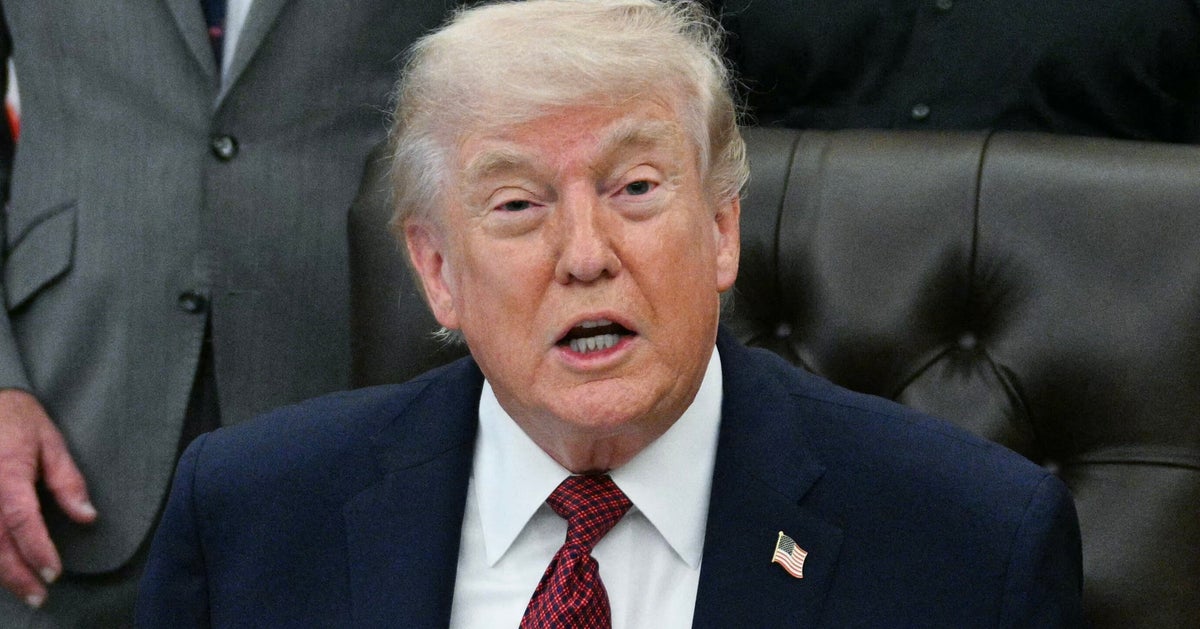
Cover image from huffpost.com, which was analyzed for this article
Trump eyes government bailout or resale of bankrupt Spirit Airlines amid fuel crisis, slammed as 'Trump Shuttle' repeat by WSJ. Conservatives warn against federal cockpit control and industry ripples. Liquidation fears spread.
PoliticalOS
Friday, April 24, 2026 — Business
Spirit's crisis stems from a toxic mix of regulatory decisions, mechanical failures, repeated bankruptcies and an external fuel shock, not any single cause. A government equity stake would break long precedent and likely prove difficult to unwind, yet pure liquidation carries immediate costs for workers and some consumers on budget routes. The episode ultimately tests whether Washington can resist inserting itself when a politically visible company fails, even after earlier intervention helped shape that failure.
What outlets missed
All three outlets underplayed the severity of the Pratt & Whitney engine recalls that grounded dozens of Spirit aircraft starting in 2023, well before the final JetBlue ruling, and generated over $1 billion in documented losses according to SEC filings and Reuters. They also gave minimal attention to Spirit's March 2026 private restructuring support agreement with creditors designed to slash $5.3 billion in debt without taxpayer funds, which showed the market was still attempting solutions. The fuel price surge to over $4 per gallon triggered by Strait of Hormuz disruptions received only glancing references despite its role as an immediate catalyst that upended restructuring math for the entire sector. Finally, coverage largely ignored the DOJ's detailed consumer-harm predictions from the merger block, including specific route-by-route analyses showing Spirit's elimination would raise fares 10-30 percent in many leisure markets.
Trump's Spirit Bailout Plan Revives Questions About Government Role in Failing Businesses
The Trump administration is weighing a potential $500 million rescue of Spirit Airlines that could leave the federal government with ownership of up to 90 percent of the carrier, a proposal drawing sharp criticism from conservative institutions that ordinarily align with the president. The plan, first reported by The Wall Street Journal, would extend a loan to the bankrupt ultra-low-cost airline while taking equity warrants that could convert into majority ownership. President Trump confirmed he is considering the idea, telling reporters that Spirit possesses “good aircraft and good assets” and that the government could “sell it for a profit” once oil prices fall. He added that he already has “a smart person” in mind to run the company.
The proposal lands in a heavily ironic policy landscape. Three years ago the Biden administration’s Justice Department, supported by Transportation Secretary Pete Buttigieg, blocked Spirit’s proposed merger with JetBlue. Regulators argued at the time that preserving Spirit as an independent discounter was essential to maintaining low fares and competition. The decision broke with decades of precedent that had permitted similar combinations. Without the merger’s financial backstop, Spirit filed for Chapter 11 bankruptcy protection in 2024, restructured, and then filed again months later. Market forces delivered a verdict its shareholders had already accepted in 2022: the airline could not survive as a stand-alone entity in an industry defined by high fixed costs, volatile fuel prices, and relentless competition from the four dominant carriers.
Now the same government that insisted Spirit must remain independent is being asked to become its largest shareholder. The Wall Street Journal’s editorial board called the bailout economically unjustified and warned it would “fuel moral hazard,” the danger that companies and investors will take excessive risks knowing taxpayers may absorb the losses. The board noted that as many as 14,000 workers could lose jobs if Spirit liquidates, yet argued that allowing failure would deliver a “useful lesson in market discipline.” In a pointed aside, the editors asked whether the rescue represented “the revival of the Trump Shuttle, circa 1989,” a reference to the former president’s earlier foray into the airline business that ended in bankruptcy and heavy losses.
Senator Ted Cruz, a Texas Republican rarely at odds with Trump, used nearly identical language, labeling the bailout “an absolutely TERRIBLE idea.” National Review’s editors described the prospect as an “expensive mistake” compounded by earlier government error. In their view, the Biden antitrust decision set the stage for Spirit’s collapse; a Trump bailout would simply layer one flawed intervention atop another. Steve Forbes, writing in the Daily Wire, framed the choice more bluntly: Americans “do not want a boarding pass on Government Airlines.” He argued that politicians and bureaucrats are poor substitutes for market competition and that taxpayers should not be forced to absorb losses from a business model that has already failed twice in bankruptcy court.
The episode highlights deeper tensions in how both parties approach the airline industry. For years policymakers have oscillated between protecting competition and protecting incumbents. The Biden team’s assertive antitrust blocked a merger that might have stabilized Spirit and preserved its low-fare model under stronger ownership. The result was not more competition but less; Spirit’s weakness has already contributed to capacity cuts and fare pressure on the routes it serves. A Trump administration bailout would shift the problem from antitrust policy to industrial policy, placing the government in the unfamiliar and politically risky position of effectively nationalizing a commercial airline.
Proponents of the rescue point to the real human and economic costs. Spirit’s demise would eliminate one of the country’s most aggressive price competitors, likely raising fares for price-sensitive travelers in the Midwest and Northeast. Airport workers, contractors, and communities that rely on the carrier’s routes would face immediate pain. Trump’s framing, that the government is simply buying distressed assets at a discount and installing competent management, echoes his long-standing view of business as a series of deals rather than a process of creative destruction. Yet critics from across the conservative spectrum counter that this approach undermines the very market signals that are supposed to allocate capital efficiently.
The debate also surfaces uncomfortable questions about consistency. Many of the same voices now opposing a Spirit bailout supported or tolerated other forms of government support for airlines during the pandemic. The distinction, they argue, is that those earlier rescues responded to an exogenous shock; Spirit’s troubles reflect long-term structural failure. Still, the pattern is hard to ignore: government intervenes to block a private solution, the private solution proves necessary, and government is then asked to provide a public solution. Each intervention makes the next one easier to justify.
Whether the administration ultimately proceeds remains unclear. Commerce Secretary Howard Lutnick has sketched the loan terms that would include the equity warrants, but internal discussions continue. For an administration that campaigned on reducing government overreach, placing Washington in the cockpit of a failing airline would mark a striking departure. For consumers and workers who depend on affordable air travel, the stakes are immediate. For those who worry about the long-term integrity of market signals, the stakes are philosophical. The Spirit case may ultimately reveal less about any single airline than about the persistent difficulty American policymakers have in allowing distressed companies to fail.
(Word count: 712)
You just read Liberal's take. Want to read what actually happened?
More in Business & Economy

AI Companies Weigh Early IPOs as Risks Mount
Nasdaq fell sharply amid concerns over AI spending sustainability and data center costs; Nvidia, Meta, and others were hit as Meta and Tesla reported earnings.

Stocks Rise on Earnings as Home Sales Hit Low
Major indices closed mixed to higher, led by healthcare and defensive stocks, as companies like Eli Lilly and UnitedHealth reported strong results. Pending home sales hit record lows.

US Stocks Mixed as Tech Rebounds on AI Optimism
The Dow slipped slightly while the S&P 500 and Nasdaq rose, led by Nvidia, AMD, and Intel gains on renewed AI sector confidence after prior drops. Broader market volatility tied to earnings and data center demand.

Trump Unveils $8 Billion Diesel Relief for Farmers
The Agriculture Department launched the program to offset record diesel prices for farmers, framed as economic aid and a midterm pitch in Kansas amid ongoing inflation and energy cost pressures.
The Compass
You just read five takes on one story.
What's your take? Find your political shape in a few minutes.
Take the test