
Spirit Airlines Teeters as Legacy Carriers Match Fares and Costs Mount
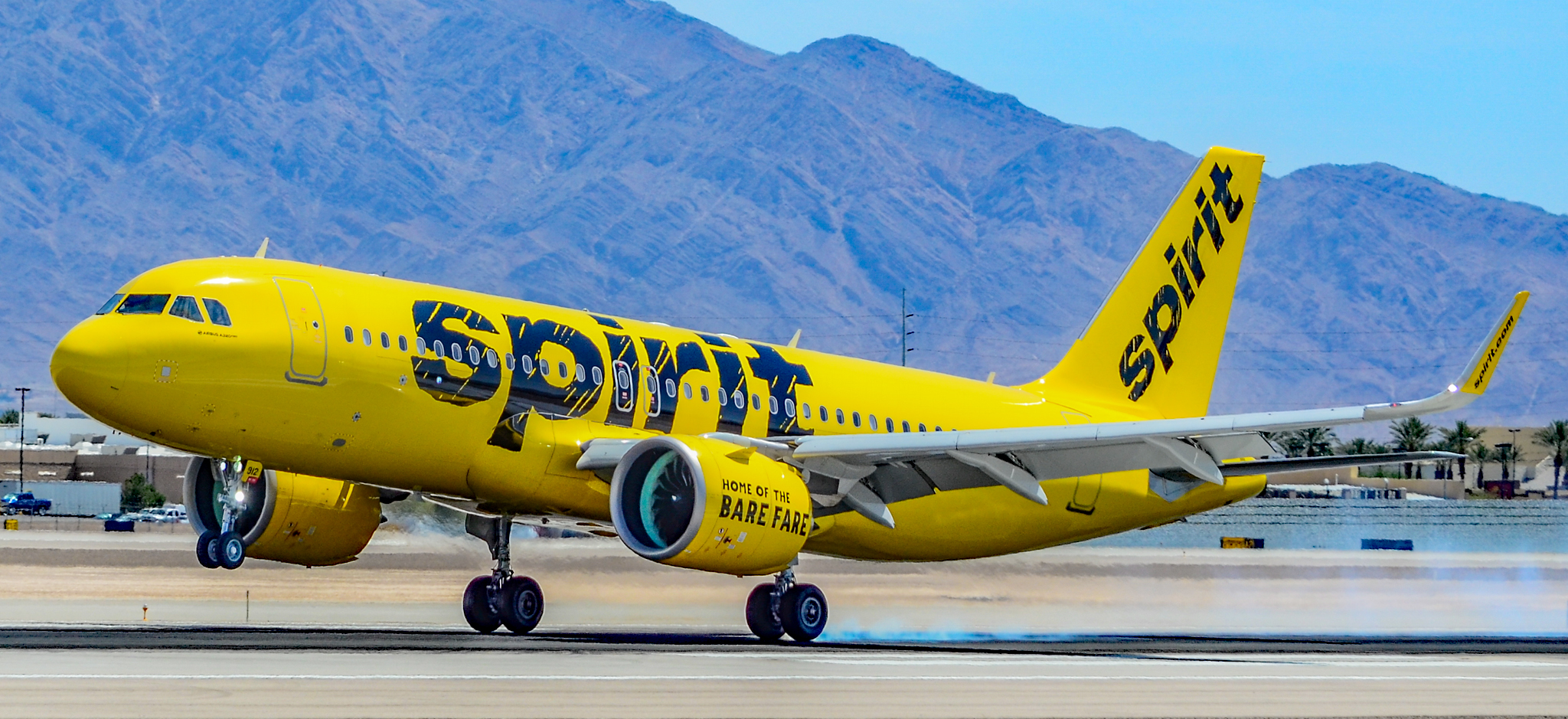
Cover image from thefederalist.com, which was analyzed for this article
Spirit Airlines, once the Dollar General of skies, faces challenges as major carriers match low fares leading to financial strain. Observers debate government bailout under Trump admin. The case underscores airline industry consolidation trends.
PoliticalOS
Wednesday, April 29, 2026 — Business
Spirit's near-collapse stems from a combination of legacy carriers adopting and improving upon its low-cost tactics, sharp rises in fuel and labor expenses exacerbated by geopolitical events and engine recalls, and reduced flying by inflation-weary budget consumers. A potential Trump administration rescue after the prior Biden block of its JetBlue merger highlights unresolved tensions over government intervention in a consolidating industry. The most important reality is that ultra-low-cost options for price-sensitive travelers are shrinking, regardless of whether the root cause is framed as competition, costs or policy.
What outlets missed
Both outlets underplayed the Pratt & Whitney engine recall crisis that grounded roughly 20% of Spirit's fleet since 2023, creating chronic operational and financial strain documented in SEC filings and Reuters reports. Specific fuel cost impacts — jet fuel hitting $4.32 per gallon in April 2026 and adding an estimated $360 million in expenses amid Iran-related conflicts — received only passing mention despite dominating airline earnings calls that quarter. Detailed restructuring numbers, including Spirit's plan to slash debt from $7.4 billion to $2.1 billion with a targeted mid-2026 exit from bankruptcy, were omitted in favor of broader narrative arguments. Neither fully explored how Spirit remained profitable before 2019, suggesting its challenges involve a mix of legacy competitive responses, exogenous shocks and management decisions rather than any single policy failure.
Major Airlines Adapt and Outmaneuver Spirit as Carrier Faces Possible Liquidation
Aran Darling booked what seemed like a straightforward bargain flight from Los Angeles to New York last month. The small business owner, who with his partner runs Froot Stand selling avocados, passion fruit, finger limes and other specialty produce from Ventura growers, needed to attend a Manhattan food industry event. The trip offered a chance to network with a major client and expand their customer base. The only problem was the airline: Spirit.
As news reports intensified about Spirit's financial distress, Darling began checking his booking obsessively. Headlines warned of a possible liquidation following the carrier's second bankruptcy filing in recent years. Darling called the airline repeatedly, shared his concerns with followers on social media, and weighed the risk of showing up at the airport only to find his red-eye grounded. His experience captures the uncertainty now facing thousands of passengers as one of America's most aggressive low-cost carriers confronts an existential threat.
Spirit built its business on a simple premise. Marketed as the no-frills option for travelers who cared mainly about price, the airline unbundled every aspect of the flying experience. Base fares stayed exceptionally low because customers paid separately for seat selection, carry-on bags, checked luggage, even water on board. The model resembled Dollar General's approach on the ground: strip away extras, keep overhead minimal, and attract budget-conscious flyers who tolerated inconvenience for savings. For years the strategy worked. Spirit filled planes that might otherwise fly half-empty and carved out a niche among leisure travelers and visiting friends and relatives traffic.
Yet the major carriers studied Spirit's success and responded with precision. Delta, United and American each rolled out basic economy fares that delivered comparable rock-bottom prices while preserving advantages Spirit could not replicate. Their vast route networks, established loyalty programs, reliable operational performance and ability to offer connecting flights gave them a decisive edge. When passengers could get a similar low fare on a legacy carrier with better odds of an on-time arrival and without the constant upselling, Spirit's competitive moat evaporated. The big airlines had beaten the upstart at its own game.
The numbers tell the story. Spirit's domestic market share peaked in the low single digits before competitive pressure and operational missteps sent it into a tailspin. Last year the carrier accounted for roughly 3.5 percent of domestic passenger miles, ranking eighth among U.S. airlines. To preserve cash during its bankruptcy proceedings, Spirit has slashed its schedule dramatically, cutting planned flights from more than 19,500 in May of last year to an estimated 9,353 next month. The reduction represents a halving of capacity in roughly one year.
Remarkably, the broader air travel system has absorbed these cuts without widespread chaos. Other carriers have added seats on overlapping routes, and demand has shifted to alternatives. The episode demonstrates a core economic reality: markets reallocate resources. When one firm contracts, competitors typically expand to capture the displaced customers. Passengers may pay slightly higher average fares or lose a few ultra-low options, but the overall capacity and service levels adjust through decentralized decision-making rather than central direction.
This natural market correction now stands in tension with talk of government intervention. President Trump stated last week that his administration was considering "helping them out, meaning bailing them out, or buying it." The mention of a potential $500 million lifeline has sparked immediate pushback from fiscal conservatives. With federal debt exceeding $39 trillion and annual deficits approaching $2 trillion, they argue that taxpayers should not subsidize an airline that represents neither a national security asset nor an economically irreplaceable service.
The objections run deeper than the raw budget numbers. Government equity stakes in private companies during the 2008-2009 financial crisis, most notably the Obama administration's intervention in General Motors, produced mixed results at best and created lasting distortions. Once the precedent is set that certain firms are too politically salient to fail, incentives change across the economy. Managers take greater risks, investors demand less accountability, and efficient competitors face an uneven playing field subsidized by public funds.
Spirit's situation offers a textbook case for allowing creative destruction to run its course. The airline's assets, including planes, gates and landing slots, would likely find higher-valued uses in the hands of carriers that have already demonstrated superior execution. Employees with valuable skills would be absorbed by a growing industry that, despite periodic turbulence, continues to expand overall. Consumers ultimately benefit when capital flows toward the most productive operators rather than being propped up by political favoritism.
For now Darling and others in similar positions must make contingency plans. Many have shifted to alternative carriers at higher prices, a reminder that the lowest fare sometimes carries the highest risk. Spirit's fate remains unresolved as bankruptcy proceedings continue. The Trump administration must decide whether to follow through on bailout discussions or allow the market to render its verdict.
The episode underscores a larger pattern. Low-cost disruption in airlines, as in retail and other sectors, forces incumbents to innovate. When they do, the original disruptor can find itself without a sustainable advantage. Rather than viewing Spirit's potential disappearance as a failure of policy, it may simply reflect the ordinary workings of competition. Resources move. Businesses adapt or exit. Passengers adjust. And the system, absent artificial life support, tends toward efficiency over time. Whether Washington chooses to interfere will reveal as much about political incentives as about airline economics.
You just read Conservative's take. Want to read what actually happened?
More in Business & Economy

Stocks Rise on Earnings as Home Sales Hit Low
Major indices closed mixed to higher, led by healthcare and defensive stocks, as companies like Eli Lilly and UnitedHealth reported strong results. Pending home sales hit record lows.

US Stocks Mixed as Tech Rebounds on AI Optimism
The Dow slipped slightly while the S&P 500 and Nasdaq rose, led by Nvidia, AMD, and Intel gains on renewed AI sector confidence after prior drops. Broader market volatility tied to earnings and data center demand.

Trump Unveils $8 Billion Diesel Relief for Farmers
The Agriculture Department launched the program to offset record diesel prices for farmers, framed as economic aid and a midterm pitch in Kansas amid ongoing inflation and energy cost pressures.
CPI Rises to 3.7 Percent as Energy Costs Climb Amid Iran Conflict
Hotter-than-expected CPI figures fueled rate hike fears and contributed to sharp declines in AI and tech stocks. Left and right economic commentary debates Trump policies versus Fed actions.
The Compass
You just read five takes on one story.
What's your take? Find your political shape in a few minutes.
Take the test