
Spirit Airlines Teeters as Legacy Carriers Match Fares and Costs Mount
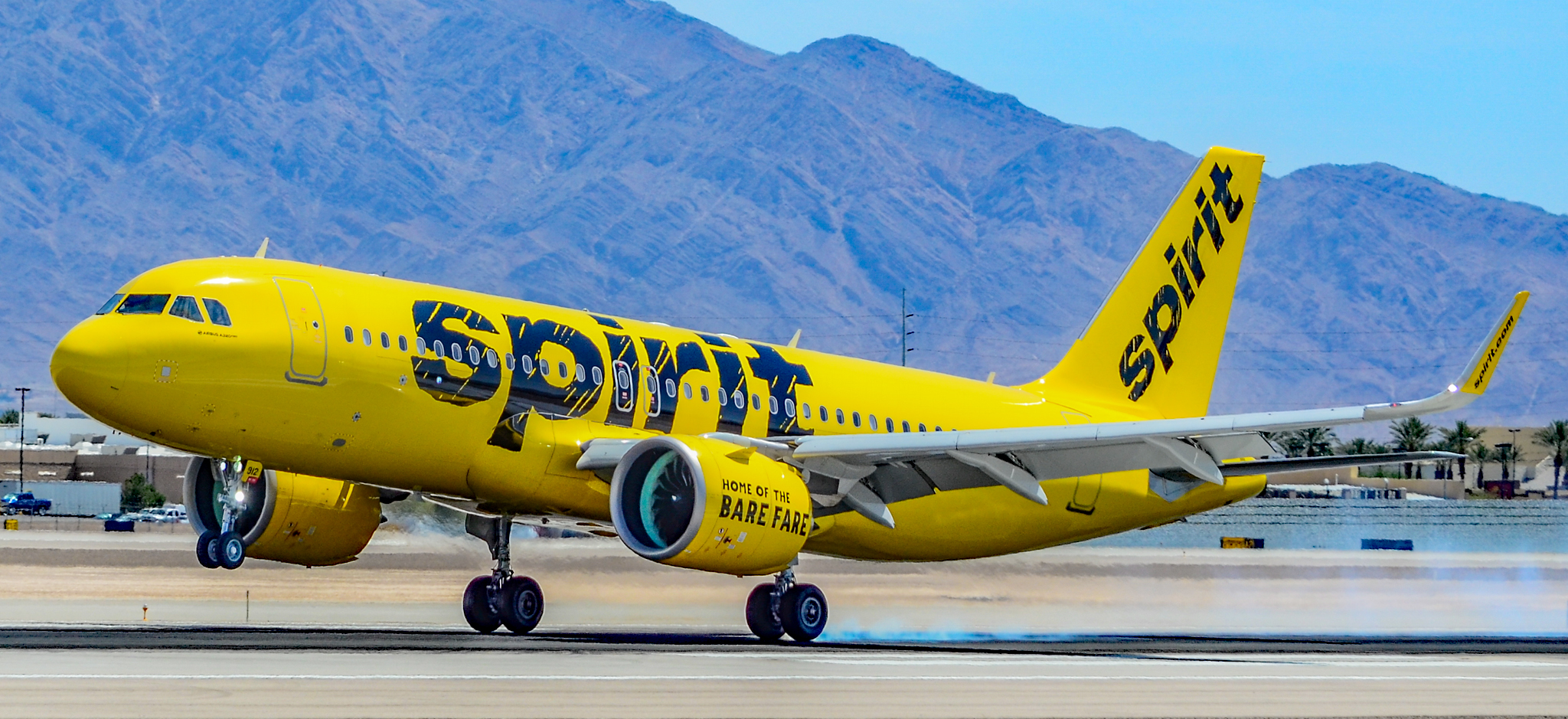
Cover image from thefederalist.com, which was analyzed for this article
Spirit Airlines, once the Dollar General of skies, faces challenges as major carriers match low fares leading to financial strain. Observers debate government bailout under Trump admin. The case underscores airline industry consolidation trends.
PoliticalOS
Wednesday, April 29, 2026 — Business
Spirit's near-collapse stems from a combination of legacy carriers adopting and improving upon its low-cost tactics, sharp rises in fuel and labor expenses exacerbated by geopolitical events and engine recalls, and reduced flying by inflation-weary budget consumers. A potential Trump administration rescue after the prior Biden block of its JetBlue merger highlights unresolved tensions over government intervention in a consolidating industry. The most important reality is that ultra-low-cost options for price-sensitive travelers are shrinking, regardless of whether the root cause is framed as competition, costs or policy.
What outlets missed
Both outlets underplayed the Pratt & Whitney engine recall crisis that grounded roughly 20% of Spirit's fleet since 2023, creating chronic operational and financial strain documented in SEC filings and Reuters reports. Specific fuel cost impacts — jet fuel hitting $4.32 per gallon in April 2026 and adding an estimated $360 million in expenses amid Iran-related conflicts — received only passing mention despite dominating airline earnings calls that quarter. Detailed restructuring numbers, including Spirit's plan to slash debt from $7.4 billion to $2.1 billion with a targeted mid-2026 exit from bankruptcy, were omitted in favor of broader narrative arguments. Neither fully explored how Spirit remained profitable before 2019, suggesting its challenges involve a mix of legacy competitive responses, exogenous shocks and management decisions rather than any single policy failure.
Spirit Airlines Bankruptcy Exposes the Limits of Budget Travel in a Consolidated Industry
Aran Darling booked a red-eye Spirit Airlines flight from Los Angeles to New York last month for what he hoped would be a pivotal moment for his small business. Darling and his partner Izzy de la Meme run Froot Stand, a Ventura-based operation that sources avocados, passion fruit, finger limes and other specialty produce from local growers and distributes it across the country. A major client had invited him to a Manhattan food event where networking could help expand their reach. The ticket was cheap, the kind of fare that made Spirit Airlines a go-to option for entrepreneurs and budget-conscious families who treat air travel as a necessary expense rather than a luxury.
As departure approached, Darling found himself refreshing news sites and calling the airline repeatedly. Headlines warned that Spirit, already in its second bankruptcy in recent years, might liquidate entirely. Flights could vanish overnight. For Darling and thousands like him, the possibility represented more than inconvenience. It threatened the fragile economics of small businesses that rely on affordable connectivity to compete in national markets.
Spirit's troubles mark the latest chapter in a broader transformation of American air travel. The airline built its business on a radical version of the low-cost model, positioning itself as the Dollar General of the skies. It offered bare-bones fares with no free carry-on bags, no complimentary snacks, no assigned seats and a relentless array of add-on fees. The approach attracted price-sensitive passengers who accepted the trade-offs for savings that could amount to hundreds of dollars per ticket. At its peak, Spirit flew a meaningful share of domestic routes, providing genuine competition on price in an industry long dominated by higher-cost legacy carriers.
That model worked until it didn't. Major airlines studied Spirit's playbook and adapted it. Delta, United, American and others introduced basic economy fares that mirrored many of Spirit's restrictions while leveraging their larger route networks, loyalty programs and operational reliability. They matched the ultra-low fares on competitive routes while maintaining higher margins on other segments of their business. The legacy carriers also benefited from years of industry consolidation that reduced the number of major players and strengthened their pricing power. What began as a disruptive insurgency by Spirit and similar ultra-low-cost carriers has evolved into a market where the biggest airlines have absorbed the budget segment rather than being displaced by it.
The numbers tell a stark story. Spirit's scheduled flights have plummeted from more than 19,000 last May to roughly 9,300 next month as the airline retrenches in bankruptcy. Its domestic passenger miles accounted for just 3.5 percent of the national total last year, ranking it eighth among U.S. carriers. These are not the metrics of a systemically critical enterprise. Yet the human and economic ripple effects are real. Pilots, flight attendants, ground crew and the small businesses that depended on cheap fares all face uncertainty. The potential disappearance of Spirit threatens to reduce competition on certain routes, which could translate into higher prices over time.
The situation has now drawn political attention at the highest level. President Trump stated last week that his administration was considering "helping them out, meaning bailing them out, or buying it." The comments have sparked intense debate about the proper role of government in distressed industries. Critics, including many fiscal conservatives, argue against using taxpayer funds to prop up a struggling private company. With federal debt exceeding $39 trillion and annual deficits approaching $2 trillion, they contend that throwing money at an eighth-ranked airline sets a dangerous precedent. The Obama-era auto industry interventions, which involved government stakes in private firms, remain a cautionary tale for those who view such actions as distorting markets and creating moral hazard.
There are substantive reasons to question a Spirit bailout on policy grounds. The airline does not provide unique national security capabilities, nor does it serve routes that no other carrier could cover. Its business model, while innovative in its time, has been replicated and in many ways surpassed by larger competitors who operate with greater efficiency at scale. Preserving every marginal player in an industry is not a formula for economic vitality. Markets require that companies face the consequences of strategic missteps, including the decision to double down on an increasingly commoditized ultra-low-cost approach as the rest of the sector adapted.
At the same time, the Spirit saga reveals deeper structural problems in American aviation that transcend any single carrier. The industry has consolidated dramatically over the past two decades, with mergers reducing competitive pressure and contributing to higher fares on many routes. Legacy carriers have grown adept at segmenting customers and extracting fees that can make the total cost of a "cheap" ticket comparable to traditional fares. For middle-class families, small business owners like Darling, and anyone without access to corporate travel budgets, the erosion of genuine low-cost options represents a quiet reduction in economic mobility. Air travel that was becoming more accessible has begun to feel more stratified again.
This tension between market discipline and consumer impact sits at the heart of the current moment. Bankruptcy proceedings may yet produce a viable restructured Spirit or an acquisition by another carrier that preserves some of its routes and competitive pressure. Liquidation remains a distinct possibility. Either outcome will test whether the industry can maintain meaningful price competition without perpetual government backstops.
The episode also arrives at a politically charged time. Republicans face midterm elections where fiscal restraint and opposition to corporate welfare have traditionally energized their base. A bailout for Spirit would test the durability of those principles when specific constituencies face pain. Democrats, meanwhile, have shown greater willingness to intervene in markets to protect jobs and services, though many would likely question directing scarce resources toward an airline with limited systemic importance.
For passengers like Aran Darling, the philosophical debates feel distant. He ultimately flew his Spirit red-eye without incident, but the experience left him questioning future bookings. His story is one of many. The low-cost revolution in air travel democratized access to opportunities across the country. Its partial reversal, driven by sophisticated competitive responses from bigger players, suggests that markets alone may not reliably preserve the consumer benefits that deregulation once promised. As Spirit's fate unfolds in bankruptcy court and in Washington, it offers a case study in how quickly innovative business models can be neutralized and how difficult it becomes to restore the competitive dynamics that benefited ordinary travelers. The outcome will shape not just one airline's survival but the texture of air travel for millions who cannot afford to treat every flight as a premium experience.
You just read Liberal's take. Want to read what actually happened?
More in Business & Economy

Stocks Rise on Earnings as Home Sales Hit Low
Major indices closed mixed to higher, led by healthcare and defensive stocks, as companies like Eli Lilly and UnitedHealth reported strong results. Pending home sales hit record lows.

US Stocks Mixed as Tech Rebounds on AI Optimism
The Dow slipped slightly while the S&P 500 and Nasdaq rose, led by Nvidia, AMD, and Intel gains on renewed AI sector confidence after prior drops. Broader market volatility tied to earnings and data center demand.

Trump Unveils $8 Billion Diesel Relief for Farmers
The Agriculture Department launched the program to offset record diesel prices for farmers, framed as economic aid and a midterm pitch in Kansas amid ongoing inflation and energy cost pressures.
CPI Rises to 3.7 Percent as Energy Costs Climb Amid Iran Conflict
Hotter-than-expected CPI figures fueled rate hike fears and contributed to sharp declines in AI and tech stocks. Left and right economic commentary debates Trump policies versus Fed actions.
The Compass
You just read five takes on one story.
What's your take? Find your political shape in a few minutes.
Take the test