
US Goods and Services Deficit Narrows in June
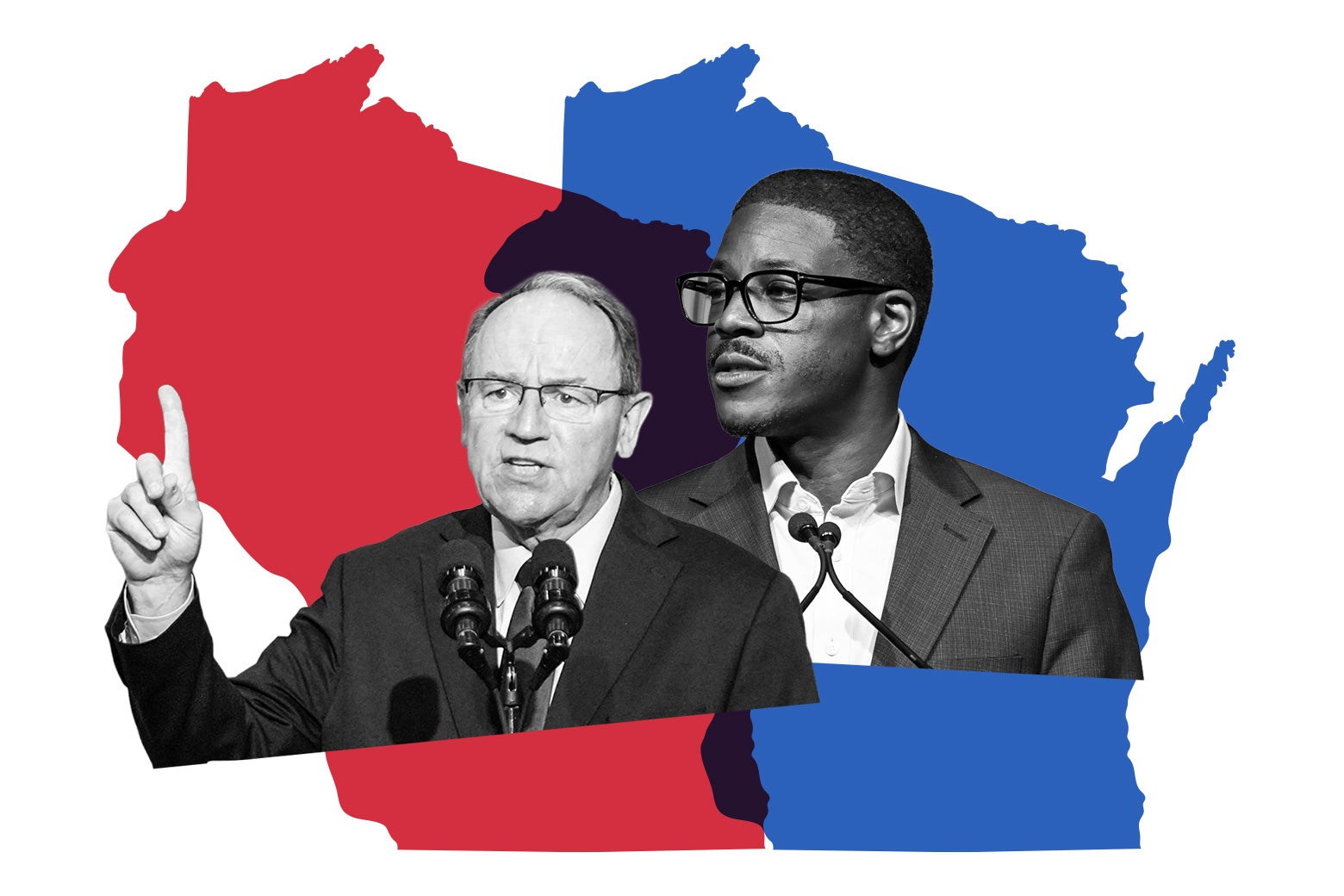
Cover image from slate.com, which was analyzed for this article
The goods and services deficit narrowed in June while forecasts highlight a shift toward investment-led growth as consumer spending softens.
PoliticalOS
Saturday, August 15, 2026 — Business
No outlet supplied verified figures on the June deficit narrowing or the investment-led growth forecast. Readers receive no sourced data on import declines, consumer softening, or bank projections from the material provided.
What outlets missed
The provided outlets published no coverage of the June trade figures or growth forecasts. Their articles addressed influencer terminology and Wisconsin primary results instead. No outlet supplied import or export totals, monthly comparisons, or bank projections on investment versus consumption. The absence leaves readers without any sourcing on the deficit change or the economic outlook described in the summary.
Wisconsin Primary Shows Voters Turning Against Socialist Fringe
Milwaukee County Executive David Crowley secured the Democratic nomination for governor in Wisconsin this week, defeating state Representative Francesca Hong in a contest that exposed the limits of insurgent left-wing challenges within the party. The result overturned late polling that had suggested a tighter race or even an upset by the more radical candidate.
Crowley, backed by sitting Governor Tony Evers and other party regulars, prevailed by emphasizing practical governance over sweeping ideological shifts. Hong, aligned with democratic socialist priorities, had drawn attention for proposals centered on wealth redistribution and expansive government programs. Her campaign struggled to convert online enthusiasm into broad voter support, mirroring recent difficulties for similar candidates in Michigan where predictive models also missed the mark.
Election data indicated that Crowley's margin came from stronger performance in suburban and moderate Democratic precincts. Turnout patterns showed established party infrastructure still effective at mobilizing reliable voters wary of experiments that have produced mixed results elsewhere. States experimenting with aggressive tax hikes and regulatory expansions have often seen slower growth and business departures, patterns documented in labor market statistics from places like California and New York.
The outcome reinforces a recurring electoral signal. Primary voters have repeatedly chosen candidates who signal continuity with mainstream Democratic positioning rather than sharp departures toward centralized economic control. Crowley's win follows similar rejections of socialist-backed contenders in other states over the past several cycles, where promises of transformative spending collided with concerns over inflation, housing costs, and job mobility.
Hong's platform included elements such as guaranteed public services and reduced reliance on private markets, ideas that echo longstanding debates over incentives and outcomes. Historical records show that heavy intervention in pricing and allocation frequently distorts supply without delivering sustained gains for lower-income households. Sowell-style analysis of such policies stresses measurable trade-offs rather than stated intentions, noting how minimum wage mandates and rent controls have sometimes reduced employment opportunities for the very groups targeted for help.
Crowley now advances to the general election against Republican opposition. His approach stresses incremental improvements in education funding and public safety, areas where Wisconsin data reveal persistent gaps between urban and rural performance. The primary contest itself highlighted internal party tensions without producing the broader realignment some observers anticipated.
Separately, recent online debates over social media personalities have featured claims that criticism of influencer culture masks bias against women. Such framing reduces complex questions about market-driven content creation and consumer preferences to group identity. Evidence from platform analytics indicates that both male and female creators succeed or fail based on audience demand, not institutional gatekeeping. Attributing disapproval to sexism overlooks how voluntary transactions in attention economies reward value delivered, a pattern consistent across industries from entertainment to consulting.
Voters and consumers alike continue to demonstrate preference for results over rhetoric in multiple domains.
You just read Conservative's take. Want to read what actually happened?
More in Business & Economy

Business Activity Holds Up as Selling Prices Rise Fastest Since 2022
S&P Global PMI shows robust activity but selling prices rise at fastest pace since 2022 amid energy and supply chain costs. Halloween candy prices jump 7.7%.

Stock Futures Climb on Anthropic IPO Filing and AI Financing
Major indices rose on enthusiasm from Anthropic's IPO filing and broader AI infrastructure announcements including Meta's massive fundraising plans. Investors are betting heavily on continued AI growth despite valuation concerns.

Tariffs and AI Transition Fuel Growth and Job Worries
Trump's tariff rhetoric and AI-driven restructuring raised concerns about growth, inflation, and job impacts as markets reacted to geopolitical and tech shifts.

AI Companies Weigh Early IPOs as Risks Mount
Nasdaq fell sharply amid concerns over AI spending sustainability and data center costs; Nvidia, Meta, and others were hit as Meta and Tesla reported earnings.
The Compass
You just read five takes on one story.
What's your take? Find your political shape in a few minutes.
Take the test