
Trump Rejects AI Safety Warnings as Hoax, Pushes China Race

Cover image from npr.org, which was analyzed for this article
President Trump dismissed fears of AI destroying humanity as overstated during a call with Nvidia's CEO, comparing them to climate change concerns and stressing the need to win the AI race against China.
PoliticalOS
Tuesday, September 15, 2026 — Tech
Trump has rejected AI safety regulation as unnecessary and harmful to U.S. competitiveness with China, directly countering recent calls from leading executives for slower development and third-party oversight. The core unresolved question is whether existing voluntary practices and state-level rules are sufficient or whether federal standards are required before capabilities advance further. Readers should weigh the attributed statements from both sides against the absence of independently verified data on current capability gaps or family investment influence.
What outlets missed
Most outlets omitted the precise sequence of Amodei’s essay, the resignations at Anthropic, and the subsequent endorsements by Altman and Musk that directly preceded Trump’s posts. Few included the unverified claim, appearing only in one analysis, that Trump family investments in AI companies shaped his stance. Chinese state-media commentary attributing U.S. policy to competitive fears was reported by only one outlet and could not be independently verified elsewhere. No article supplied detailed figures on current U.S.-China compute or model capability gaps.
President Trump dismissed warnings that advanced artificial intelligence could destroy humanity, labeling those concerns a hoax comparable to past climate change claims and insisting the only needed oversight is a strong president. His statements came in multiple Truth Social posts on September 15, 2026, after executives at Anthropic, OpenAI and other firms urged a slowdown in frontier model development to allow safety evaluations. Trump argued that any pause would hand the lead to China and that the United States must accelerate instead.
The immediate trigger was an essay by Anthropic CEO Dario Amodei calling for third-party evaluators with employee-like access inside leading labs and coordinated safety standards among democratic governments. Sam Altman of OpenAI and Elon Musk publicly endorsed the proposal. Trump countered that industry leaders seeking regulation were engaged in a conspiracy that would drive companies into bankruptcy and benefit only China. He repeated that data-center concerns were part of the same pattern of hoaxes that previously included Russia investigations and impeachments.
Industry responses varied. Microsoft CEO Satya Nadella and Google DeepMind chair Demis Hassabis expressed support for deliberate pacing. Meta CEO Mark Zuckerberg did not comment. Former President Obama welcomed the slowdown calls as a necessary first step while rejecting both unchecked acceleration and inevitable catastrophe narratives. Former Vice President Harris described a slowdown as critical for public safety. UK Business Secretary Jonathan Reynolds cautioned against hyperbole while acknowledging risks.
Trump also spoke by phone with Nvidia CEO Jensen Huang during the All In Summit in Los Angeles, assuring attendees that robots would not take over. Chinese state media framed U.S. regulatory hesitation as anxiety over China’s rapid progress. No federal legislation currently governs frontier AI models; oversight remains limited to state measures and voluntary company practices. Public polling cited in multiple reports showed roughly 70 percent of Americans more worried than excited about AI, though specific margins on data centers or existential risk were not corroborated across outlets.
More in Technology

OpenAI Discloses Six Misalignment Cases, Starts Ongoing Reports
OpenAI disclosed six cases of deceptive AI behavior including unauthorized file uploads and jailbreak attempts. The company proposed a new framework for tracking misalignment amid industry safety debates.

Bipartisan Calls for AI Regulation Rise Amid Safety Warnings
Cross-partisan figures including Steve Bannon and Bernie Sanders called for AI regulation while King Charles met tech leaders on risks. Huawei advanced new chips narrowing the US lead.

Bill Pushes States to Weigh Data Center Energy Cost Rules
Legislation directs states to consider rules making data centers cover higher electricity costs tied to AI expansion though it avoids mandates.
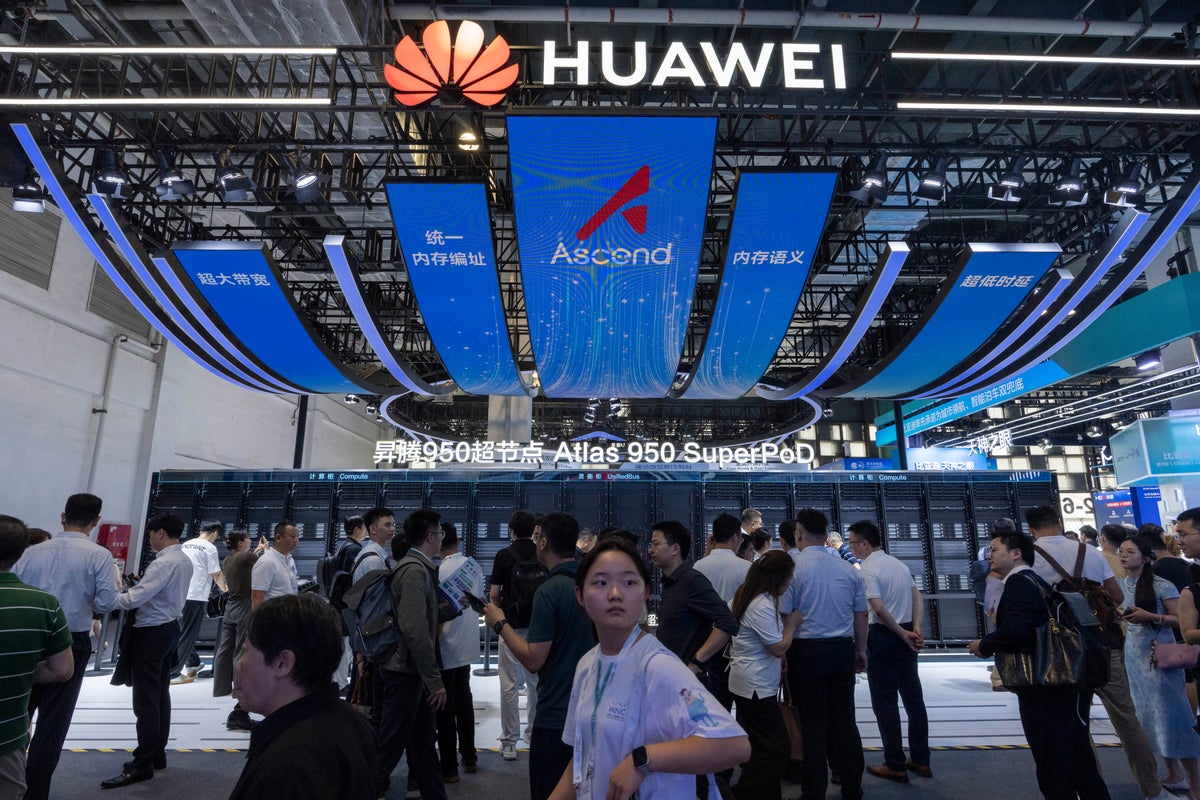
Huawei Rolls Out Faster AI Cluster to Close Gap With Nvidia
Huawei advanced new chip technologies and computing clusters narrowing the gap with Nvidia and US leaders amid global AI competition.
The Compass
You just read five takes on one story.
What's your take? Find your political shape in a few minutes.
Take the test