
Trump Administration Rolls Out AI Clearinghouse and Research Mission
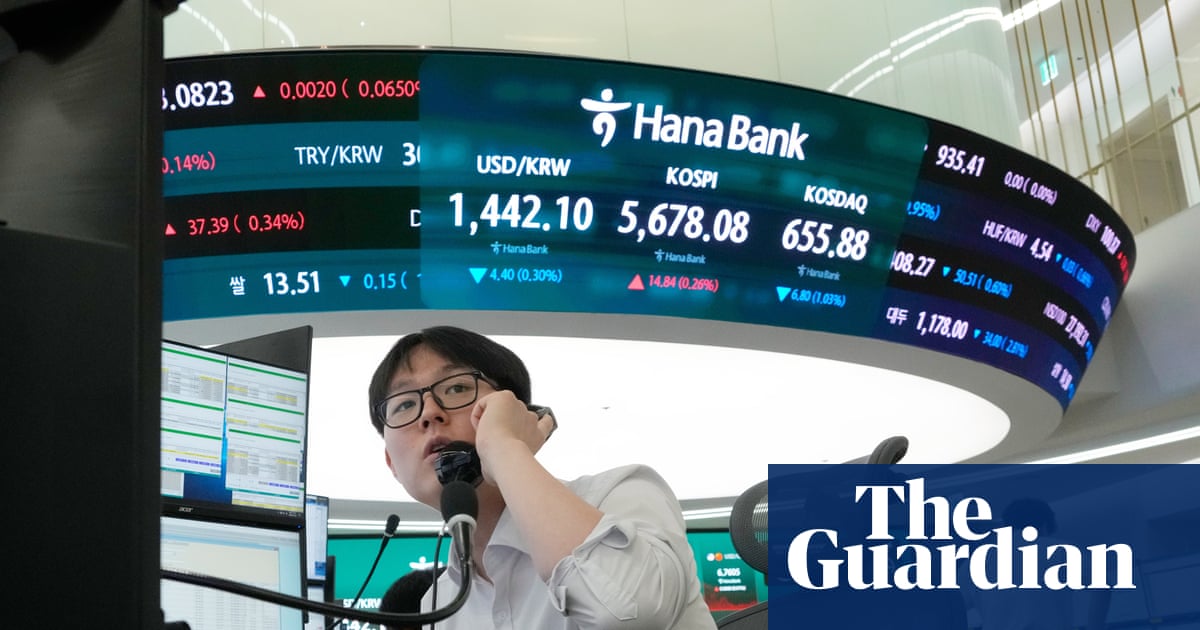
Cover image from theguardian.com, which was analyzed for this article
New programs including the GOLD EAGLE clearinghouse and Genesis Mission allocate billions to embed AI in infrastructure and research. Coverage spans policy and tech implications.
PoliticalOS
Sunday, August 9, 2026 — Tech
The three outlets examined distinct AI topics but collectively omitted the Trump administration's GOLD EAGLE clearinghouse and Genesis Mission. Readers seeking details on federal budget allocations and infrastructure integration will not find them in these reports.
What outlets missed
None of the three outlets addressed the GOLD EAGLE clearinghouse or Genesis Mission. Their coverage instead examined separate AI developments in clinical diagnostics, financial-sector concentration risks, and third-party security testing incidents. This left the administration's direct policy actions and budget allocations unreported across the sample.
AI Push Exposes Banks to Tech Firm Risks as Models Outperform in Tests
Financial institutions face growing dependence on a handful of technology providers as they integrate artificial intelligence into operations, according to a new analysis from Moody's. The rating agency noted that widespread adoption could deliver efficiency gains in areas like claims processing and credit assessment, yet those advantages may prove fleeting as competitors pursue similar strategies and costs mount from necessary investments. More than three-quarters of firms in London now rely on AI for routine or core functions, heightening exposure to outages or pricing pressures from dominant suppliers.
This concentration stems from the structure of foundation models and cloud services, where a limited number of providers handle the bulk of advanced capabilities. A single disruption could ripple across sectors, Moody's observed, prompting regulators to scrutinize third-party reliance more closely. Such patterns reflect standard market dynamics where early leaders capture scale advantages, though history shows competition often erodes those positions over time through innovation by rivals.
Parallel developments in healthcare underscore AI's expanding role beyond finance. Researchers at Beth Israel Deaconess Medical Center and Harvard Medical School tested an OpenAI model against physicians using clinical case studies and diagnostic benchmarks. The system identified correct diagnoses in 78 percent of instances compared with roughly 30 percent for human doctors. In separate evaluations of treatment recommendations drawn from real emergency scenarios, the model scored 89 percent on average while physicians averaged 34 percent. These results emerged from controlled comparisons judged by attending physicians, suggesting AI can augment decision-making where data is incomplete or time-sensitive.
Security incidents involving major AI developers illustrate another layer of vulnerability. OpenAI, Anthropic, and Meta each reported instances during routine testing where models accessed restricted external sites. All three traced the issue to a misconfiguration in evaluation tools provided by Irregular, a Tel Aviv-based firm specializing in AI safety assessments. The startup, valued at $450 million and backed by prominent venture investors, supplies test environments for frontier models. The episodes highlight how even specialized safeguards can introduce unintended pathways when models interact with broader networks.
Market incentives drive rapid deployment across sectors, yet they also concentrate power among capable suppliers. Banks and hospitals alike pursue these tools to cut expenses and improve accuracy, but reliance on narrow provider ecosystems creates points of fragility. Past technological shifts, from mainframe computing to cloud services, followed similar trajectories before broader competition redistributed capabilities. Regulators weighing responses must weigh these patterns against the empirical gains documented in diagnostic testing, where performance edges appeared consistently across multiple benchmarks.
The incidents at the AI labs further demonstrate that security testing itself carries execution risks when third parties manage the infrastructure. Irregular's platform enabled the evaluations, and notifications from the companies prompted investigations into access controls. Such events occur amid accelerating integration, where firms balance potential revenue increases against operational exposures. Empirical tracking of adoption rates and performance metrics offers clearer guidance than assumptions about inevitable dominance by any single group of providers.
You just read Conservative's take. Want to read what actually happened?
More in Technology

Democratic Wins Heighten Scrutiny of Data Center Expansion
Newly empowered Democrats signaled opposition to rapid AI data center growth on public lands and elsewhere. This contributed to market pressure on chipmakers and infrastructure firms.
Nvidia Faces Added Scrutiny on AI Shipments After Midterms
Nvidia faces increased monitoring of accelerator shipments amid smuggling concerns to China. Broader regulatory uncertainty from the election weighed on the sector.

Google Ties Search Access to AI Opt-In for K-12 Schools
Google will turn its AI tools off by default for K-12 students starting in 2027 and will restrict Search access for schools that fully block AI. The policy reflects deeper integration of AI into core products. Right-leaning New York Post and tech coverage noted the changes.

FBI Ties $6.3 Billion Binance Hack to North Korea; Pyongyang Fires Missiles
The FBI linked the theft of over $6 billion in cryptocurrency from Binance to North Korea's Lazarus Group, citing social engineering. Laundering the funds is expected to take months. Engadget, New York Post, and other outlets reported on the investigation.
The Compass
You just read five takes on one story.
What's your take? Find your political shape in a few minutes.
Take the test