
Trump Deletes AI Image of Himself as Healer After Blasphemy Backlash
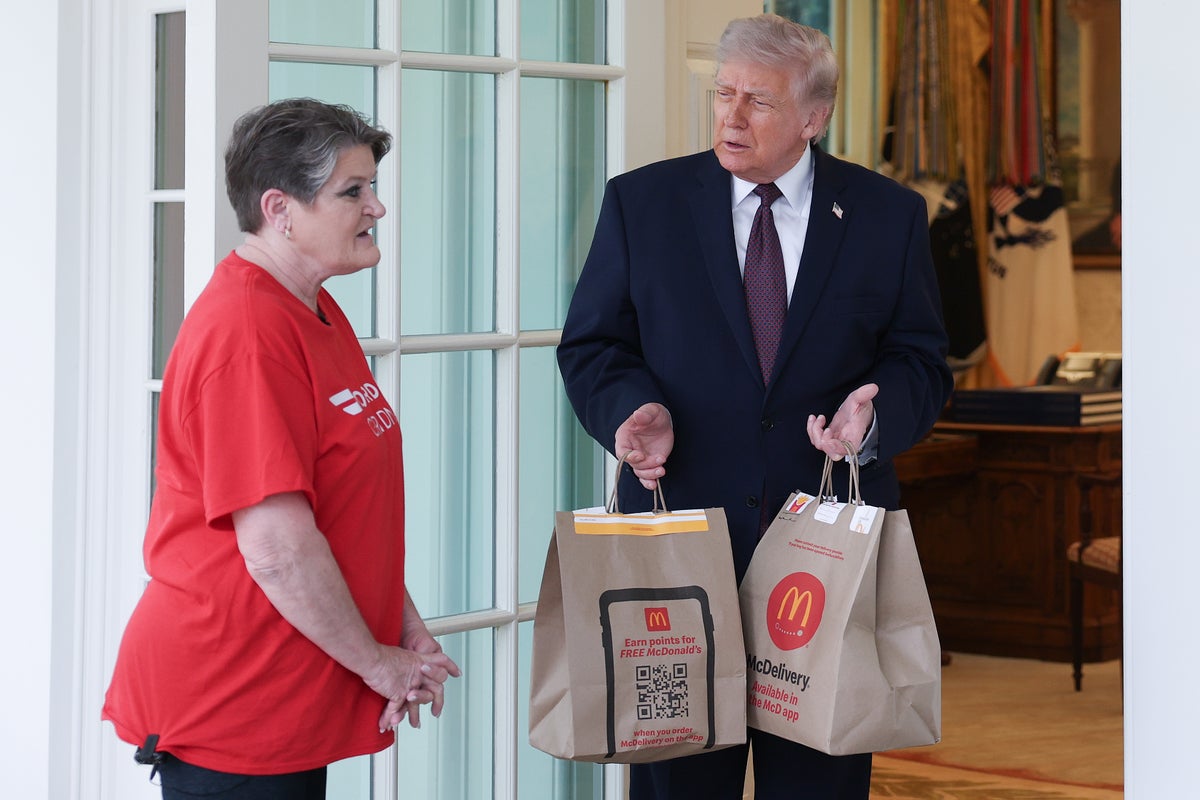
Cover image from independent.co.uk, which was analyzed for this article
Trump shared an AI image portraying himself as Jesus before deleting it, prompting 'Antichrist' accusations and mockery. The post followed Pope feud and drew widespread criticism. It amplified religious controversy.
PoliticalOS
Tuesday, April 14, 2026 — Politics
A single AI image briefly cast Donald Trump in a Christ-like pose, sparking genuine outrage from some prominent religious conservatives who saw blasphemy where he saw a doctor healing the sick. The swift deletion and his explanation did not satisfy critics, yet the backlash appears narrower than some coverage suggested and sits within his long pattern of provocative religious-adjacent rhetoric. The episode highlights unresolved tensions between Trump's messianic political style, traditional Christian boundaries, and a media environment eager to interpret every gesture as either revelation or disaster.
What outlets missed
Most outlets underplayed or omitted the clear medical context visible in the image itself: a hospital bed, multiple nurses, and a prominent Red Cross symbol that directly supports Trump's physician explanation. The post's precise timing, hours after Trump's explicit Truth Social criticisms of Pope Leo XIV as 'weak' on crime and foreign policy during the Iran ceasefire period and near Orthodox Easter, was frequently downplayed, stripping away the religious provocation layer. Several reports amplified specific critical quotes without noting that some, including certain Owens attributions, could not be independently verified in other coverage, while ignoring defenses from figures like Isabel Brown who called backlash a 'misreading.' Right-leaning media's near-silence on the story was rarely analyzed, leaving readers without a sense of how narrowly the outrage registered beyond vocal online voices.
For evangelical Christians who form a core part of Donald Trump's political base, the image struck at something deep. A figure resembling the president, robed in white with a glowing hand pressed to a sick man's forehead, appeared on his Truth Social account Sunday night. Within hours it was gone. The deletion came after sharp criticism from prominent conservatives and religious voices who called the post blasphemous. Trump offered a different account: he believed the picture showed him as a doctor.
The central tension sits in that gap. One reading casts the image as self-deification at a religiously charged moment. The other sees a misinterpreted piece of AI-generated medical symbolism. Both interpretations now circulate, amplified by a president whose supporters have long blended faith and politics in unconventional ways.
The image, first posted April 13, 2026, showed Trump-like figure in robes beside a hospital bed. Nurses stood nearby. A Red Cross symbol appeared in the frame. Patriotic elements filled the background: an American flag, soldiers, eagles. Trump had criticized Pope Leo XIV hours earlier, calling him weak on crime, soft on the radical left and poor on foreign policy amid tensions over Iran. The timing, falling near Orthodox Easter, added fuel.
Critics from the right moved quickly. Rep. Marjorie Taylor Greene labeled it infused with an "Antichrist spirit." Conservative commentator Megan Basham called the post "outrageous blasphemy" and urged Trump to seek forgiveness from God and the public. Pastor Joel Webbon tweeted his belief that Trump was "demon possessed." Riley Gaines, a Trump ally on other issues, asked why he would post it and warned that "God shall not be mocked." Brilyn Hollyhand termed it "gross blasphemy" and said faith is not a prop. Cam Higby, who spends hours daily defending the president, drew a line at blasphemy. The Knights Templar International, a Christian militant group, demanded immediate removal and a public apology. Trump deleted the post roughly 14 hours later.
Some of the quoted reactions, including certain statements attributed to Candace Owens about demonic influence and a spell cast by Paula White, appeared in HuffPost but could not be independently verified across other major outlets. Joe Walsh, a longtime Trump critic who ran against him, also weighed in, though his history places him outside the president's inner circle of allies.
Trump addressed the matter directly with reporters on Monday. He said he thought the image depicted him "as a doctor" connected to the Red Cross and healing the sick. "Only the fake news could come up with" the Jesus interpretation, he added. He told CBS News the deletion was not driven by backlash but by a desire to avoid confusion. He also claimed to have done more for the Catholic Church than any president in the last century. No apology was issued.
The episode did not occur in isolation. Trump had escalated criticism of the newly elected Pope Leo XIV, at one point saying he preferred the pontiff's brother Louis because "Louis is all MAGA." The Iran conflict loomed in the background. A fragile ceasefire had taken hold after U.S. and Israeli operations. Trump had vowed to prevent Iran from obtaining nuclear weapons and discussed blockading key shipping lanes.
Late-night comedy seized on the visual. Jon Stewart, on The Daily Show, stood beside a version of the image and joked about its resemblance to Trump, asking "Am I okay?" Other outlets highlighted the moment as further evidence of the president's unusual relationship with religious imagery. He has shared AI-generated content before. Nick Adams, a Trump-appointed envoy, had previously posted a similar altered image with the caption that Trump was healing the nation.
Reactions split along familiar lines. Left-leaning outlets framed the episode as a rare fracture with evangelical allies. Right-leaning coverage was lighter or absent from flagship platforms like Fox News and Breitbart. Pro-Trump voices such as Isabel Brown of the Daily Wire called the image "disgusting" but argued it was being misread and credited Trump with broader faith revival. The full scale of evangelical discomfort remains difficult to measure. Polls have not yet captured it. Quiet quitting among some MAGA faithful has been reported anecdotally but not broadly confirmed.
The story reveals larger patterns. Trump's use of spectacle, whether in politics or social media, frequently tests boundaries. Christian doctrine warns against idolatry and self-elevation. American conservatism has spent decades arguing that leaders should reflect humility before God. Yet Trump's brand merges personal strength with providential language. The image, medical or messianic, landed in that unresolved space.
By Tuesday the news cycle had moved on to a DoorDash delivery of McDonald's to the White House, a staged event promoting Trump's "no tax on tips" policy. A woman identified as Sharon Simmons, wearing a branded shirt, handed over the bags while Trump tipped her $100 and fielded questions on Iran. The juxtaposition, intentional or not, only sharpened the contrast between sacred imagery and everyday political theater.
What lingers is the unresolved question of intent. Trump maintains the post was innocent. His critics see something darker. Multiple outlets reported the same sequence of posting, outrage and deletion, yet differed sharply on emphasis, sourcing and context. The medical details of the image, the precise papal criticisms and Trump's consistent physician explanation received uneven treatment. Readers comparing accounts across sources encountered different versions of the same afternoon.
More in Politics

Federal Agents Search Omar Home in Ongoing Immigration Probe
Homeland Security agents searched the Minnesota Democrat's DC residence in a criminal probe, prompting accusations of political intimidation from Omar and Democratic leaders. Coverage spans left-leaning outlets like NPR, BBC, and The Guardian alongside right-leaning criticism from The Federalist and Daily Wire.

Trump Diesel Import Plan Draws Pushback Over Russia Ties
The weekend agreement drew bipartisan congressional pushback and criticism from Ukraine's Zelenskyy, with analysts downplaying US fuel price impacts. Right-leaning outlets like National Review, Dispatch, and Washington Examiner questioned its legality and effectiveness.

Independents Test Voter Appetite for Middle Ground in 2026 Midterms
Nearly 200 independents are running in competitive races as voters weigh ballot measures on housing costs in states like Massachusetts. Left-leaning coverage from NYT, NPR, and Guardian highlights turnout and key races while right outlets focus on GOP strategy.
Trump Rallies in Alaska, Ohio to Bolster GOP Senate Candidates
The president rallied in Wasilla for Sen. Dan Sullivan and faced empty seats at an Ohio event amid midterm concerns. Outlets across the spectrum covered the trips as signals of GOP vulnerability weeks before Election Day.
The Compass
You just read five takes on one story.
What's your take? Find your political shape in a few minutes.
Take the test