
Trump Deletes AI Image of Himself as Healer After Blasphemy Backlash
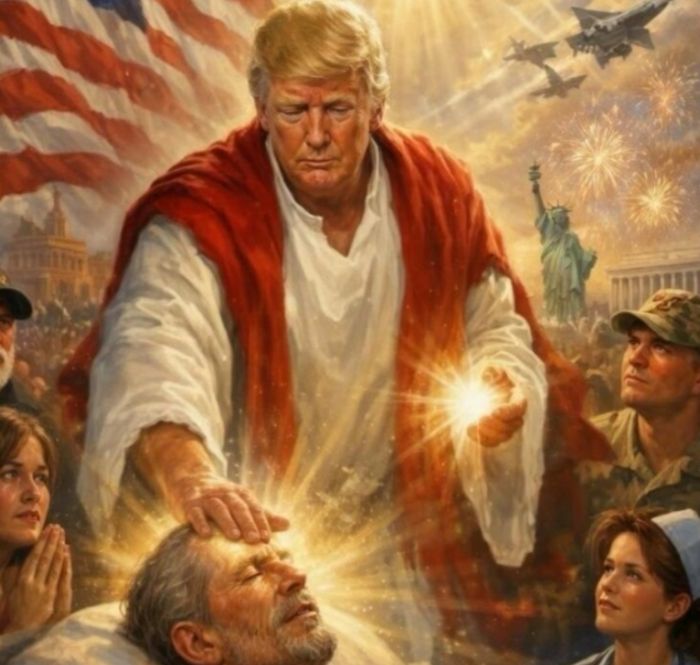
Cover image from crooksandliars.com, which was analyzed for this article
Trump shared an AI image portraying himself as Jesus before deleting it, prompting 'Antichrist' accusations and mockery. The post followed Pope feud and drew widespread criticism. It amplified religious controversy.
PoliticalOS
Tuesday, April 14, 2026 — Politics
A single AI image briefly cast Donald Trump in a Christ-like pose, sparking genuine outrage from some prominent religious conservatives who saw blasphemy where he saw a doctor healing the sick. The swift deletion and his explanation did not satisfy critics, yet the backlash appears narrower than some coverage suggested and sits within his long pattern of provocative religious-adjacent rhetoric. The episode highlights unresolved tensions between Trump's messianic political style, traditional Christian boundaries, and a media environment eager to interpret every gesture as either revelation or disaster.
What outlets missed
Most outlets underplayed or omitted the clear medical context visible in the image itself: a hospital bed, multiple nurses, and a prominent Red Cross symbol that directly supports Trump's physician explanation. The post's precise timing, hours after Trump's explicit Truth Social criticisms of Pope Leo XIV as 'weak' on crime and foreign policy during the Iran ceasefire period and near Orthodox Easter, was frequently downplayed, stripping away the religious provocation layer. Several reports amplified specific critical quotes without noting that some, including certain Owens attributions, could not be independently verified in other coverage, while ignoring defenses from figures like Isabel Brown who called backlash a 'misreading.' Right-leaning media's near-silence on the story was rarely analyzed, leaving readers without a sense of how narrowly the outrage registered beyond vocal online voices.
Trump Faces Rare Rebuke From Religious Conservatives Over Christ Like AI Image
President Donald Trump deleted an AI generated image from his Truth Social account that depicted him in robes with a glowing hand laid upon a sick man in a hospital bed, prompting an unusually sharp backlash from evangelical Christians and longtime conservative allies who viewed the post as blasphemous. The incident, which unfolded amid Trump's public feud with Pope Leo XIV over the ongoing conflict with Iran, has revealed limits to the tolerance some of his religious supporters will extend even to a president they helped elect twice.
The image showed Trump in a white robe and red sash surrounded by a nurse, a soldier, a praying woman and an American flag, with military planes and fireworks in the background. Trump posted it Sunday night shortly after calling the new pope "WEAK" on crime, foreign policy and "catering to the Radical Left." By Monday morning the president had removed the post. When asked about it by reporters, he offered an explanation that strained credulity even for some supporters. "I thought it was me as a doctor," Trump said, claiming the picture related to the Red Cross. "Only the fake news could come up with that one."
The defense did little to quell the anger from quarters that have reliably defended Trump through two impeachments, legal battles, an assassination attempt and years of cultural warfare. Podcaster Candace Owens, once a vocal Trump supporter, told listeners Monday that the president appeared to be "under demonic influence" and suggested spiritual adviser Paula White might have cast a spell on him. "He is surrounded by, ironically, the very thing he accuses me, Megyn and Tucker of being," Owens said.
Pastor Joel Webbon was more direct, posting: "I genuinely believe Trump is currently demon possessed." Author and commentator Megan Basham called the image "outrageous blasphemy" and demanded Trump remove it and seek forgiveness. Comedian and former Republican congressman Joe Walsh, who has become a Trump critic, blamed the president's voters, elected officials and media enablers for encouraging the kind of megalomania that would lead to such a post. Even Riley Gaines, an athlete and activist who has aligned with Trump on transgender sports issues, expressed bewilderment. "Why? Seriously, I cannot understand why he'd post this," she wrote.
The reactions carried a consistent theme. Many of these voices have warned for years about the dangers of political idolatry and the temptation to view any leader as a messiah. Their swift condemnation suggested that for at least some religious conservatives, there are lines that cannot be crossed without inviting divine judgment rather than electoral success. Clint Russell, a podcaster who voted for Trump in the past, captured the shift many described: "In 18 months I went from hesitantly voting for Trump to thinking there's a decent chance he's the antichrist."
The episode comes at a delicate moment in Trump's second term. He has escalated rhetoric against Iran, raising questions about the stability of a fragile ceasefire and even the possibility of American involvement in blockading the Strait of Hormuz. The AI image included martial imagery that some interpreted as linking Trump's personal power to both spiritual and military authority. Rev. Benjamin Cremer noted the double standard that would likely apply if a Democratic president had posted similar content. "If any Democrat president did this, Evangelical Christians would implode," he wrote. "But will they speak out against this? I highly doubt it." In this case, many did.
Trump's behavior after deleting the post only added to the sense of chaos. He called an impromptu press event at the White House to accept a DoorDash delivery of McDonald's McNuggets from a woman wearing a "DoorDash Grandma" T-shirt. As she praised his "no tax on tips" policy and Trump handed her a hundred dollar bill, the president took questions about Iran while holding greasy paper bags. The strange tableau, complete with a professionally made up delivery driver, played out as the president mused about military options in the Middle East. The contrast between pretend divine healer and fast food patron was lost on no one.
Late night host Jon Stewart highlighted the image's resemblance to familiar messianic tropes during Monday's episode of The Daily Show, posing next to it and quipping, "Am I okay?" Left leaning outlets seized on the story with evident glee, treating it as confirmation of long held warnings about Trump's narcissism. Yet the more significant development may be the fracture it exposed on the right. Religious conservatives have long argued that character and humility matter in leaders, even when those leaders deliver policy victories on abortion, judges or border security. This episode tested that conviction.
The president has frequently used AI generated images to promote his agenda, often blending patriotic symbols with his own likeness. Previous posts have drawn less internal criticism. This one crossed a threshold for many who take seriously the biblical prohibition against graven images and self exaltation. Trump allies such as Nick Adams had circulated similar visuals before, describing the president as "healing this nation." The pattern suggests a rhetorical escalation that some supporters now regret encouraging.
As the White House Correspondents' Dinner approaches later this month, Trump plans to attend for the first time since 2015, expecting praise as one of the greatest presidents. The recent events may complicate that narrative. A federal judge this week dismissed Trump's defamation suit against The Wall Street Journal over its reporting on a bawdy birthday card he allegedly sent Jeffrey Epstein years ago, another reminder that past associations continue to shadow his administration.
What remains is a rare moment of accountability from within Trump's coalition. For years, critics on the left have accused his supporters of cult like devotion. When religious conservatives themselves warn of demonic influence and antichrist parallels, it suggests that devotion has its limits. Whether those limits will affect Trump's governing power or simply reflect the enduring power of religious principle over partisan loyalty is a question the coming months will test. In a political era defined by personality, the pushback serves as a reminder that some traditions refuse to bend, even for a president who has delivered concrete results for the constituencies that once embraced him without reservation.
You just read Conservative's take. Want to read what actually happened?
More in Politics
Trump at 32% Approval as Gas Prices Test GOP Midterm Hopes
NYT/Siena polling showed Trump's approval at historic lows around 32 percent with Democrats leading by double digits in key districts. Early voting has surged in battleground states.

Record Early Voting Hits Battlegrounds, Shifting Partisan Shares
AP analysis found hundreds of thousands more early ballots than in 2022 in states including Texas, Ohio, Kansas, Maine, and North Carolina, shifting partisan dynamics.
Trump Backs Marshall in Kansas Senate Race Tightened by Farm Costs
President Trump rallied in deep-red Kansas for GOP Sen. Roger Marshall in a competitive race, announcing an $8 billion farm fuel relief program amid high diesel prices. Democrats see an opening to end 94 years of GOP dominance in the state.

Trump Pauses Russia Sanctions Amid Ukraine Tensions and Missile Strikes
Trump waived sanctions on Russia and floated trilateral talks with Putin and Xi as part of ending the Ukraine war, while tensions rose with Zelenskyy over Starlink and arms. Bipartisan senators engaged Zelenskyy amid the shifts.
The Compass
You just read five takes on one story.
What's your take? Find your political shape in a few minutes.
Take the test