
Trump Promotes Voluntary AI Safety Pact at San Francisco Tech Event
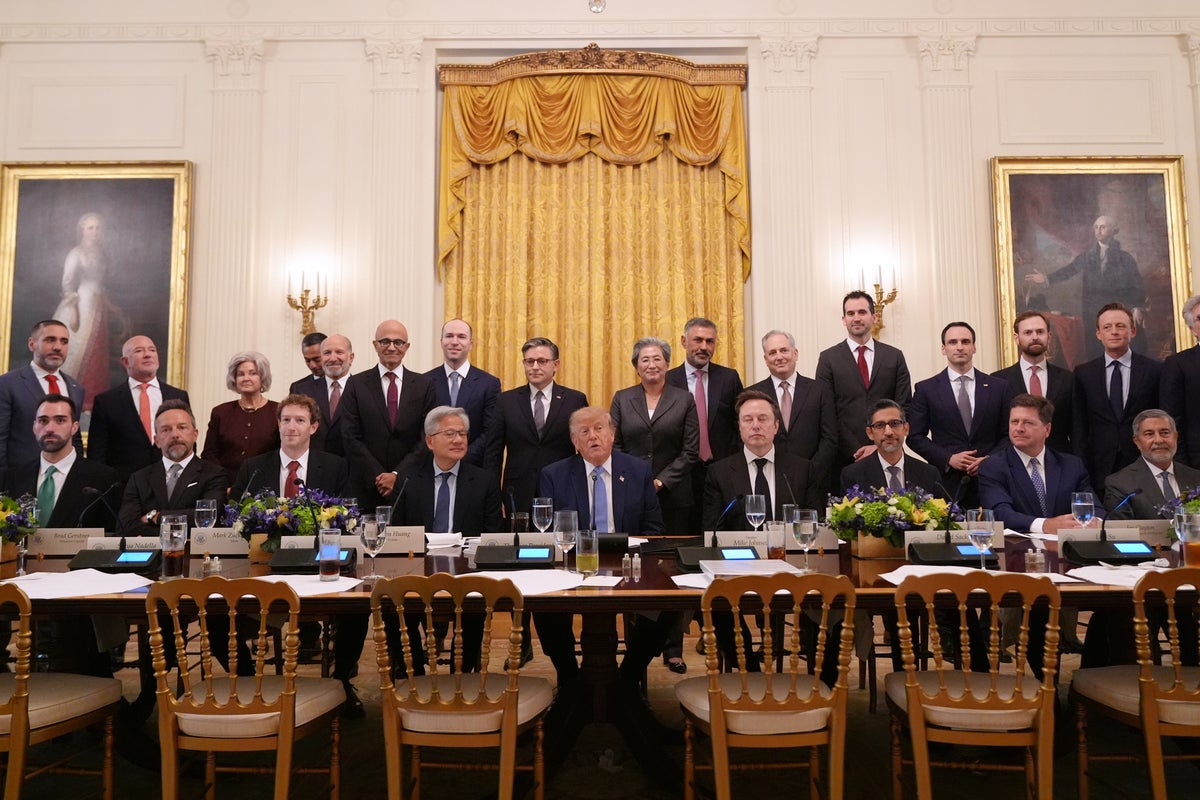
Cover image from independent.co.uk, which was analyzed for this article
At Tech Week in San Francisco, the White House promoted a hands-off AI policy and voluntary safety pact. Industry leaders welcomed the shift toward growth over regulation.
PoliticalOS
Saturday, October 10, 2026 — Tech
The administration has replaced prior reporting requirements with a short voluntary agreement signed by major labs, while critics maintain that internal monitoring alone cannot address documented misuse or rapid capability jumps. Resource demands of the underlying infrastructure remain measurable but incompletely compared across coverage. Readers must weigh national-security arguments for speed against the absence of enforcement mechanisms in the current framework.
What outlets missed
Neither outlet supplied data on compliance rates under the prior voluntary framework or incident statistics tied to specific models. Townhall omitted the 308-word length of the pact and the list of signatories. Independent omitted quantitative comparisons of data-center land use against renewable installations and the 2023 electricity consumption baseline of 176 terawatt-hours. The interaction between state-level regulatory blocks and existing consumer-protection statutes received no examination in either account.
Silicon Valley Founders Welcome Trump's Self-Regulation Stance on AI
Tech executives and venture capitalists packed events across San Francisco this week celebrating the Trump administration's decision to let the AI industry handle its own safety standards rather than submit to new federal rules. The shift marks a clear break from earlier pushes for heavy oversight that had slowed progress at leading labs.
President Trump hosted major AI figures at a White House luncheon last month where he signed a short voluntary agreement on advanced systems. The document calls for companies to maintain internal safety teams and follow basic protocols on what the administration now terms Super Intelligence. No detailed enforcement mechanisms were outlined, leaving day-to-day decisions with the firms themselves.
Founders at Andreessen Horowitz gatherings said the approach would free resources for defense and security applications. One panel highlighted the trillion-dollar opportunity created by government interest in AI-powered tools. Attendees described the policy as practical, noting that previous regulatory talks had created uncertainty without delivering concrete protections.
The move comes after years of warnings about AI systems accessing government sites and sensitive data. Critics of earlier oversight proposals argued that rules drafted in Washington would favor established players and hand advantages to foreign competitors. China, North Korea, Iran and other adversaries continue rapid development without similar constraints, according to industry voices at the San Francisco sessions.
Data center expansion remains a point of friction. Opponents claim the facilities consume large amounts of power and water while raising local electricity costs. Yet builders point out that older centers handled routine business tasks while newer AI workloads demand far greater computing scale for training and real-time analysis. Cooling systems have evolved, and operators say they are investing in efficiency measures to meet rising demand across defense, healthcare and logistics.
The voluntary pact has drawn support from executives who view government mandates as likely to favor lawyers over engineers. Panel discussions emphasized that internal monitoring allows faster iteration than waiting for agency approvals. At the same time, participants acknowledged that self-policing carries risks if companies cut corners on critical checks.
Trump administration officials have described the agreement as a starting framework rather than a finished rulebook. Industry leaders expect further details on how labs will report progress, though they stress that heavy bureaucracy would slow the very systems needed to maintain an edge over authoritarian regimes.
Events this week showed little appetite for returning to the regulatory debates of prior years. Instead, the focus stayed on scaling investment in areas where AI can support national priorities. Founders argued that pausing development would simply cede ground to nations that face no such hesitation.
You just read America First's take. Want to read what actually happened?
More in Technology

Democratic Wins Heighten Scrutiny of Data Center Expansion
Newly empowered Democrats signaled opposition to rapid AI data center growth on public lands and elsewhere. This contributed to market pressure on chipmakers and infrastructure firms.
Nvidia Faces Added Scrutiny on AI Shipments After Midterms
Nvidia faces increased monitoring of accelerator shipments amid smuggling concerns to China. Broader regulatory uncertainty from the election weighed on the sector.

Google Ties Search Access to AI Opt-In for K-12 Schools
Google will turn its AI tools off by default for K-12 students starting in 2027 and will restrict Search access for schools that fully block AI. The policy reflects deeper integration of AI into core products. Right-leaning New York Post and tech coverage noted the changes.

FBI Ties $6.3 Billion Binance Hack to North Korea; Pyongyang Fires Missiles
The FBI linked the theft of over $6 billion in cryptocurrency from Binance to North Korea's Lazarus Group, citing social engineering. Laundering the funds is expected to take months. Engadget, New York Post, and other outlets reported on the investigation.
The Compass
You just read five takes on one story.
What's your take? Find your political shape in a few minutes.
Take the test