
Trump Proposes 250-Foot DC Triumphal Arch and White Paint for Historic Building
Cover image from cbsnews.com, which was analyzed for this article
Designs for a 250-foot arch honoring Trump in DC were revealed, igniting controversy over spending. Related proposals include painting federal building facades white. Critics question symbolism and costs.
PoliticalOS
Saturday, April 11, 2026 — Politics
The Trump administration is advancing two concrete plans that would visibly reshape Washington's most visited historic corridor: a 250-foot golden arch at Memorial Circle and white paint on the Eisenhower Executive Office Building. Both face active lawsuits, federal preservation law barriers, and expert objections over cost, irreversibility and visual impact on Arlington. Readers should understand that while the renderings are real and funding reserved, legal and review processes make construction uncertain.
What outlets missed
Both outlets omitted that the Eisenhower Executive Office Building is a National Historic Landmark whose granite facade cannot be painted without likely irreversible damage, according to expert analysis cited in the 2025 preservation lawsuit. Daily Caller failed to note the site's prior non-Trump arch proposals, including a 2019 neoclassical design, or that Trump's historical claims about a pre-Civil War approval have been fact-checked as inaccurate. CBS downplayed the year-old federal lawsuit blocking alterations and never mentioned the $15 million total taxpayer commitment or the veterans' specific objection that the arch would harm their experience visiting Arlington. Neither story fully reconciled the celebratory 250th-anniversary framing with the active court challenges that could stop both projects before ground is broken.
Trump Administration Advances Patriotic Designs to Mark Americas Founding in Capital Landscape
The Trump administration is moving forward with two distinctive proposals that would reshape prominent features of Washington, bringing classical scale and explicit references to American founding principles into the everyday experience of visitors to the nations capital. One envisions a towering triumphal arch at a prominent yet long underused site. The other would alter the appearance of a major executive branch building long known for its somber gray exterior. Both reflect an emphasis on visibility, tradition, and the semiquincentennial celebration of American independence scheduled for 2026.
On Friday the administration submitted detailed renderings to the Commission of Fine Arts for what it calls the Independence Arch. The structure would rise 250 feet above Memorial Circle, the roundabout on the Virginia side of the Potomac River directly across from the Lincoln Memorial. That location now holds little more than an empty traffic circle but sits on the axis linking some of the citys most visited patriotic sites. Planners intend the arch to serve as a permanent landmark for the 250th anniversary of the Declaration of Independence, matching its height to the milestone year.
The design, prepared by the American firm Harrison Design, features classical proportions on a monumental scale. At its summit stand two eagles flanking a 60foot golden winged figure identified by President Trump as Lady Liberty. Gold lettering drawn from the Pledge of Allegiance would be legible from a distance. The side facing the Lincoln Memorial would read One Nation Under God. The side oriented toward Arlington National Cemetery would read Liberty and Justice For All. Four golden lion statues would guard the base, with additional gold accents distributed throughout the structure. The overall effect recalls the great triumphal arches of history while incorporating unmistakably American symbols and language.
Trump announced the formal filing on Truth Social, writing that his administration had delivered plans for what will be the GREATEST and MOST BEAUTIFUL Triumphal Arch, anywhere in the World. He added that the project would prove a wonderful addition to the Washington D.C. area for all Americans to enjoy for many decades to come. The timing aligns with broader preparations for America 250, the national effort to commemorate the founding era. A spending plan from the National Endowment for the Humanities, first reported by NOTUS, has already reserved $2 million in special initiative funds and $13 million in matching grants for the arch. The endowment frequently supports projects that combine public seed money with private contributions, a model that appears at work here.
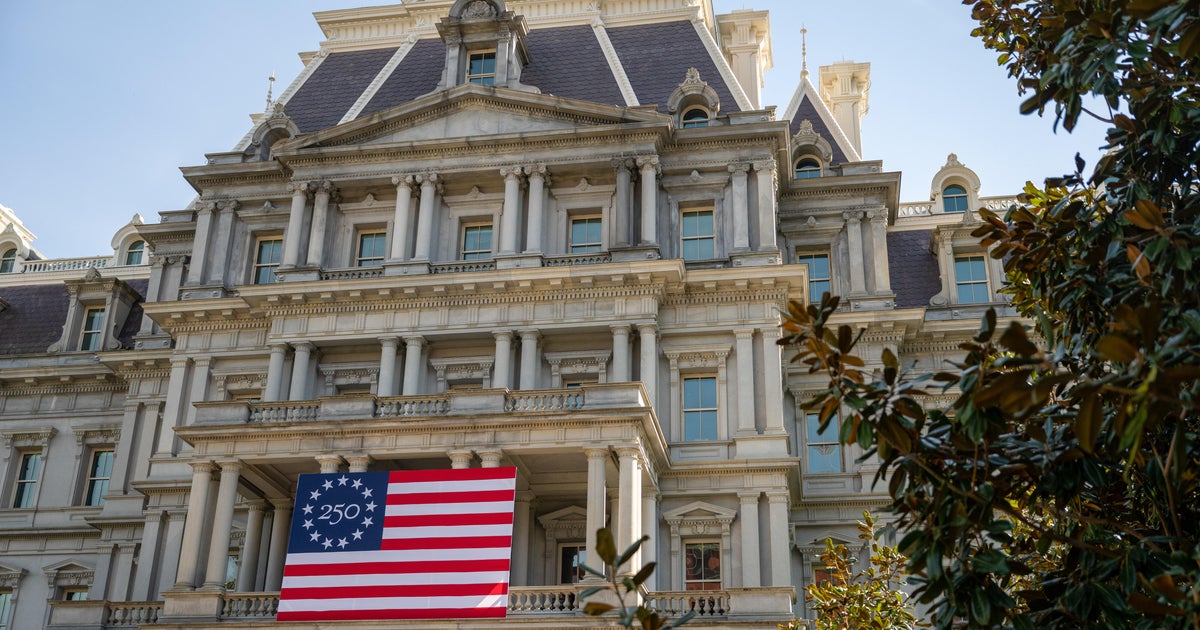
The second proposal submitted to architectural review authorities calls for painting the Eisenhower Executive Office Buildings gray stone facade white. The French Second Empirestyle structure, completed in the late 19th century, stands immediately west of the White House and provides office space for hundreds of staff members, including those on the National Security Council. Its current slategray color has long distinguished it from the bright white of the presidential mansion next door. Administration officials have not released extensive public commentary on the precise rationale, but the change would create a more unified visual impression across the executive office complex and brighten a building that many tourists photograph daily without realizing its operational importance.
Both initiatives share a common theme. They seek to make enduring statements about national identity at locations millions of citizens and foreign visitors pass each year. Memorial Circle lies on a direct line between the Lincoln Memorial and Arlington National Cemetery, two of the most solemn patriotic sites in America. The proposed arch would give that axis a vertical focal point that asserts continuity with the founding documents and the sacrifices required to defend them. Similarly, making the Eisenhower Building white would harmonize it with the symbolic center of American government rather than allowing it to recede into bureaucratic drabness.
Critics of large federal building projects often raise concerns about cost and the proper role of government in shaping public aesthetics. In this case, the use of matching funds for the arch suggests an attempt to leverage private support rather than rely solely on taxpayers. The Commission of Fine Arts, an independent body established in 1910 precisely to advise on matters of design and planning in the capital, will now evaluate both proposals on their architectural merit, compatibility with surrounding monuments, and long-term maintenance implications. Its recommendations carry considerable weight even if they are not legally binding.
The arch renderings released Friday continue a pattern established during Trumps first term, when he issued an executive order promoting classical architectural styles for federal buildings. That order cited the need to restore dignity and beauty to public structures after decades of modernist experimentation that many found cold or uninspiring. Supporters argue that grand, legible monuments help transmit historical memory to new generations more effectively than abstract sculptures or minimalist designs. Detractors counter that such projects risk becoming personal monuments to the president who builds them. The current proposals test where that line lies.
Washingtons monumental core has always been a work in progress. The Lincoln Memorial itself was completed in 1922, decades after Lincolns death. The Washington Monument required nearly a century from conception to dedication. Each generation has added its own markers. What distinguishes the present effort is the explicit incorporation of religious language from the Pledge of Allegiance and the scale of the golden elements at a time when many cultural institutions have grown wary of such unabashed patriotism.
If approved and built, the Independence Arch would likely become an immediate draw for tour buses and school groups. Its inscriptions would be among the largest displays of the full Pledge of Allegiance anywhere in the country. The view from its base toward the Lincoln Memorial on one side and the graves of veterans on the other would create a deliberate tableau of memory, faith, and national purpose. Meanwhile, a freshly painted Eisenhower Building would present a brighter face to Pennsylvania Avenue and the millions who walk past it annually.
These proposals arrive as the country prepares for its 250th birthday amid continuing debates about how best to teach and transmit American history. By choosing symbols that evoke unity under God, liberty, and justice, the administration is placing a bet that classical forms and straightforward declarations of national ideals remain the most effective way to impress those values upon residents and visitors alike. The Commission of Fine Arts deliberations in coming weeks will help determine whether that bet finds institutional support or encounters resistance from those who prefer more restrained government intervention in the capital skyline. For now, the renderings and the paint proposal stand as concrete expressions of one administrations conviction that the nations capital should not merely administer but also inspire.
You just read Conservative's take. Want to read what actually happened?