
Trump Proposes 250-Foot DC Triumphal Arch and White Paint for Historic Building
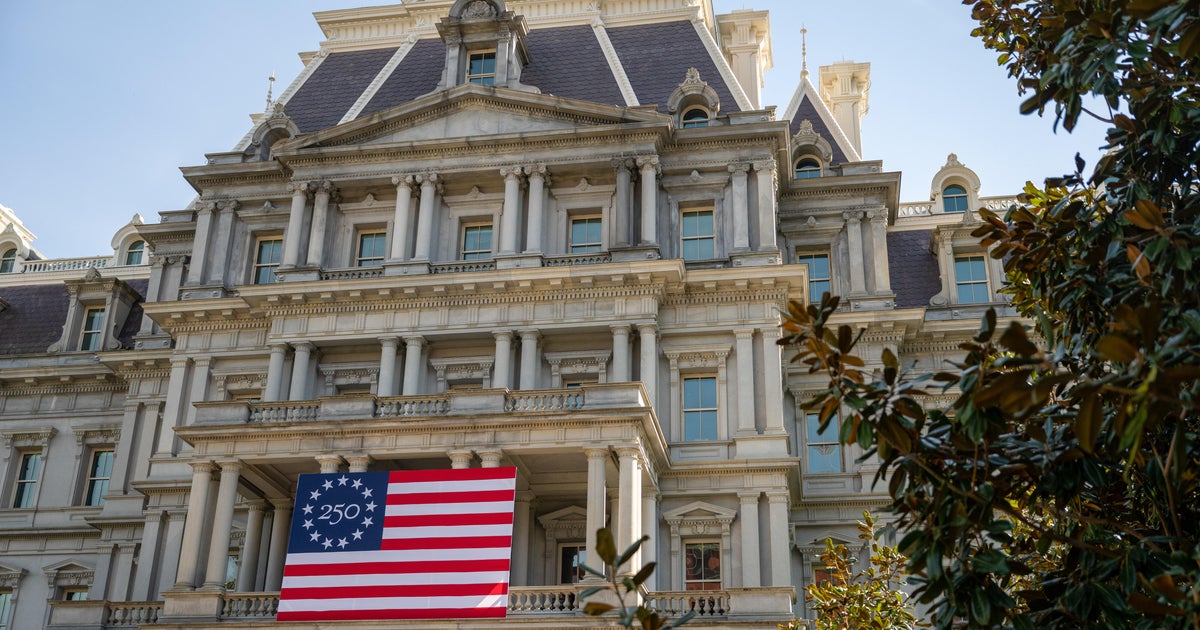
Cover image from cbsnews.com, which was analyzed for this article
Designs for a 250-foot arch honoring Trump in DC were revealed, igniting controversy over spending. Related proposals include painting federal building facades white. Critics question symbolism and costs.
PoliticalOS
Saturday, April 11, 2026 — Politics
The Trump administration is advancing two concrete plans that would visibly reshape Washington's most visited historic corridor: a 250-foot golden arch at Memorial Circle and white paint on the Eisenhower Executive Office Building. Both face active lawsuits, federal preservation law barriers, and expert objections over cost, irreversibility and visual impact on Arlington. Readers should understand that while the renderings are real and funding reserved, legal and review processes make construction uncertain.
What outlets missed
Both outlets omitted that the Eisenhower Executive Office Building is a National Historic Landmark whose granite facade cannot be painted without likely irreversible damage, according to expert analysis cited in the 2025 preservation lawsuit. Daily Caller failed to note the site's prior non-Trump arch proposals, including a 2019 neoclassical design, or that Trump's historical claims about a pre-Civil War approval have been fact-checked as inaccurate. CBS downplayed the year-old federal lawsuit blocking alterations and never mentioned the $15 million total taxpayer commitment or the veterans' specific objection that the arch would harm their experience visiting Arlington. Neither story fully reconciled the celebratory 250th-anniversary framing with the active court challenges that could stop both projects before ground is broken.
Trump Administration Pushes Striking Architectural Changes Across Washington to Shape Its Enduring Image
President Donald Trump is advancing two distinctive proposals that would materially alter prominent sites in the nation’s capital, each framed as a contribution to the country’s upcoming 250th anniversary but carrying unmistakable personal imprint. On Friday the administration released detailed renderings of a proposed 250-foot triumphal arch intended for Memorial Circle, a currently empty roundabout on the Virginia side of the Potomac River directly across from the Lincoln Memorial. At the same moment, Trump has submitted plans to repaint the slate-gray Eisenhower Executive Office Building adjacent to the White House in white, according to documents filed with the Commission of Fine Arts, the independent body that advises on design questions in the federal city.
The larger and more theatrical of the two projects is the “Independence Arch,” designed by the firm Harrison Design. Standing 250 feet tall to echo the anniversary milestone, the structure would be crowned by two eagles flanking a 60-foot golden winged figure that Trump has identified as Lady Liberty. Gold lettering drawn from the Pledge of Allegiance would face outward in both directions: “One Nation Under God” oriented toward the Lincoln Memorial and “Liberty and Justice For All” turned toward Arlington National Cemetery. Four golden lion statues would guard the base, with additional gold accents distributed across the monument. The renderings show a classical triumphal form reinterpreted in a highly polished, reflective style that departs from the restrained stone memorials that otherwise populate the National Mall and its immediate surroundings.
Trump announced the formal submission to the Commission of Fine Arts on Truth Social, writing that his administration had filed “presentation and plans” for what he called “the GREATEST and MOST BEAUTIFUL Triumphal Arch, anywhere in the World.” He added that the project “will be a wonderful addition to the Washington D.C. area for all Americans to enjoy for many decades to come.” The idea was first teased by the president in October 2025. A spending plan from the National Endowment for the Humanities, first reported by NOTUS, has set aside $2 million in special initiative funds and $13 million in matching grants for the arch. The endowment, which routinely blends public appropriations with private donations, is positioning the project as part of broader semiquincentennial programming.
The second proposal targets the Eisenhower Executive Office Building, the ornate French Second Empire structure that houses working space for senior White House staff, including much of the National Security Council. Trump’s filing seeks permission to cover the building’s characteristic gray stone facade with white paint. The change would bring the exterior closer in tone to the White House itself and would coincide with the display of an America 250 flag already flying outside the complex. While the White House has not released a detailed rationale, the timing suggests the administration views the repainting as another visual element in a coordinated effort to refresh and unify the ceremonial core of the capital for the 250th anniversary celebrations.
Taken together, the two filings illustrate a pattern. Trump has made clear he wants visitors to the capital to encounter physical reminders of his conception of American identity that cannot be ignored or easily removed. The arch’s scale and material choices, heavy on gold and explicit patriotic text, project a particular reading of national strength and unity. Its placement in a prominent but undeveloped traffic circle ensures it would become part of the visual corridor linking the Lincoln Memorial, the Potomac, and Arlington, sites already freighted with layered historical meaning. The repainting of the Eisenhower Building, though less monumental, would similarly shift the everyday backdrop of executive governance from the muted gray that has defined it for generations to a brighter, more uniform white.
Both proposals now await review by the Commission of Fine Arts, whose mandate is to maintain aesthetic coherence across the capital’s most sensitive districts. The commission has historically balanced innovation against the city’s established neoclassical and federal styles. How it responds to a 250-foot golden arch and the sudden whitening of a major Second Empire landmark will test where that balance now lies. The administration’s use of National Endowment for the Humanities resources for the arch also raises procedural questions about the boundary between commemoration and executive branding, though supporters argue the semiquincentennial offers a rare opportunity to invest in permanent civic infrastructure.
The projects arrive at a moment when Washington is already layered with presidential legacies: the Jefferson Memorial, the FDR memorial, the MLK monument. Trump’s entries stand out for their explicit scale, their reliance on gold detailing, and the speed with which they have moved from concept to formal submission. The Independence Arch in particular appears engineered to function as both anniversary celebration and personal testament. Its inscriptions face the two poles of American civic religion, the temple-like Lincoln Memorial and the quiet rows of Arlington’s graves. Whether the Commission of Fine Arts ultimately approves the designs, Trump has already succeeded in forcing a conversation about what kind of symbols the capital should carry into its third century.
For now the renderings and the paint proposal exist only on paper. Yet they signal an administration intent on treating the built environment of Washington as another arena in which to define national memory. The coming months of commission debate, public comment, and possible revisions will determine how much of that vision becomes concrete, gold-accented, and permanently visible to every tourist, protester, and future president who passes through the city.
You just read Liberal's take. Want to read what actually happened?