
Trump Proposes 250-Foot DC Triumphal Arch and White Paint for Historic Building
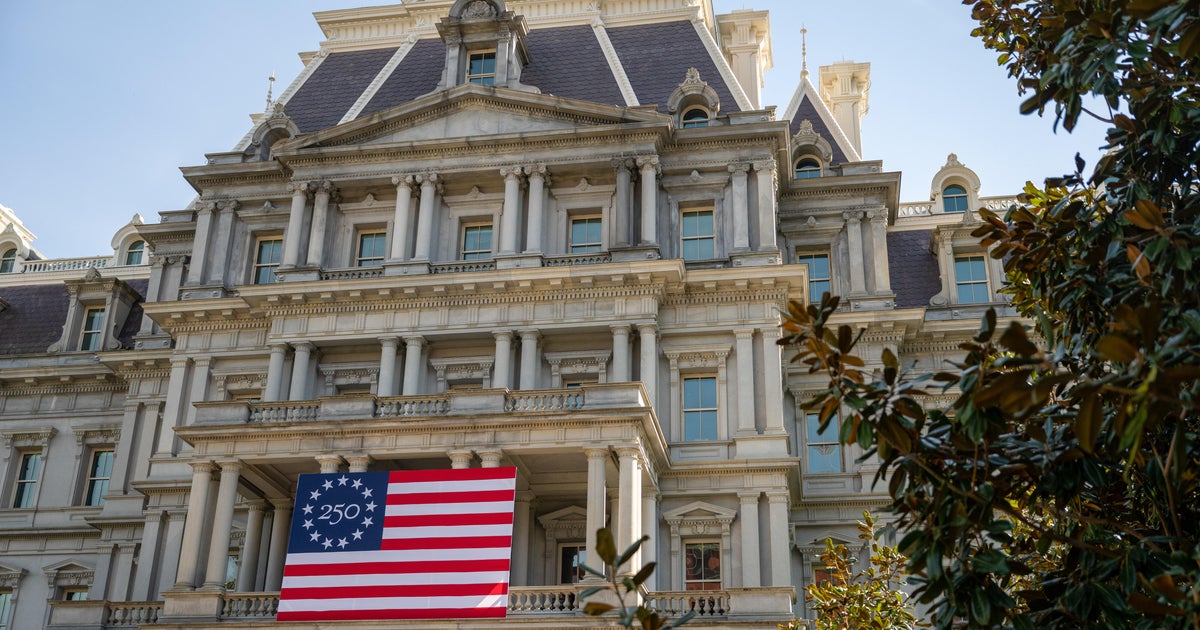
Cover image from cbsnews.com, which was analyzed for this article
Designs for a 250-foot arch honoring Trump in DC were revealed, igniting controversy over spending. Related proposals include painting federal building facades white. Critics question symbolism and costs.
PoliticalOS
Saturday, April 11, 2026 — Politics
The Trump administration is advancing two concrete plans that would visibly reshape Washington's most visited historic corridor: a 250-foot golden arch at Memorial Circle and white paint on the Eisenhower Executive Office Building. Both face active lawsuits, federal preservation law barriers, and expert objections over cost, irreversibility and visual impact on Arlington. Readers should understand that while the renderings are real and funding reserved, legal and review processes make construction uncertain.
What outlets missed
Both outlets omitted that the Eisenhower Executive Office Building is a National Historic Landmark whose granite facade cannot be painted without likely irreversible damage, according to expert analysis cited in the 2025 preservation lawsuit. Daily Caller failed to note the site's prior non-Trump arch proposals, including a 2019 neoclassical design, or that Trump's historical claims about a pre-Civil War approval have been fact-checked as inaccurate. CBS downplayed the year-old federal lawsuit blocking alterations and never mentioned the $15 million total taxpayer commitment or the veterans' specific objection that the arch would harm their experience visiting Arlington. Neither story fully reconciled the celebratory 250th-anniversary framing with the active court challenges that could stop both projects before ground is broken.
Trump Administration Submits Plans for Massive Golden Arch and White Paint on Historic Executive Office Building
The Trump administration is advancing an ambitious set of proposals that would dramatically reshape prominent sites in Washington, including the construction of a towering 250-foot triumphal arch and the repainting of the Eisenhower Executive Office Building’s signature gray stone facade. Both initiatives, submitted to the Commission of Fine Arts, are framed by the White House as celebrations of the nation’s upcoming 250th anniversary, yet they also reflect President Donald Trump’s explicit desire to imprint a bold and permanent stamp on the capital’s landscape.
New renderings released Friday depict the so-called Independence Arch rising from the center of Memorial Circle, a currently undeveloped roundabout directly across the Potomac River from the Lincoln Memorial. At 250 feet tall, the arch is designed to match the anniversary milestone it purports to honor. Its crown would feature two eagles flanking a 60-foot golden winged figure that Trump has personally identified as Lady Liberty. Gold lettering drawn from the Pledge of Allegiance would be visible from key vantage points: “One Nation Under God” facing the Lincoln Memorial and “Liberty and Justice For All” oriented toward Arlington National Cemetery. Four golden lion statues would guard the base, with additional gilded accents covering other parts of the structure.
The architectural firm Harrison Design, which maintains offices in several American cities, produced the renderings. Trump first teased the concept in October 2025. In a Truth Social post on Friday, the president hailed the project in characteristic language. “I am pleased to announce that TODAY my Administration officially filed the presentation and plans to the highly respected Commission of Fine Arts for what will be the GREATEST and MOST BEAUTIFUL Triumphal Arch, anywhere in the World,” he wrote. “This will be a wonderful addition to the Washington D.C. area for all Americans to enjoy for many decades to come!”
Federal funding has already been earmarked. A spending plan from the National Endowment for the Humanities, first reported by NOTUS, sets aside $2 million in special initiative funds along with $13 million in matching funds for the arch. The independent agency routinely blends public dollars with private contributions for commemorative projects.
The arch proposal arrives alongside a separate but equally striking plan to alter one of Washington’s most recognizable government structures. The Trump administration has formally submitted plans to cover the Eisenhower Executive Office Building’s gray stone exterior with white paint. The French Second Empire-style building, which stands immediately west of the White House, provides workspace for hundreds of staffers, including key personnel on the National Security Council. Its current slate-gray appearance has long defined its visual identity within the capital’s monumental core.
Photographs circulating with the proposal show an America 250 flag already flying outside the building, tying the repaint job thematically to the semiquincentennial commemorations. The Commission of Fine Arts, which reviews architectural and design changes in the federal city, will now evaluate both the arch and the painting proposal. The independent body has historically served as a guardian of aesthetic consistency in Washington, where every alteration to the National Mall or surrounding federal properties carries symbolic weight.
Taken together, the two projects illustrate a concerted effort by the Trump administration to ensure that visitors to the nation’s capital encounter unmistakable markers of this presidential term. The arch’s scale and lavish use of gold would make it impossible to ignore for anyone approaching the Lincoln Memorial or crossing the Potomac. The decision to paint the Eisenhower Executive Office Building white would similarly transform a structure that has stood as a visual counterpoint to the White House for generations. While the White House describes these changes as patriotic enhancements, they also represent a departure from the more restrained classical style that has governed much of Washington’s monumental architecture for over a century.
Critics of the proposals, though not quoted in the administration’s announcements, are likely to raise questions about cost, taste, and historical appropriateness. The $15 million already reserved for the arch comes from an agency whose budget is frequently debated in Congress. The notion of painting over the historic masonry of the Eisenhower building, a National Historic Landmark, may spark debate among preservationists who argue that such a radical color change risks undermining the structure’s architectural integrity.
Trump has made clear throughout his political career that he views large, visible monuments as essential tools for projecting strength and permanence. The triumphal arch fits neatly into that worldview, echoing classical forms while incorporating the gilded aesthetic the president has long favored in his personal properties. By placing the structure within sight of both the Lincoln Memorial and Arlington National Cemetery, the design attempts to insert itself into the capital’s most solemn axis of American memory.
The timing is also notable. With the 250th anniversary of the Declaration of Independence approaching in 2026, the administration has seized on the milestone as justification for projects that will long outlast any temporary commemorative events. Unlike parades or festivals, these physical changes would remain part of Washington’s built environment for decades, ensuring that future generations touring the capital cannot avoid encountering Trump’s vision of national identity.
The Commission of Fine Arts typically moves deliberately on such submissions, soliciting expert testimony and public comment before issuing recommendations. Its review will determine whether the arch receives final approval and whether the gray stone of the Eisenhower building will indeed be covered in white. In the meantime, the renderings and plans offer an early look at how the current administration hopes to be remembered in the physical fabric of the city it has governed.
For residents and tourists alike, the proposals raise a broader question about the role of presidential legacy in a democratic capital. Previous presidents have left their marks through policy, crisis leadership, or quiet additions to the National Mall. The current occupant is pursuing a more overt strategy, one that relies on height, gold, and dramatic color shifts to command attention. Whether these changes ultimately enrich the visitor experience or simply crowd the landscape with one man’s self-image remains to be seen as the review process unfolds.
The administration has not yet detailed the full timeline for construction or painting, nor has it released comprehensive cost estimates beyond the initial NEH reservation. What is already evident, however, is the determination to move quickly. By filing both proposals on the same day and publicizing them aggressively, the White House is signaling that these projects are priorities as the 250th anniversary draws near. In doing so, it is betting that grandeur and visibility will translate into a legacy that cannot be ignored, no matter who occupies the Oval Office in the years ahead.
You just read Progressive's take. Want to read what actually happened?