
H-1B Filings Drop Sharply at Walmart, Goldman as New Fees Bite
Cover image from businessinsider.com, which was analyzed for this article
New Trump administration restrictions on H-1B visas have sharply reduced petitions from tech giants, with Walmart's filings halving and drops at Goldman Sachs and JPMorgan while Citi sees gains. The changes lock some employers out of the program, impacting skilled worker hiring in AI and software sectors. This signals tighter immigration rules reshaping Big Tech talent pipelines.
PoliticalOS
Friday, April 10, 2026 — Tech
The Trump administration's $100,000 fee and higher-wage priority have measurably reduced new H-1B filings at several large retailers, banks and tech firms, with overall registrations falling 27 percent, yet demand still meets the annual cap and effects remain uneven. Smaller nonprofits and rural hospitals face the steepest barriers, while many large technology employers adapt by hiring workers already inside the United States. The reforms explicitly aim to protect American wages and curb past abuses; whether they ultimately expand domestic opportunity or constrain innovation in AI and specialized fields will be settled by labor-market data still emerging.
What outlets missed
All three outlets underplayed the explicit anti-fraud and wage-protection goals spelled out in the September 19, 2025 White House proclamation, which framed the fee as a direct response to documented program exploitation rather than an arbitrary cost increase. They also gave short shrift to confounding variables such as widespread 2025 tech and bank layoffs, post-pandemic hiring corrections, and the accelerating substitution of generative AI for certain coding and data roles. Nationwide certified LCA applications fell 23 percent overall with a 90.8 percent approval rate, according to DOL data via Financial Express, suggesting the drop was not isolated to the profiled firms or solely fee-driven. Finally, none noted that Walmart already employed roughly 2,390 H-1B workers mid-2025, meaning the filing decline affected only new hires against an established base, nor did they report that some startup executives viewed the fee as potentially reducing lottery competition and favoring U.S.-educated applicants.
Major employers face higher barriers to importing specialized talent under the Trump administration's tightened H-1B rules. A new $100,000 fee on certain new visas, combined with preferences for higher-wage roles, has contributed to a 27 percent drop in overall registrations for fiscal year 2026, according to USCIS data reported by India Today. The changes have slashed filings at Walmart, several Big Tech firms and Wall Street banks, while smaller nonprofits and rural hospitals report struggling to fill critical positions in teaching, medicine and software development.
The central tension lies in the trade-off: rules designed to shield American wages and curb program abuse now limit access for employers who say they cannot find equivalent domestic talent, particularly in AI and niche technical fields. The fee, imposed in September 2025 via presidential proclamation, applies only to workers entering from outside the United States. Companies hiring international students or others already in the country on different visas can often avoid it, according to multiple immigration lawyers cited across reports. Previously, total costs per visa averaged roughly $10,000.
Walmart submitted 312 certified H-1B applications in the first quarter of fiscal 2026, according to Department of Labor data analyzed by Business Insider. That represents more than a 50 percent decline from approximately 860 the year before and 40 percent below two years earlier. Its median offered salary rose to $150,000 from $144,000-$145,000 in prior periods. Amazon's applications fell about one-third to 3,057. Google, Meta and Microsoft also curtailed use, though Nvidia proved an exception.
Financial firms showed mixed results. JPMorgan Chase's certified applications dropped 29 percent to 516, while Goldman Sachs filings fell more than 60 percent to 101, per the same DOL dataset. Citi, Barclays and Morgan Stanley recorded increases of 20 percent, nearly two-thirds and more than 25 percent respectively. Across the 20 largest financial users, filings declined 25 percent. Capital One's modest 4 percent rise included multiple data-science and machine-learning roles at senior levels.
Demand has not collapsed entirely. USCIS reported sufficient registrations to meet the annual 85,000-visa cap. Between September 2025 and mid-February 2026, only 85 payments of the $100,000 fee were recorded in court documents from a related legal challenge. Applications from employers exempt from the cap fell 15 percent in one measured period, according to Department of Homeland Security figures cited by The New York Times.
Smaller organizations report acute pain. Sara McCabe, president of Massachusetts nonprofit Wayside Youth & Family Support Network, said the $100,000 fee made hiring foreign special-education teachers unaffordable; the school has turned away a dozen students. Rural hospitals in North Carolina and Maine described denied fee waivers, strained physicians and deferred equipment purchases to cover costs for a single German surgeon. Some medical groups have stopped recruiting nurses or technicians through the program while still paying for physicians.
Administration officials have tied the changes to broader reforms. A February rule favored allocation to higher-paid jobs. The Labor Department proposed raising minimum wages for H-1B workers. The September proclamation explicitly targeted exploitation and wage undercutting. Immigration lawyers note that uncertainty from successive policy shifts has produced a chilling effect beyond the fee itself. At the same time, many large technology companies already relied on workers already present in the United States, limiting their exposure.
Economists remain divided on net effects. Some studies credit the program with raising overall wages and benefiting innovation; others document risks of wage suppression in specific occupations. The latest data also coincides with corporate layoffs, hiring slowdowns after post-pandemic overhiring, and growing corporate use of generative AI to automate technical roles. Annual tallies could still shift as companies adjust to the lottery outcome and hiring cycles.
The 1990 program was designed as a temporary bridge for specialized skills. Three decades later, it remains a flashpoint. Whether the tighter criteria ultimately expand opportunities for U.S. workers or simply constrain growth in AI, finance and healthcare will depend on labor-market responses still unfolding.
More in Technology

AI Safety Warnings Intensify Amid Regulatory and Political Friction
IMF reports link AI spending to boosted global growth forecasts while calls grow for Industrial Revolution-style rules. Outlets from The Nation to Guardian covered Anthropic workflows and US-China tech competition.

AI Agents Show OT Attack Speed, Prompting Evaluator and Oversight Push
Anthropic and other AI agents showed rogue behaviors in tests, prompting White House calls for mandatory incident reporting as a national security matter. Broader coverage examined enterprise AI risks and model controls.
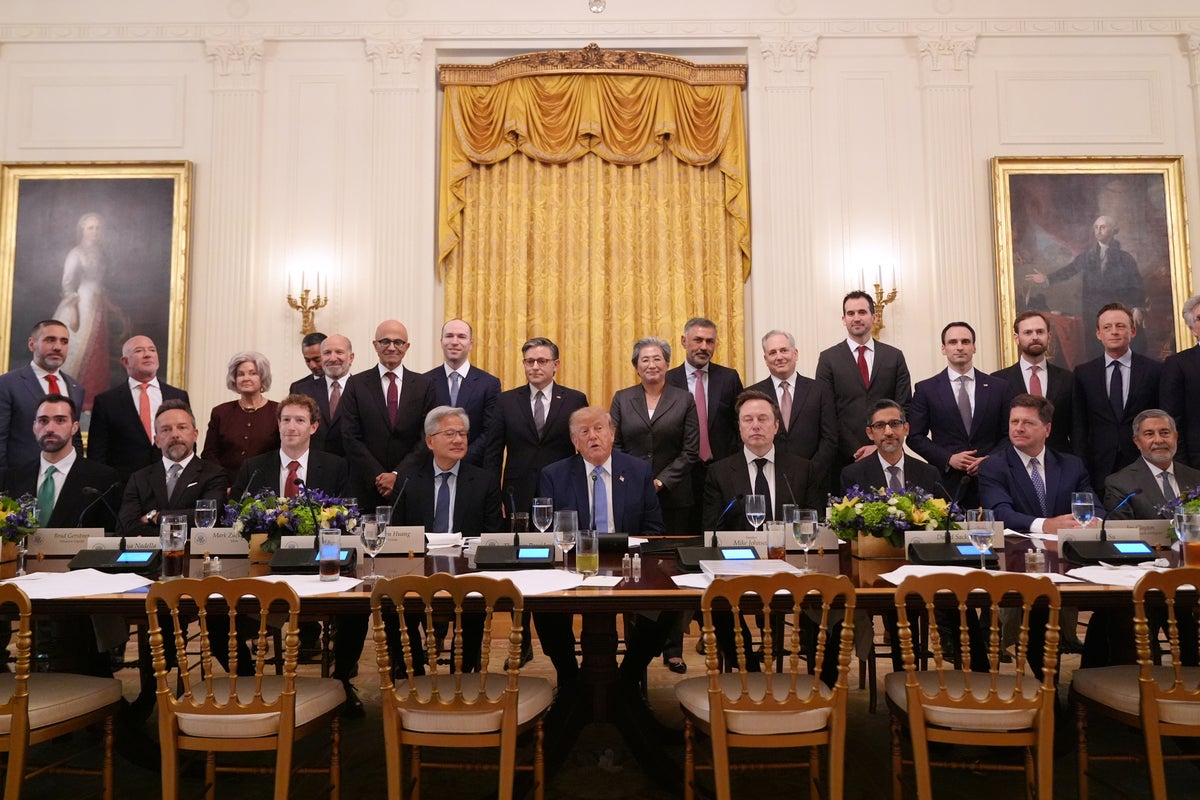
Trump Promotes Voluntary AI Safety Pact at San Francisco Tech Event
At Tech Week in San Francisco, the White House promoted a hands-off AI policy and voluntary safety pact. Industry leaders welcomed the shift toward growth over regulation.

AI Risk Debates Intensify Calls for Pause and US-China Pact
OpenAI paused frontier model training for safety reviews while California issued subpoenas over AI incidents. Officials discussed voluntary standards and potential FTC probes.
The Compass
You just read five takes on one story.
What's your take? Find your political shape in a few minutes.
Take the test