
Trump Says Iran War 'Very Close to Over' as Fragile Ceasefire Nears Expiration
Cover image from independent.co.uk, which was analyzed for this article
President Trump stated the war with Iran is nearly concluded and direct talks could restart within days, possibly in Pakistan, boosting market sentiment. Despite the ongoing blockade, optimism for de-escalation is growing. Outlets highlight both hopeful signals and remaining hurdles.
PoliticalOS
Wednesday, April 15, 2026 — Politics
The Iran conflict now turns on whether renewed talks in Pakistan can bridge a deep nuclear divide before the April 22 ceasefire expires. Trump's blockade has increased pressure on Tehran but also risks escalation, while casualty counts and displacement figures remain fluid and only partially corroborated. The single most important reality is that both sides claim to want a deal yet have so far refused the compromises required to make one stick.
What outlets missed
Most coverage underplayed the full scale of humanitarian costs, with only isolated references to more than 1,200 civilian deaths and 3.2 million displaced inside Iran according to NPR and humanitarian monitors. Few outlets provided the precise nuclear proposals exchanged in Islamabad—a U.S. demand for a 20-year enrichment suspension versus Iran's three-to-five-year counteroffer—despite those details appearing in Reuters and Al Jazeera reporting. The sequence of events was often compressed: Iran's closure of the Strait of Hormuz in early March preceded the U.S. blockade by more than a month, yet many stories presented the American action as the first disruption. Independent verification of blockade effectiveness was thin; maritime data showing vessels still moving was mentioned by CNBC but omitted by pro-administration outlets. Finally, the reported assassination of Supreme Leader Ali Khamenei during the initial strikes, noted in Institute for the Study of War summaries, received almost no attention despite its potential to reshape Iranian succession and negotiating posture.
Trump Claims Iran War Nears End as Fragile Talks Loom and Domestic Support Slips
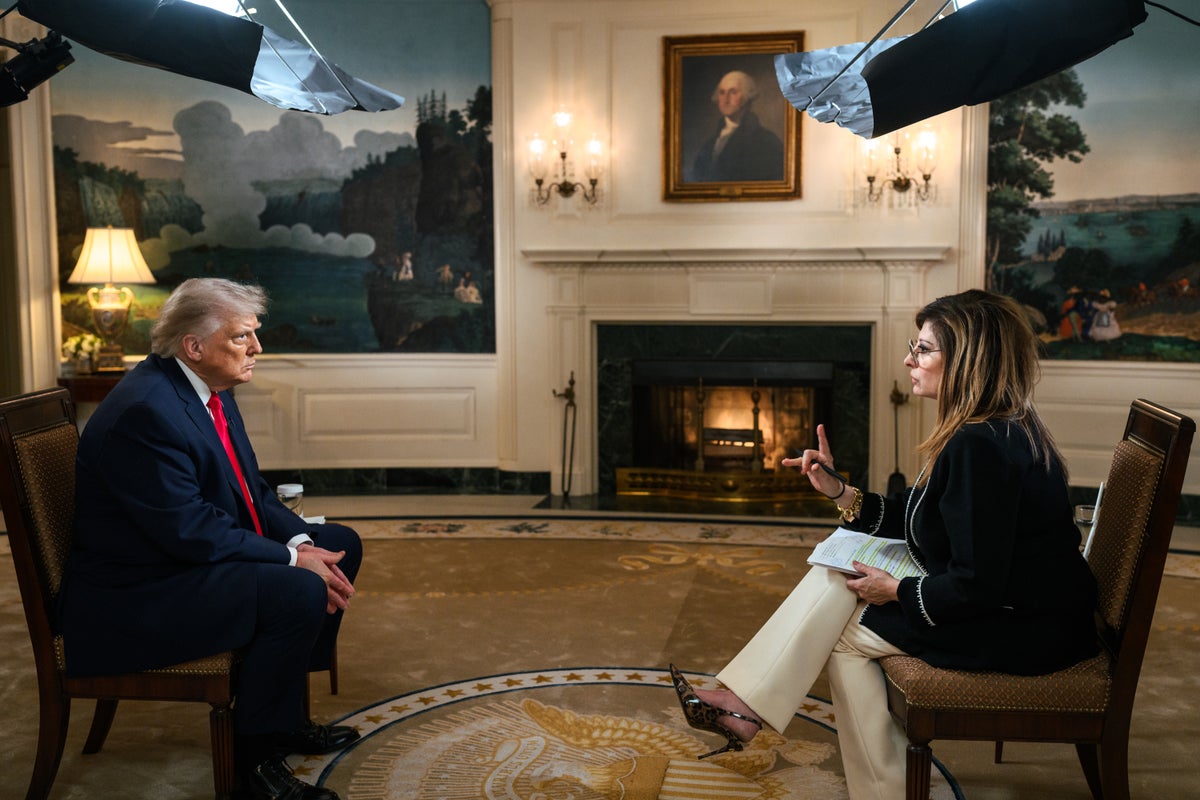
President Donald Trump projected confidence Wednesday that the seven-week-old war with Iran is on the verge of ending, even as the United States maintains a total blockade on Iranian maritime trade and fresh negotiations remain stalled on the core issue of Tehran’s nuclear ambitions. In interviews with Fox Business and the New York Post, Trump described the conflict as “very close to being over” and said a second round of direct talks could resume in Pakistan within days, hosted again by officials in Islamabad who helped facilitate the first inconclusive session last weekend.
The comments come as a two-week ceasefire, set to expire April 21, hangs in the balance. Vice President JD Vance led the initial round of negotiations in Pakistan, which ended without agreement after the U.S. insisted Iran forswear any nuclear-weapons capability. Iranian officials have maintained their program is civilian. A senior Iranian source told Reuters no firm date has been set for new talks, though Pakistani, Gulf, and European diplomats said momentum exists to reconvene soon. Trump personally called a New York Post reporter in Islamabad on Tuesday, urging her to stay put because “something could be happening over the next two days.” He praised Pakistan’s army chief, Field Marshal Gen. Asim Munir, as “fantastic” and credited him with helping broker the venue.
Despite the diplomatic activity, the military pressure has only intensified. U.S. Central Command announced that American forces have completely halted all seaborne trade in and out of Iran. Additional vessels, including a Chinese-owned tanker under U.S. sanctions, were turned back near the Strait of Hormuz on Wednesday. The blockade has disrupted oil flows and contributed to market volatility, though oil prices fell for a second straight day on hopes of a diplomatic breakthrough. Trump told Fox Business anchor Maria Bartiromo that Iran’s leadership “wants to make a deal very badly” because American strikes have left the country in ruins. “If I pulled up stakes right now, it would take them 20 years to rebuild,” he said, adding that the U.S. could destroy every Iranian bridge and power plant in an hour but prefers a settlement that allows eventual reconstruction.
The war, which began in late February, has already transformed Iran’s political landscape. Trump has repeatedly claimed that U.S. action removed “the radicals” and produced “a different regime now,” language that suggests openness to broader regime-change outcomes even as official policy frames the conflict as a preventive strike against nuclear proliferation. Critics at home and abroad question whether the administration has a coherent plan for what follows any ceasefire. The Institute for the Study of War assessed that Iran is likely to drag out talks to buy time for reconstitution, while European allies have expressed unease about the precedent of military escalation.
Domestically, the conflict is exposing fractures within Trump’s own coalition. New polling analyzed by CNN’s Harry Enten shows the president’s net approval among non-college-educated white voters — a cornerstone of his political base — has plummeted 34 points. Those voters are also registering deep dissatisfaction with Trump’s handling of the war itself. The backlash has coincided with unusually public spats between Trump and longstanding allies. After Italian Prime Minister Giorgia Meloni echoed the Pope’s criticism of the conflict, Trump lashed out at her as “unacceptable” and a “coward” who “doesn’t care if Iran has a nuclear weapon.” The episode underscored how the war is straining relationships that once formed the backbone of Trump’s international support.
Markets, by contrast, appear to be pricing in optimism. Trump predicted a stock-market boom once hostilities fully cease, and some traders have welcomed signals that the blockade could ease if talks advance. Yet the human and strategic costs remain largely out of view in the administration’s messaging. Independent analysts note that even a successful deal would leave unresolved questions about Iran’s residual nuclear knowledge, the stability of its government, and the long-term U.S. military posture in the Persian Gulf. A return to pre-war sanctions-plus-containment may prove politically difficult after the scale of destruction Trump has described.
The coming days will test whether Trump’s blend of public bravado and back-channel diplomacy can produce a durable outcome. Islamabad is racing to organize logistics before the ceasefire lapses. U.S. officials told reporters that discussions with Iran remain active despite last weekend’s impasse. For now, the president’s message is one of imminent victory: the war has achieved its military objectives, Iran is crippled, and a deal is within reach. The test will be whether that optimism survives contact with a negotiating table where fundamental disagreements over nuclear weapons persist, an economy under total maritime siege continues to unravel, and political support at home shows signs of erosion.
Beneath the optimistic rhetoric lies a deeper uncertainty about American power in the Middle East after decades of inconclusive engagements. Trump’s insistence that only force could prevent an Iranian bomb reflects a longstanding hawkish view, yet the speed with which he now pivots toward negotiations suggests recognition that prolonged conflict carries its own risks — to global energy markets, to allied cohesion, and to his own political standing. Whether the next two days in Pakistan yield a framework for peace or simply another round of brinkmanship will shape not only the fate of the Iranian people but the trajectory of U.S. foreign policy for years to come.
You just read Liberal's take. Want to read what actually happened?
More in Politics

Federal Agents Search Omar Home in Ongoing Immigration Probe
Homeland Security agents searched the Minnesota Democrat's DC residence in a criminal probe, prompting accusations of political intimidation from Omar and Democratic leaders. Coverage spans left-leaning outlets like NPR, BBC, and The Guardian alongside right-leaning criticism from The Federalist and Daily Wire.

Trump Diesel Import Plan Draws Pushback Over Russia Ties
The weekend agreement drew bipartisan congressional pushback and criticism from Ukraine's Zelenskyy, with analysts downplaying US fuel price impacts. Right-leaning outlets like National Review, Dispatch, and Washington Examiner questioned its legality and effectiveness.

Independents Test Voter Appetite for Middle Ground in 2026 Midterms
Nearly 200 independents are running in competitive races as voters weigh ballot measures on housing costs in states like Massachusetts. Left-leaning coverage from NYT, NPR, and Guardian highlights turnout and key races while right outlets focus on GOP strategy.
Trump Rallies in Alaska, Ohio to Bolster GOP Senate Candidates
The president rallied in Wasilla for Sen. Dan Sullivan and faced empty seats at an Ohio event amid midterm concerns. Outlets across the spectrum covered the trips as signals of GOP vulnerability weeks before Election Day.
The Compass
You just read five takes on one story.
What's your take? Find your political shape in a few minutes.
Take the test