
Trump Brands MAGA Critics 'Losers' in Fiery Iran Policy Feud
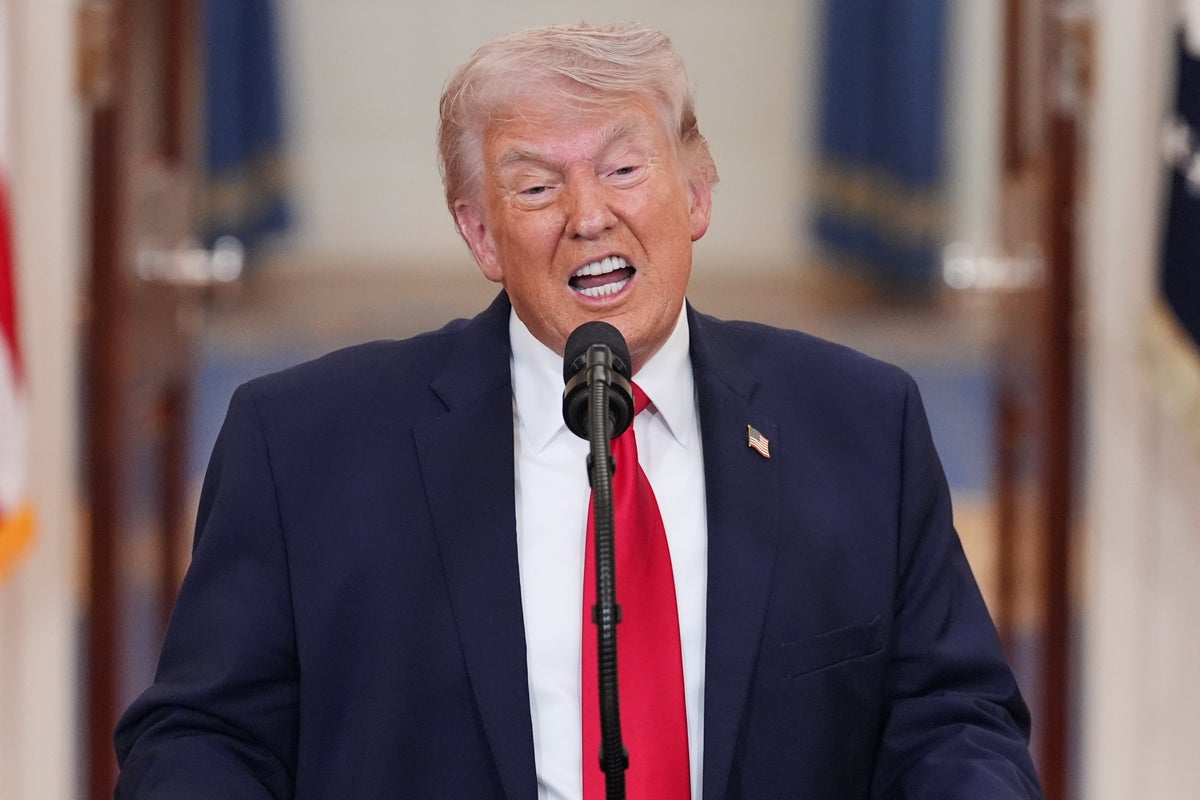
Cover image from independent.co.uk, which was analyzed for this article
President Trump raged against prominent MAGA figures like Marjorie Taylor Greene, Tucker Carlson, and others criticizing his Iran war and ceasefire, calling them 'losers' and accusing them of undermining him. Greene unloaded on Trump and Netanyahu, highlighting deepening divisions within the GOP base amid the conflict. The feud has supercharged media battles and raised concerns about midterm impacts on Republicans.
PoliticalOS
Friday, April 10, 2026 — Politics
The public argument between Trump and once-loyal MAGA voices exposes a genuine policy fault line over foreign intervention that predates the personal attacks. While polls show most Republicans still back action against a nuclear Iran, softening support among younger voters and vocal dissent from influential podcasters suggest the coalition is under strain. The single most important reality is that Trump's second term is testing whether assertive national-security moves can coexist with the isolationist instincts that helped elect him; how that tension resolves will shape both his agenda and his party's future.
What outlets missed
Most coverage omitted that Marjorie Taylor Greene resigned from Congress on January 5, 2026, three months before the latest exchange, and that her criticisms stemmed from a broader set of grievances including big-tech censorship and Epstein file releases rather than Iran alone. Outlets frequently failed to provide precise context for Trump's threats: Iran had restricted shipping through the Strait of Hormuz after a February 2026 ceasefire, disrupting 20 percent of global oil flows, making the warnings a response to an active economic provocation rather than unprompted saber-rattling. Several reports amplified or slightly altered critic quotes without verification, such as specific profanity from Kelly or claims of Trump threatening to 'obliterate Iranian civilization' when verified language referred to living in the stone ages or hell. Poll trends showing softening support among voters under 50 and a drop from 85 percent to 79 percent Republican approval received almost no attention, nor did the limited nature of U.S. involvement as targeted strikes alongside Israel rather than a formally declared war. Finally, Trump's explicit claim that he remains too busy with 'World and Country Affairs' to return critics' calls was often buried or mocked instead of weighed against the post's length as evidence of his priorities.
Divisions that once seemed contained within Donald Trump's coalition are now spilling into public view, raising questions about whether his approach to Iran will fracture the base that delivered his 2024 victory and complicate Republican efforts in the 2026 midterms. A single 482-word Truth Social post on April 9, 2026, crystallized the tension: the president directly attacked former allies who have broken with him over U.S. military involvement in the Iran conflict, calling them low-IQ losers who misunderstand MAGA priorities.
The post came days after a ceasefire took hold in the conflict that began in late February following Iranian missile strikes on Israel and the assassination of Supreme Leader Ali Khamenei. Trump had demanded Iran reopen the Strait of Hormuz, a chokepoint carrying one-fifth of global oil trade that Tehran had effectively closed during the fighting. In earlier statements he warned of severe consequences if the waterway stayed blocked, language that drew sharp pushback from voices long aligned with his America First outlook. According to a Quinnipiac University poll released in late March, 79 percent of Republicans said the military action had made the world safer, though support appeared softer among voters under 50 and had declined from earlier surveys that pegged approval near 85 percent.
Trump reserved his harshest language for podcasters Tucker Carlson, Megyn Kelly, Candace Owens and Alex Jones. He described Carlson as a broken man unchanged since his 2023 departure from Fox News and suggested he see a psychiatrist. He revived a 2015 debate grudge against Kelly, called Owens crazy for her claims about French first lady Brigitte Macron, and labeled Jones bankrupt for his Sandy Hook comments that led to billion-dollar defamation judgments. The president insisted these figures were not true MAGA supporters because they opposed preventing Iran from obtaining nuclear weapons. He added that he no longer cared what they said because he was occupied with world and country affairs, and he separately criticized the Wall Street Journal's editorial board for calling his victory declaration premature.
Marjorie Taylor Greene, who resigned her House seat on January 5, 2026, after clashing with party leadership over multiple issues including foreign policy and the Jeffrey Epstein files, also drew fire. Trump dubbed her Marjorie Traitor Brown and called her nasty. Greene responded on social media that Trump had gone mad by waging war against Iran in violation of campaign promises. She wrote that she had worked alongside Carlson, Kelly, Owens and Jones to elect him, but that he had changed while they had not. In earlier interviews she described the Iran action as a complete betrayal, questioned whether Trump was acting as a Christian, and suggested administration officials should invoke the 25th Amendment to restrain him.
The critics' responses varied in tone. Owens posted that it might be time to put Grandpa in a home. Jones said he felt sorry for Trump and described the war as a total disaster, contrasting the current president with the one who had achieved earlier successes. Carlson had called certain threats evil and urged aides to say no directly to the president. Kelly questioned why he could not behave like a normal human. Several of the figures had previously supported Trump enthusiastically: Carlson once described him as the leader of a nation after the first assassination attempt, and Kelly had urged audiences to vote for him and recruit others.
The episode highlights an unresolved contradiction. Trump campaigned on avoiding new wars yet authorized strikes that, while limited and followed by a ceasefire, have drawn accusations of mission creep from isolationist voices within his own movement. Greene and others argue the policy betrays the non-interventionist instincts that helped elect him. Trump counters that stopping a nuclear Iran represents strength and winning, core MAGA tenets. Public polling shows majority Republican backing for the action so far, yet the intensity of the intra-coalition criticism, amplified by large podcast audiences that sometimes exceed one million listeners per episode, suggests the fault line could widen.
Reactions from other quarters followed predictable patterns. The Wall Street Journal editorial board questioned the timing of any victory claim. Trump dismissed the board as among the worst and most inaccurate in the world. Conservative media offered contrasting emphases: some highlighted the personal nature of the insults, others the underlying policy dispute over whether U.S. force was necessary to reopen the strait and deter Iranian nuclear ambitions. Left-leaning outlets tended to frame the episode as evidence of broader instability, while right-leaning ones often portrayed the critics as marginal figures seeking attention.
Unresolved questions remain. How deeply the rift penetrates the wider Republican electorate will not be fully clear until midterm voting. Whether younger voters, less moved by memories of the 1979 Iranian hostage crisis that some analysts tie to current hawkish sentiment, continue to peel away could matter most. Trump has insisted he could win the critics back if he chose but has more important matters to address. The critics show no sign of retreating. The central tension, therefore, is whether a president elected on promises of restraint can pursue assertive foreign policy without alienating the very coalition that rejected endless wars in the first place.
More in Politics

Federal Agents Search Omar Home in Ongoing Immigration Probe
Homeland Security agents searched the Minnesota Democrat's DC residence in a criminal probe, prompting accusations of political intimidation from Omar and Democratic leaders. Coverage spans left-leaning outlets like NPR, BBC, and The Guardian alongside right-leaning criticism from The Federalist and Daily Wire.

Trump Diesel Import Plan Draws Pushback Over Russia Ties
The weekend agreement drew bipartisan congressional pushback and criticism from Ukraine's Zelenskyy, with analysts downplaying US fuel price impacts. Right-leaning outlets like National Review, Dispatch, and Washington Examiner questioned its legality and effectiveness.

Independents Test Voter Appetite for Middle Ground in 2026 Midterms
Nearly 200 independents are running in competitive races as voters weigh ballot measures on housing costs in states like Massachusetts. Left-leaning coverage from NYT, NPR, and Guardian highlights turnout and key races while right outlets focus on GOP strategy.
Trump Rallies in Alaska, Ohio to Bolster GOP Senate Candidates
The president rallied in Wasilla for Sen. Dan Sullivan and faced empty seats at an Ohio event amid midterm concerns. Outlets across the spectrum covered the trips as signals of GOP vulnerability weeks before Election Day.
The Compass
You just read five takes on one story.
What's your take? Find your political shape in a few minutes.
Take the test