
Trump Brands MAGA Critics 'Losers' in Fiery Iran Policy Feud
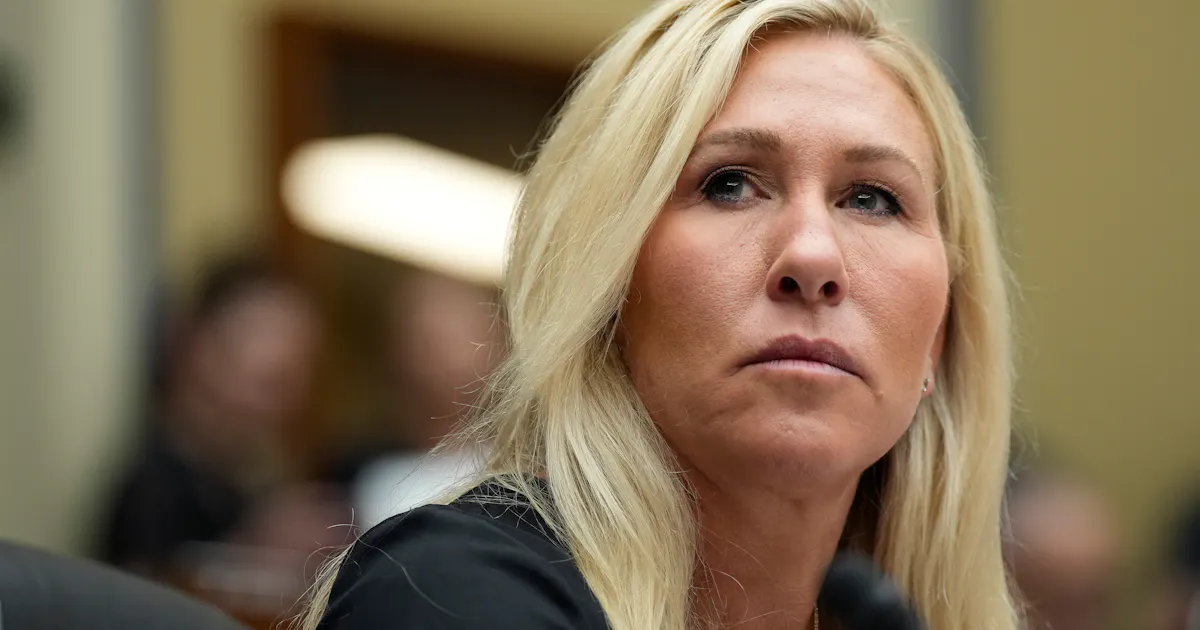
Cover image from newrepublic.com, which was analyzed for this article
President Trump raged against prominent MAGA figures like Marjorie Taylor Greene, Tucker Carlson, and others criticizing his Iran war and ceasefire, calling them 'losers' and accusing them of undermining him. Greene unloaded on Trump and Netanyahu, highlighting deepening divisions within the GOP base amid the conflict. The feud has supercharged media battles and raised concerns about midterm impacts on Republicans.
PoliticalOS
Friday, April 10, 2026 — Politics
The public argument between Trump and once-loyal MAGA voices exposes a genuine policy fault line over foreign intervention that predates the personal attacks. While polls show most Republicans still back action against a nuclear Iran, softening support among younger voters and vocal dissent from influential podcasters suggest the coalition is under strain. The single most important reality is that Trump's second term is testing whether assertive national-security moves can coexist with the isolationist instincts that helped elect him; how that tension resolves will shape both his agenda and his party's future.
What outlets missed
Most coverage omitted that Marjorie Taylor Greene resigned from Congress on January 5, 2026, three months before the latest exchange, and that her criticisms stemmed from a broader set of grievances including big-tech censorship and Epstein file releases rather than Iran alone. Outlets frequently failed to provide precise context for Trump's threats: Iran had restricted shipping through the Strait of Hormuz after a February 2026 ceasefire, disrupting 20 percent of global oil flows, making the warnings a response to an active economic provocation rather than unprompted saber-rattling. Several reports amplified or slightly altered critic quotes without verification, such as specific profanity from Kelly or claims of Trump threatening to 'obliterate Iranian civilization' when verified language referred to living in the stone ages or hell. Poll trends showing softening support among voters under 50 and a drop from 85 percent to 79 percent Republican approval received almost no attention, nor did the limited nature of U.S. involvement as targeted strikes alongside Israel rather than a formally declared war. Finally, Trump's explicit claim that he remains too busy with 'World and Country Affairs' to return critics' calls was often buried or mocked instead of weighed against the post's length as evidence of his priorities.
Trump Faces Mounting Conservative Criticism Over Threats in Iran Conflict
President Donald Trump unleashed a lengthy online attack Thursday against several prominent conservative figures who have broken with him over the administration's military confrontation with Iran, calling them "losers" and "low IQ" while insisting the criticism no longer bothers him. The outburst, posted on Truth Social, named Tucker Carlson, Megyn Kelly, Candace Owens and Alex Jones, all of whom have publicly opposed what they describe as reckless escalation in the Middle East.
The president accused the group of effectively rooting for Iran, which he called the world's leading state sponsor of terrorism, to acquire nuclear weapons. "They think it is wonderful for Iran, the Number One State Sponsor of Terror, to have a Nuclear Weapon — Because they have one thing in common, Low IQs," Trump wrote. He described Carlson as someone who "should see a good psychiatrist," labeled Owens "crazy," said Jones utters "some of the dumbest things," and revisited old grievances with Kelly. The post ran more than 480 words and also took shots at The Wall Street Journal's editorial board.
The criticism from these former allies centers on Trump's rhetoric during the conflict. On Easter Sunday, the president warned that if Iran failed to reopen the Strait of Hormuz — a critical oil shipping route closed amid fighting — the country would be "living in Hell." He followed with a threat that "a whole civilization will die tonight" unless a deal was reached, and referenced "Power Plant Day, and Bridge Day, all wrapped up in one" in Iran. A two-week ceasefire was announced Tuesday, yet the earlier language continues to reverberate.
Carlson, who once championed Trump on the campaign trail, called the Easter message "vile on every level" and urged military aides to reject any plans targeting Iranian civilians. Kelly told the president to "f***ing shut up about that sh*t." Owens went further, describing the administration as "satanic" and calling on Congress to remove the "Mad King Trump." Jones suggested Trump had been "set up by Israel" and invoked dementia in his commentary. Owens responded to Thursday's post by writing, "It may be time to put Grandpa up in a home."
The backlash took an unexpected turn when Rep. Marjorie Taylor Greene, one of Trump's staunchest congressional defenders in the past, delivered a blunt assessment in a CNN interview. Greene declared that Trump is "mentally unfit for the presidency," that aides must "rein him in," and that he is "catastrophically failing." She portrayed the president as a man "lashing out" like a bully under stress, adding that serious leaders do not respond to provocations with personal insults. When asked about Trump's mocking reference to her as "Marjorie 'Traitor' Brown" — a jab claiming she turns brown under pressure — Greene dismissed it as the behavior of someone in decline.
This rift signals deeper strains within the coalition that propelled Trump back to the White House. For years, these voices formed the core of a populist right skeptical of foreign entanglements that drain American resources and lives without clear victories. Carlson has spent recent weeks highlighting the human costs of escalation and questioning narratives that could pull the United States into another prolonged Middle East conflict. His interviews have featured voices raising alarms about civilian casualties and the risk of wider war, echoing long-standing conservative arguments for restraint that predate the Trump era.
The president's defenders counter that Iran poses a genuine threat as a nuclear aspirant and financier of proxy militias across the region. They argue that strong language, even if crude, deters adversaries who interpret restraint as weakness. Yet the personal nature of Trump's response — suggesting critics smell bad or need psychiatric help — has only amplified the sense that policy disagreement is being treated as personal betrayal. After the initial reporting on Greene's interview, Trump issued yet another tirade against her and other detractors, underscoring the intensity of the breach.
Observers note this episode differs from past intramural spats. Previous Trump controversies tended to unify his base against external opponents. The Iran conflict, however, has exposed genuine philosophical divides over when and how American power should be deployed. Threats invoking the destruction of an entire civilization cross a line for many who remember the sober realism that once defined postwar conservatism — a tradition wary of utopian missions to remake the world and mindful of the limits of military force.
The timing adds to the complexity. The ceasefire provides breathing room, yet the underlying standoff over the Strait of Hormuz and Iran's nuclear ambitions remains unresolved. Oil markets have fluctuated with each escalation, reminding Americans of the pocketbook consequences of distant conflicts. Domestic critics from the right now join longstanding skeptics who warn that repeated interventions erode the constitutional order at home and distract from pressing challenges such as border security, fiscal discipline and cultural cohesion.
Whether this fracture proves temporary or marks a lasting realignment remains unclear. Trump has survived past challenges by doubling down on his persona as a fighter unafraid of elite consensus. His latest broadside suggests he intends to maintain that posture. Yet when voices once central to his movement — from podcast hosts shaping millions of listeners to a key House ally — begin describing the president as failing and in need of restraint, it reveals a coalition under genuine stress. The coming weeks will test whether shared goals on domestic policy can overcome these foreign policy divergences, or whether the right's internal debate over America's role abroad will reshape the political landscape for years ahead.
You just read Conservative's take. Want to read what actually happened?