
Trump Brands MAGA Critics 'Losers' in Fiery Iran Policy Feud
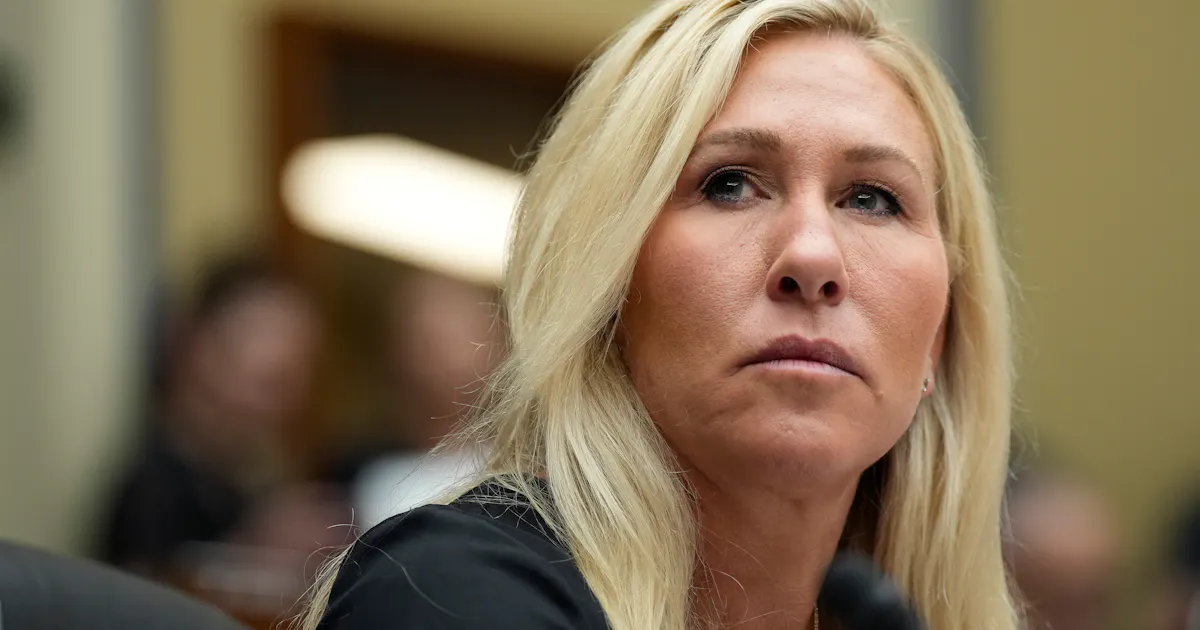
Cover image from newrepublic.com, which was analyzed for this article
President Trump raged against prominent MAGA figures like Marjorie Taylor Greene, Tucker Carlson, and others criticizing his Iran war and ceasefire, calling them 'losers' and accusing them of undermining him. Greene unloaded on Trump and Netanyahu, highlighting deepening divisions within the GOP base amid the conflict. The feud has supercharged media battles and raised concerns about midterm impacts on Republicans.
PoliticalOS
Friday, April 10, 2026 — Politics
The public argument between Trump and once-loyal MAGA voices exposes a genuine policy fault line over foreign intervention that predates the personal attacks. While polls show most Republicans still back action against a nuclear Iran, softening support among younger voters and vocal dissent from influential podcasters suggest the coalition is under strain. The single most important reality is that Trump's second term is testing whether assertive national-security moves can coexist with the isolationist instincts that helped elect him; how that tension resolves will shape both his agenda and his party's future.
What outlets missed
Most coverage omitted that Marjorie Taylor Greene resigned from Congress on January 5, 2026, three months before the latest exchange, and that her criticisms stemmed from a broader set of grievances including big-tech censorship and Epstein file releases rather than Iran alone. Outlets frequently failed to provide precise context for Trump's threats: Iran had restricted shipping through the Strait of Hormuz after a February 2026 ceasefire, disrupting 20 percent of global oil flows, making the warnings a response to an active economic provocation rather than unprompted saber-rattling. Several reports amplified or slightly altered critic quotes without verification, such as specific profanity from Kelly or claims of Trump threatening to 'obliterate Iranian civilization' when verified language referred to living in the stone ages or hell. Poll trends showing softening support among voters under 50 and a drop from 85 percent to 79 percent Republican approval received almost no attention, nor did the limited nature of U.S. involvement as targeted strikes alongside Israel rather than a formally declared war. Finally, Trump's explicit claim that he remains too busy with 'World and Country Affairs' to return critics' calls was often buried or mocked instead of weighed against the post's length as evidence of his priorities.
Trump Turns on Core Supporters as Iran War Exposes Deep MAGA Cracks
President Donald Trump spent Thursday afternoon on Truth Social unloading on some of his most loyal former allies, branding Tucker Carlson, Megyn Kelly, Candace Owens, and Alex Jones as low IQ losers and demanding they stop questioning his war with Iran. The lengthy post marked a striking turn against voices that helped carry him to victory in 2024, revealing fractures in the movement that once seemed unbreakable.
Trump did not hold back. He called the group stupid people whose own families know it, accused them of secretly rooting for Iran to obtain nuclear weapons, and singled out Carlson for supposedly losing his way. The president insisted he no longer cares what they think while simultaneously proving he cares a great deal. Hours earlier Marjorie Taylor Greene, one of his most reliable defenders in Congress, delivered an even more devastating assessment on CNN. She described Trump as mentally unfit for the presidency, said those around him need to rein him in, and declared bluntly that he is failing.
The trigger for all this is Trump’s military campaign against Iran and the apocalyptic language he has used to justify it. On Easter Sunday the president warned that an entire civilization would die if Tehran refused to open the Strait of Hormuz. He followed up with promises of Power Plant Day and Bridge Day in Iran, threats that sounded less like measured statecraft and more like the rhetoric of regime change wars that conservatives once campaigned against. Carlson called the Easter message vile on every level and urged military aides to refuse any orders that would target Iranian civilians. Kelly told the president to shut up about the subject. Owens labeled the administration satanic and called for Congress to remove what she termed the Mad King. Jones suggested Trump shows signs of dementia.
These are not random voices. Each played a significant role in building the coalition that returned Trump to the White House. Carlson’s audience remains one of the largest in conservative media. Owens and Jones speak directly to younger and more conspiratorial corners of the right. Their sudden break with Trump over this conflict suggests something deeper than personal grievance. Many of these critics see the Iran operation as a betrayal of the America First principles Trump rode to power. Instead of ending forever wars, he appears to have started another one in the Middle East, complete with threats that evoke the very neoconservative foreign policy he once scorned.
Greene’s CNN interview represented a watershed moment. Long known as an unapologetic Trump supporter, she refused to engage with the president’s juvenile insults, which included calling her Marjorie Traitor Brown and suggesting she smells. Instead she focused on substance. Trump is lashing out because he is failing, she said, and the people around him should stop indulging behavior that makes the country look unstable. Her willingness to say on national television that the president appears mentally unfit carries weight precisely because she has no history of Never Trumpism. When someone with her track record reaches that conclusion, it signals real trouble inside the coalition.
Trump’s defenders will dismiss all this as disloyalty. Yet the pattern is familiar. Time and again, presidents who plunge into Middle East conflicts find their domestic support eroding, especially when the rhetoric grows bloodthirsty. Trump’s threat to wipe out an entire civilization crossed a line for many who believed his promises to avoid exactly that kind of hubris. Carlson in particular has warned for years that foreign policy elites drag America into wars that benefit everyone except American citizens. His audience appears to be listening.
The president also took shots at The Wall Street Journal’s editorial board in the same post, accusing them of the same low IQ thinking. This broadside against virtually every prominent conservative critic of the Iran policy suggests isolation rather than strength. After announcing a two week ceasefire with Iran, Trump continues to rage at domestic opponents instead of explaining how the conflict advanced American interests. Oil prices have spiked. The region remains volatile. And now the very base that demanded an end to nation building finds itself watching the president threaten nation ending.
What makes this moment different from past Trump controversies is the source of the criticism. These are not Democrats or establishment Republicans. They are the podcasters, commentators, and lawmakers who defended him through two impeachments, a stolen election narrative, and legal warfare. When even Marjorie Taylor Greene says the emperor has no clothes, the political reality becomes harder to ignore.
Trump’s post ended with the claim that he no longer cares about any of it. The length of the rant and the personal nature of the insults suggest otherwise. A leader secure in his decisions does not spend 482 words attacking people whose only offense was taking his own past rhetoric about avoiding stupid wars seriously. The conservative movement is having a reckoning. Whether Trump recognizes it or not, the coalition that powered his return is beginning to fracture over the oldest temptation in Washington, the belief that one more Middle East conflict will finally bring peace.
You just read America First's take. Want to read what actually happened?