
Trump Brands MAGA Critics 'Losers' in Fiery Iran Policy Feud
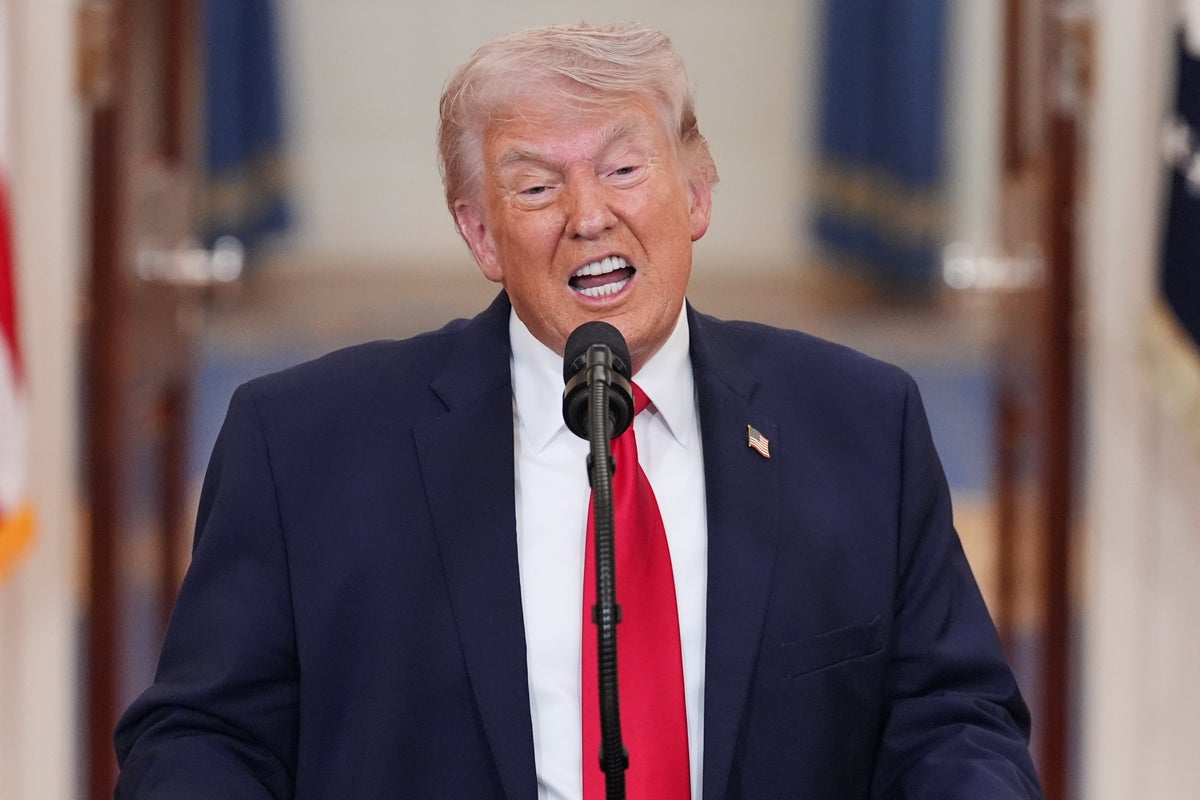
Cover image from independent.co.uk, which was analyzed for this article
President Trump raged against prominent MAGA figures like Marjorie Taylor Greene, Tucker Carlson, and others criticizing his Iran war and ceasefire, calling them 'losers' and accusing them of undermining him. Greene unloaded on Trump and Netanyahu, highlighting deepening divisions within the GOP base amid the conflict. The feud has supercharged media battles and raised concerns about midterm impacts on Republicans.
PoliticalOS
Friday, April 10, 2026 — Politics
The public argument between Trump and once-loyal MAGA voices exposes a genuine policy fault line over foreign intervention that predates the personal attacks. While polls show most Republicans still back action against a nuclear Iran, softening support among younger voters and vocal dissent from influential podcasters suggest the coalition is under strain. The single most important reality is that Trump's second term is testing whether assertive national-security moves can coexist with the isolationist instincts that helped elect him; how that tension resolves will shape both his agenda and his party's future.
What outlets missed
Most coverage omitted that Marjorie Taylor Greene resigned from Congress on January 5, 2026, three months before the latest exchange, and that her criticisms stemmed from a broader set of grievances including big-tech censorship and Epstein file releases rather than Iran alone. Outlets frequently failed to provide precise context for Trump's threats: Iran had restricted shipping through the Strait of Hormuz after a February 2026 ceasefire, disrupting 20 percent of global oil flows, making the warnings a response to an active economic provocation rather than unprompted saber-rattling. Several reports amplified or slightly altered critic quotes without verification, such as specific profanity from Kelly or claims of Trump threatening to 'obliterate Iranian civilization' when verified language referred to living in the stone ages or hell. Poll trends showing softening support among voters under 50 and a drop from 85 percent to 79 percent Republican approval received almost no attention, nor did the limited nature of U.S. involvement as targeted strikes alongside Israel rather than a formally declared war. Finally, Trump's explicit claim that he remains too busy with 'World and Country Affairs' to return critics' calls was often buried or mocked instead of weighed against the post's length as evidence of his priorities.
Trump Lashes Out at Former Allies as Iran Conflict Exposes MAGA Cracks
President Donald Trump unleashed a lengthy and personal attack on several of his former conservative allies Thursday, branding them “low IQ” losers and suggesting they suffer from mental problems, as criticism of his handling of the war in Iran spreads beyond traditional Democratic opponents into the heart of the MAGA movement. The outburst, posted on Truth Social, targeted Tucker Carlson, Megyn Kelly, Candace Owens and Alex Jones, all of whom have condemned Trump’s rhetoric and decisions in the conflict that has roiled the Middle East and disrupted global energy markets.
The president’s post came days after he announced a two-week ceasefire with Iran. Yet the preceding weeks had been marked by increasingly bellicose statements from Trump, including a profane Easter message warning that Iran would be “living in Hell” if it failed to reopen the Strait of Hormuz, a vital oil chokepoint. In another statement he threatened that “a whole civilization will die tonight” and spoke of “Power Plant Day, and Bridge Day, all wrapped up in one,” language that even some longtime supporters described as unhinged.
Carlson, once one of Trump’s most reliable media defenders, called the threats “vile on every level” and urged aides to refuse any orders that would harm Iranian civilians. Kelly told Trump to “f***ing shut up about that sh*t.” Owens labeled the administration “satanic” and called for Congress to remove the “Mad King Trump,” while Jones suggested the president was exhibiting signs of dementia. Trump responded by saying the four shared “one thing in common, Low IQs,” adding that “they’re stupid people, they know it, their families know it, and everyone else knows it, too.” He singled out Carlson as someone who “should see a good psychiatrist” and dismissed Owens as “crazy.”
The infighting deepened further when Rep. Marjorie Taylor Greene, one of Trump’s earliest and most vocal congressional supporters, delivered a striking rebuke in a CNN interview. Greene said Trump is “mentally unfit for the presidency,” that aides must “rein him in,” and that he is “catastrophically failing.” When asked about Trump’s insults, which included calling her “Marjorie ‘Traitor’ Brown” and claiming she turns brown under stress, Greene responded coolly that one does not “respond to bullies” and that Trump’s lashing out is the behavior of a man who recognizes his own failure.
The episode marks an unusual fracture. Greene has built her career on unyielding loyalty to Trump and the most confrontational elements of the MAGA base. Her willingness to question his mental fitness and leadership on a foreign policy crisis suggests the war’s consequences are testing even the movement’s outer boundaries. The conflict, which began after Israeli strikes and drew in direct U.S. involvement, has produced no clear strategic victory while generating images and rhetoric that appear to have unsettled parts of the right that once cheered Trump’s maximalist instincts.
Several of the targeted figures responded in kind. Owens posted that it “may be time to put Grandpa up in a home.” Jones described Trump as a man who is “once a man, twice a child,” adding “this is dementia.” The exchanges have dominated conservative media for days, pushing the Iran war beyond abstract policy debate into an existential argument about Trump’s temperament and capacity.
The president’s defenders argue that Carlson and others have drifted toward isolationism and even tolerated voices sympathetic to Islamist regimes. Yet the breadth of the backlash, reaching from conspiracy-oriented podcasters to former Fox News personalities who helped carry Trump to victory in 2024, indicates something deeper is occurring. The war has forced into public view long-simmering tensions between those who see American power as a blunt instrument for reshaping the Middle East and those who fear endless entanglement and moral compromise.
What makes the moment notable is not simply the insults, which have long been Trump’s preferred mode of conflict resolution. It is the substance of the criticism. Questions about mental fitness, previously confined to liberal circles or anonymous former officials, are now being voiced by elected Republicans and influential conservative media personalities with large followings inside the MAGA ecosystem. Greene’s interview in particular stands out for its directness: a sitting member of Congress from the president’s own party stating on national television that the man she once hailed as a savior is failing and needs to be managed by his staff.
The Iran conflict itself remains fluid. The ceasefire Trump announced has quieted immediate military exchanges, but the underlying issues, from nuclear ambitions to control of energy shipping lanes, persist. Global oil prices have spiked, congressional Republicans have shown unease about the lack of clear war aims, and traditional allies have expressed private alarm at the volatility of American decision-making.
For a president who built his brand on strength and dominance, the spectacle of once-reliable allies calling him unstable or evil represents a new kind of vulnerability. Trump has tried to shrug it off, writing that he “no longer care[s] about that stuff.” Yet the volume and repetition of his responses suggest the criticism has struck a nerve. The conservative movement that once presented a unified front behind him is now engaged in an ugly public argument about whether its leader has become the very thing his critics long warned he was: impulsive, detached from reality, and prone to rhetoric that escalates conflicts rather than resolving them.
How far this rupture spreads will help determine whether the remainder of Trump’s term is defined by continued institutional strain or whether the MAGA coalition can paper over its differences. For now, the president appears more focused on settling personal scores than on articulating a coherent path forward in a war that has already damaged America’s standing and tested the loyalty of his most devoted followers.
You just read Liberal's take. Want to read what actually happened?