
Trump Threatens NATO Exit and European Troop Shifts After Allies Withhold Iran Support
Cover image from independent.co.uk, which was analyzed for this article
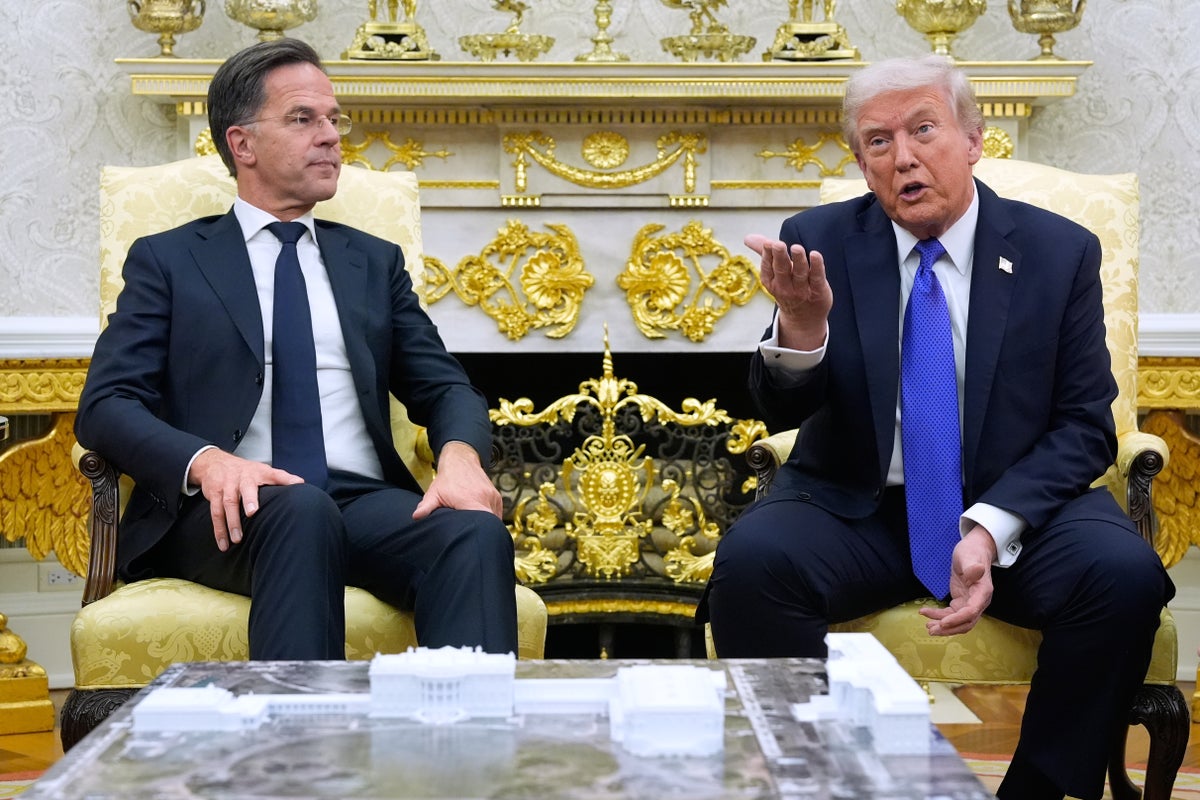
Following a meeting with NATO Secretary General Mark Rutte, Trump accused the alliance of failing to support the US during the Iran war and threatened withdrawal or troop pullouts from countries like Spain and Germany. He demands NATO commitments to secure the Strait of Hormuz within days. This escalates tensions as some allies distance themselves from Trump's actions.
PoliticalOS
Thursday, April 9, 2026 — Politics
Trump's threats expose a fundamental tension: NATO was designed for mutual territorial defense in Europe, not to automatically endorse U.S. military actions in the Middle East. The partial logistical help some allies gave, Iran's closure of the Strait of Hormuz, and the fresh ceasefire all matter more than the theatrical rhetoric. Readers should recognize that sustained public doubt from Washington could weaken deterrence against Russia far more than any single European refusal to join strikes on Iranian nuclear sites.
What outlets missed
Both outlets underplayed the specific sequence that led to the February 28 strikes: repeated failed nuclear negotiations, confirmed Iranian advances toward weapons-grade material, and the direct threat to U.S. and Israeli interests documented by Western intelligence. The global economic shock from Iran's closure of the Strait of Hormuz, which sent oil prices spiking and disrupted supply chains for weeks, received only passing mention despite being the clearest case for allied naval support. Neither article detailed the two-week ceasefire terms, which explicitly require Iran to begin reopening the strait and halt proxy attacks before any NATO naval mission proceeds. Coverage also minimized the extent of quiet logistical help provided by Britain, Germany and others, creating a sharper picture of total refusal than the mixed record that Rutte himself described on CNN.
The 77-year-old NATO alliance, built to deter Soviet tanks and later Russian missiles, now faces an American president openly questioning its value after European partners declined to join U.S. strikes on Iran. Hours after meeting NATO Secretary General Mark Rutte at the White House on April 8, 2026, President Trump repeated his grievances on Truth Social. The message was blunt: NATO failed its test.
The immediate stakes involve control of the Strait of Hormuz. Iran effectively closed the narrow waterway carrying one-fifth of global oil after U.S. and Israeli forces hit Iranian nuclear facilities, missile sites and leadership targets on February 28. Global energy prices surged. Trump has demanded that NATO members commit warships to reopen the corridor within days, according to White House statements and Rutte's subsequent television appearances. A two-week ceasefire announced Tuesday offers a narrow window for diplomacy, yet European governments remain divided on conditions for any joint mission.
At the center of the dispute sits a contradiction that has simmered since Trump's first term. NATO's founding treaty commits members to collective defense of one another's territory. It does not require them to support offensive operations chosen by Washington. The alliance invoked Article 5 once, after the September 11 attacks; members joined the war in Afghanistan. No such obligation existed for Korea, Vietnam, Iraq or this latest conflict in the Middle East. Trump, according to White House Press Secretary Karoline Leavitt, believes the alliance failed when it mattered. "They were tested, and they failed," Leavitt told reporters before the Rutte meeting.
Rutte, speaking to CNN's Jake Tapper afterward, struck a careful balance. He acknowledged Trump's disappointment with "some" allies while insisting the majority had provided basing, logistics, overflights and other assistance. The secretary general, a former Dutch prime minister, described the world as "absolutely" safer following U.S. action against Iranian nuclear and ballistic missile capabilities. He avoided confirming any direct threat of withdrawal.
European reactions split along familiar lines. Spain denied U.S. aircraft use of its airspace during the initial strikes, drawing sharp criticism from the administration. France and Italy placed restrictions on base access for planes headed to Iran, according to officials cited by The Wall Street Journal. Britain and Germany quietly permitted refueling and other support. Polish and Baltic officials, mindful of their border with Russia, have treated Trump's statements with urgency. Foreign Minister Radoslaw Sikorski urged Warsaw to develop "insurance policies" beyond sole reliance on Washington. French President Emmanuel Macron warned that repeated public doubts erode the unspoken confidence that gives alliances strength.
Trump's frustrations extend beyond the current conflict. He has linked European hesitation to earlier disputes, including his renewed interest in acquiring Greenland from Denmark. A Wall Street Journal report published Wednesday said the president is weighing a plan to reposition roughly 84,000 U.S. troops currently stationed in Europe. Forces could leave bases in Spain and Germany, countries seen as least cooperative, and shift toward Poland, Romania, Greece and Lithuania, which offered stronger backing. Any such move would simultaneously punish reluctant allies and place more American personnel closer to Russia's western flank.
Formal U.S. withdrawal from NATO would require either a two-thirds Senate vote or congressional action, following legislation passed in 2023. Trump could, however, decline to honor Article 5 commitments or reduce military aid to Ukraine that European partners help fund. White House officials have confirmed both options remain under discussion.
The Iran campaign itself followed months of stalled negotiations and intelligence warnings of Iranian nuclear advances and conventional force buildups. Once strikes began, Tehran responded by mining the Strait of Hormuz and launching missile barrages. European leaders have complained they received little advance consultation, making political support at home difficult. Several have described the operation as falling outside NATO's defensive mandate.
Rutte has spent months trying to bridge the gap with flattery and deal-making. Last year his approach helped secure an agreement raising the NATO defense spending target to 5 percent of GDP, a figure that had bought temporary goodwill in Washington. That goodwill evaporated when European capitals declined to follow the U.S. into direct combat with Iran. A European diplomat, speaking anonymously to describe internal discussions, suggested Rutte's public praise for Trump may have gone further than some allies preferred.
The ceasefire announced this week could ease immediate pressure. European governments, including France, say they will participate in a Hormuz escort mission only after verifiable de-escalation and progress toward negotiations with Tehran. Macron called the truce "a very good thing" that must be respected region-wide. Whether those conditions will be met before Trump's self-imposed deadlines remains unclear.
For now the alliance survives on what remains unsaid. European officials continue to describe NATO as the cornerstone of their security even as they quietly explore alternatives. Trump continues to treat the relationship as transactional, demanding reciprocity on battlefields of his choosing. The unresolved question is whether the United States will ultimately decide the price of maintaining 80 years of transatlantic unity has grown too high.
Reporting ranged from the Washington Post's alarmist narrative, which introduced several unverified claims linking NATO tensions to fictional invasion plots and doctored social media posts, to the Independent's more fact-based but still pejorative account that relied on direct administration quotes while coloring them with terms like 'furious' and 'disdain.' Outlets such as Reuters, referenced in both analyses, stayed closer to procedural facts on the Hormuz crisis and alliance mechanics without dramatic embellishment or unsubstantiated backstory. The spectrum shows consistent skepticism toward Trump's approach but varies sharply in willingness to inject unverified color that favors a narrative of American unilateralism over alliance burden-sharing disputes.
Behind the Coverage
washingtonpost.com
Most biased
independent.co.uk
Least biased
What each outlet got wrong
washingtonpost.com
The article invented a deferential quote from Rutte calling Trump 'daddy' last year to portray excessive flattery, stating 'Rutte... has pursued such a deferential approach to Trump that last year he called the president “daddy,”' with no evidence in archives. It also doctored Trump's Truth Social post by adding a Greenland reference: 'NATO WASN’T THERE WHEN WE NEEDED THEM... REMEMBER GREENLAND, THAT BIG, POORLY RUN, PIECE OF ICE!!!' which actual reports confirm was absent.
Our version: The neutral version uses only verified quotes like Rutte acknowledging Trump's disappointment with 'some' allies and omits unsubstantiated claims, focusing on confirmed statements from White House and Rutte's CNN appearance.
washingtonpost.com
It framed U.S. actions as Trump's unilateral 'war on Iran,' 'his attack on Iran,' and a 'war of choice' that was a 'violation of international law' per Europeans, without U.S. justifications. It also fabricated a 2023 Rubio bill barring unilateral NATO exit and speculated on Trump planning a 'military invasion' of Greenland.
Our version: The neutral rewrite contextualizes strikes as targeting Iranian nuclear facilities, missile sites, and leadership after stalled negotiations and Iranian buildups, noting NATO's defensive mandate without labeling as illegal.
independent.co.uk
The headline and lead used loaded pejorative language like 'Trump rants ‘NATO wasn’t there’ as he reportedly weighs plans to punish allies,' calling him 'furious' with 'disdain for NATO,' framing complaints as erratic outbursts. It included unverified claims that Italy 'briefly prohibited' U.S. use of a Sicily airbase and France allowed bases only for non-strike planes.
Our version: The neutral version reports troop repositioning plans neutrally from WSJ as shifting 84,000 troops from uncooperative bases like Spain and Germany to supportive ones like Poland, without emotional terms like 'rants' or 'punish.'
Facts outlets left out
U.S. and Israeli strikes on February 28 targeted Iranian nuclear facilities, missile sites, and leadership after months of stalled negotiations, intelligence warnings of nuclear advances, and Iranian force buildups.
Omitted by: washingtonpost.com, independent.co.uk
Iran closed the Strait of Hormuz carrying one-fifth of global oil after the strikes, causing energy price surges, prompting Trump's demand for NATO warships to reopen it.
Omitted by: washingtonpost.com, independent.co.uk
Specific ally actions included Spain denying airspace, France and Italy restricting base access, while Britain, Germany, Poland, and Baltics provided support like refueling and overflights.
Omitted by: independent.co.uk
Framing tricks we caught
Loaded language
“independent.co.uk title: 'Trump rants ‘NATO wasn’t there’ as he reportedly weighs plans to punish allies unhelpful with Iran war'; describes Trump as 'furious' and with 'disdain for NATO.'”
Neutral alternative: Neutral version frames as Trump 'repeated his grievances' on Truth Social with a 'blunt' message that 'NATO failed its test,' reporting troop shifts factually without emotional qualifiers.
Sensational unverified claims
“washingtonpost.com: 'Rutte... called the president “daddy,”' and doctored post 'REMEMBER GREENLAND, THAT BIG, POORLY RUN, PIECE OF ICE!!!'; alleges Trump 'prepared to launch a military invasion of [Greenland].'”
Neutral alternative: Neutral rewrite links Greenland to Trump's frustrations factually via WSJ report without invented quotes or invasion speculation, using verified White House and Rutte statements.
Selective labeling
“washingtonpost.com repeatedly calls actions 'his attack on Iran,' 'war on Iran,' 'war of choice,' and 'violation of international law' echoing Europeans, omitting U.S. rationale.”
Neutral alternative: Neutral version describes strikes neutrally as hitting 'nuclear facilities, missile sites and leadership targets' post 'stalled negotiations,' noting NATO treaty limits offensive support without legal judgments.
Source articles
More in Politics

Federal Agents Search Omar Home in Ongoing Immigration Probe
Homeland Security agents searched the Minnesota Democrat's DC residence in a criminal probe, prompting accusations of political intimidation from Omar and Democratic leaders. Coverage spans left-leaning outlets like NPR, BBC, and The Guardian alongside right-leaning criticism from The Federalist and Daily Wire.

Trump Diesel Import Plan Draws Pushback Over Russia Ties
The weekend agreement drew bipartisan congressional pushback and criticism from Ukraine's Zelenskyy, with analysts downplaying US fuel price impacts. Right-leaning outlets like National Review, Dispatch, and Washington Examiner questioned its legality and effectiveness.

Independents Test Voter Appetite for Middle Ground in 2026 Midterms
Nearly 200 independents are running in competitive races as voters weigh ballot measures on housing costs in states like Massachusetts. Left-leaning coverage from NYT, NPR, and Guardian highlights turnout and key races while right outlets focus on GOP strategy.
Trump Rallies in Alaska, Ohio to Bolster GOP Senate Candidates
The president rallied in Wasilla for Sen. Dan Sullivan and faced empty seats at an Ohio event amid midterm concerns. Outlets across the spectrum covered the trips as signals of GOP vulnerability weeks before Election Day.
The Compass
You just read five takes on one story.
What's your take? Find your political shape in a few minutes.
Take the test