
Trump Imposes 15% Tariff on Polysilicon to Bolster US Solar, Chip Supply
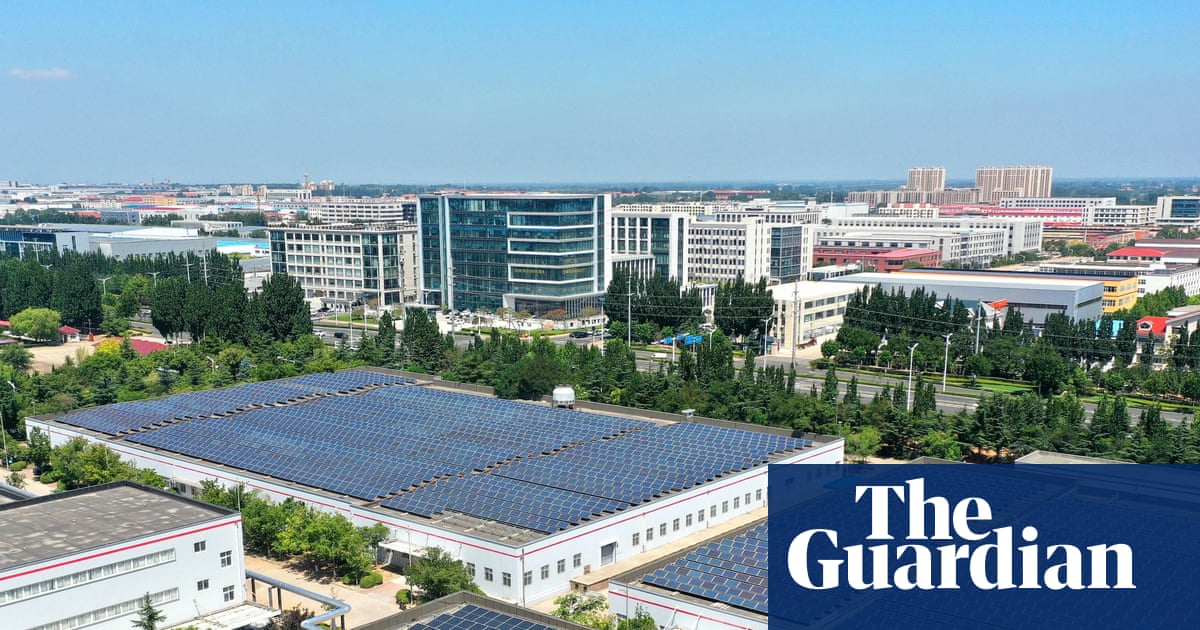
Cover image from theguardian.com, which was analyzed for this article
The administration announced 15% tariffs on polysilicon and derivatives to protect US supply chains and national security. Markets reacted with gains in some solar stocks.
PoliticalOS
Friday, August 7, 2026 — Business
The tariff and price floors create immediate protection for the two existing U.S. polysilicon plants while introducing higher costs and a three-month window for potential import surges. The policy’s success will depend on whether new domestic capacity materializes before downstream industries absorb the added expense.
What outlets missed
Most reports omitted discussion of the Commerce Department’s planned incentive program for new domestic factories, which could shape long-term investment decisions beyond the immediate tariff. Few outlets examined how the minimum-price floors interact with existing antidumping duties already in place on Chinese solar products. Coverage also underplayed the risk that delayed implementation might encourage front-loading of imports, a concern raised by trade attorneys but absent from market-reaction stories. The limited number of U.S. polysilicon plants and their ownership structures received uneven attention across outlets.
The new duties raise the cost of a critical input for solar panels and semiconductors at a moment when the United States is racing to expand domestic manufacturing capacity in both sectors. Domestic producers stand to gain protection from lower-priced imports, yet buyers of panels and chips face the prospect of higher prices once the measures take hold.
President Trump signed the proclamation on Thursday under Section 232 of the Trade Expansion Act of 1962, citing advice from Commerce Secretary Howard Lutnick. The order places a 15 percent tariff on imported polysilicon products and establishes minimum import prices of $21 per kilogram for polysilicon, $100 per kilogram for ingots and wafers, $0.22 per watt for solar cells, and $0.38 per watt for modules. The changes become effective December 4. The administration framed the steps as necessary to ensure the commercial viability of U.S. polysilicon production for economic and national security reasons.
Two U.S. facilities currently produce the material: Hemlock Semiconductor in Michigan, a joint venture involving Corning and Japan’s Shin-Etsu Handotai, and a Wacker Chemie plant in Tennessee. Corning welcomed the move as support for continued investment. Wacker said it was reviewing the details while noting the importance of supply-chain resilience for semiconductors and defense. T1 Energy, First Solar, and Qcells also issued statements of support. Trade attorney Tim Brightbill warned that the three-month delay could prompt a surge in imports before the rules apply.
China’s Foreign Ministry responded by accusing the United States of overstretching national-security concepts and disrupting normal trade. Spokesperson Lin Jian stated that protectionism would not improve U.S. competitiveness and that China would defend its companies’ interests. The Semiconductor Industry Association has reported that chips account for 2.4 percent of global polysilicon demand, underscoring the material’s dual-use role in artificial-intelligence hardware and solar manufacturing.
More in Business & Economy

Major Banks Deliver Mixed Q3 Results on Trading Beats
JPMorgan, Goldman Sachs, Citigroup, and Wells Fargo reported Q3 figures, with revenue beats in trading but some estimate misses. CNBC provided live updates on the results and market reactions.

Oil Falls on Russian Diesel Outlook Despite Geopolitical Risks
Dow futures rose while Nasdaq faced pressure from tech weakness and elevated oil after geopolitical spikes. CNBC tracked premarket moves tied to earnings and Fed speeches.

Hall and Woodford Win Economics Nobel for Stabilization Models
American economists Robert E. Hall and Michael Woodford won the Nobel memorial prize for their research on managing economies through booms and busts, informing central bank policies on inflation and unemployment.

Skydance Closes Paramount-Warner Bros. Discovery Deal
The long-delayed media mega-merger cleared hurdles and began operations under Skydance, consolidating Hollywood power. Center and center-left outlets track the regulatory and business milestones.
The Compass
You just read five takes on one story.
What's your take? Find your political shape in a few minutes.
Take the test