
Trump-Pope Leo Rift Over Iran War Tests Catholic Support

Cover image from independent.co.uk, which was analyzed for this article
Trump criticized Pope Leo as weak on crime and opposed to the Iran war, drawing defenses from US Catholics and figures like JD Vance. The public spat risks alienating religious voters amid broader theological and policy divides. Coverage notes potential political costs for Republicans.
PoliticalOS
Wednesday, April 15, 2026 — Politics
The core reality is a verifiable policy and personal disagreement between the Trump administration and Pope Leo XIV over the Iran war that has produced real discomfort among segments of U.S. Catholics, including some former Trump allies. This matters because Catholics were a growth demographic for Trump in 2024, and the rift—centered on just war principles versus national security—arrives as the conflict continues without clear resolution. Readers should weigh verified public statements against unverified dramatic quotes, recognizing that political loyalty and faith priorities are now in open tension ahead of future elections.
What outlets missed
Most coverage omitted the specific precursors to the Iran conflict, including Iran's nuclear breakthroughs, the 2025-2026 protest crackdowns that killed thousands, and Khamenei's assassination, which framed the U.S. strikes as a response rather than unprovoked aggression. Outlets downplayed or ignored Trump's consistent explanation that the AI image depicted him as a doctor tied to humanitarian aid, not a Christ figure, and rarely noted the image's full patriotic elements like fighter jets and the Statue of Liberty. The absence of any senior U.S. Catholic clergy publicly supporting the war received uneven treatment, as did Vance's full context that the vice president's role requires implementing the president's views over personal ones. Finally, concrete diplomatic efforts, including ongoing Vatican-White House back channels referenced by one official, were minimized in favor of outrage or dismissal.
Trump Social Media Posts on Pope Leo Test Conservative Catholic Support
President Donald Trump’s longstanding habit of late-night posting on Truth Social once again disrupted the news cycle this week, this time by directly challenging Pope Leo XIV and sharing an image that depicted the president in a Christ-like role as a healer. The episode has triggered condemnation from some longtime Catholic allies, revealing tensions over the proper role of religious leaders in critiquing American immigration enforcement and military decisions.
The immediate spark was Trump’s lengthy Truth Social message labeling the first American pope as “WEAK” on crime and too accommodating to liberal causes. The president argued that Pope Leo’s criticism of U.S. policy toward Iran and border security amounted to catering to the radical left. Shortly afterward, Trump posted an AI-generated picture showing him dressed in white robes, extending a glowing hand toward a sick patient. He deleted the image after it drew accusations of blasphemy, but not before it had circulated widely.
Vice President JD Vance, who converted to Catholicism in 2019, defended the president on Fox News. Vance described the picture as a joke that some people simply failed to understand. “I think the president of the United States likes to mix it up on social media,” he said, adding that it was “good” Trump remains unfiltered. Vance urged the Vatican to confine itself to matters of morality and internal church governance rather than second-guessing American public policy on immigration or national security. The president, Vance noted, has a duty to protect U.S. interests first.
The backlash has been notable because it comes from voices that once formed part of Trump’s base. Bishop Joseph Strickland, who delivered the keynote at CPAC in 2024, participated in a prayer event consecrating Trump’s Mar-a-Lago residence, and spoke at a 2020 march supporting challenges to the prior election, has shifted tone. In recent days Strickland has publicly prayed that Catholics remember to look to Christ rather than to national leaders with the most money or weapons. His comments reflect a broader unease among some conservative Catholics that crystallized after the United States began military operations against Iran six weeks ago.
Church leaders have long criticized Trump’s immigration policies as harsh. Those policies, however, have enjoyed support among many rank-and-file Catholics who prioritize rule of law, border security, and reducing crime. The current dispute illustrates a recurring pattern: when religious institutions venture into detailed policy prescriptions on secular matters, they risk alienating the very congregants who otherwise share their broader moral outlook. This dynamic echoes observations made for decades by thinkers who warn that expertise in one realm does not confer authority in another. Popes excel at spiritual guidance; they possess no unique insight into the trade-offs of military deterrence or the fiscal costs of unchecked migration.
Media treatment of the episode has followed predictable lines. Outlets quick to label Trump’s behavior “unhinged” have framed the deleted image and the papal critique as evidence of deepening isolation. Yet coverage often glosses over the substance of the disagreement. The United States is engaged in armed conflict with a regime that has spent years destabilizing the region and threatening American allies. Reasonable people can differ on tactics, but reducing the conversation to personal insults or messianic imagery misses the policy stakes. Similarly, immigration is not merely a compassion issue. It involves finite resources, public safety, and the rule of law. When a president enforces statutes passed by Congress, labeling that enforcement as un-Christian imports a political judgment into theological language.
History offers perspective. In the 1960 presidential campaign, Protestant clergy warned that John F. Kennedy would answer to the Vatican rather than the Constitution. Kennedy reassured voters by insisting that no public official should be dictated to by religious authority. The irony today is striking. Instead of fearing papal control over a president, the country watches a president push back against a pope who has inserted himself into debates over U.S. sovereignty. The separation-of-powers principle runs both ways. Elected leaders answer to voters; popes answer to their flock on matters of faith.
Trump’s communications style has not changed since his first campaign. Former aides describe how he uses social media to seize the news agenda, forcing cable networks to chase his posts rather than follow scripted narratives. The tactic produces plenty of noise. It also allows him to speak past institutional gatekeepers who have spent years dismissing concerns about illegal crossings, urban crime, and adversarial regimes. Supporters see authenticity; critics see chaos. Both reactions have become ritualized.
What matters more than the tone is whether the underlying arguments hold. Strong border enforcement and realistic foreign policy are not heretical positions. Millions of Americans, including Catholics, experience the consequences of lax immigration rules in their neighborhoods and schools. They understand that weakness invites aggression abroad. If religious leaders wish to counsel prudence, they retain that right. When they frame policy disagreements as moral failings, however, they invite exactly the kind of blunt rejoinder Trump delivered.
The deleted AI image was clumsy and easily mocked. Yet the larger question it raises is whether any public figure should be immune from criticism simply because he wears a mitre. Conservative Catholics have long argued that faith informs values but does not dictate the details of legislation or strategy. That principle applies equally to popes and presidents. As the Iran conflict continues and immigration enforcement remains a flashpoint, the current public friction may clarify rather than damage Trump’s standing among voters who prioritize tangible results over institutional decorum. For those voters, the test is not whether the president sounds pastoral. It is whether American interests are advanced.
You just read Conservative's take. Want to read what actually happened?
More in Politics
Trump at 32% Approval as Gas Prices Test GOP Midterm Hopes
NYT/Siena polling showed Trump's approval at historic lows around 32 percent with Democrats leading by double digits in key districts. Early voting has surged in battleground states.

Record Early Voting Hits Battlegrounds, Shifting Partisan Shares
AP analysis found hundreds of thousands more early ballots than in 2022 in states including Texas, Ohio, Kansas, Maine, and North Carolina, shifting partisan dynamics.
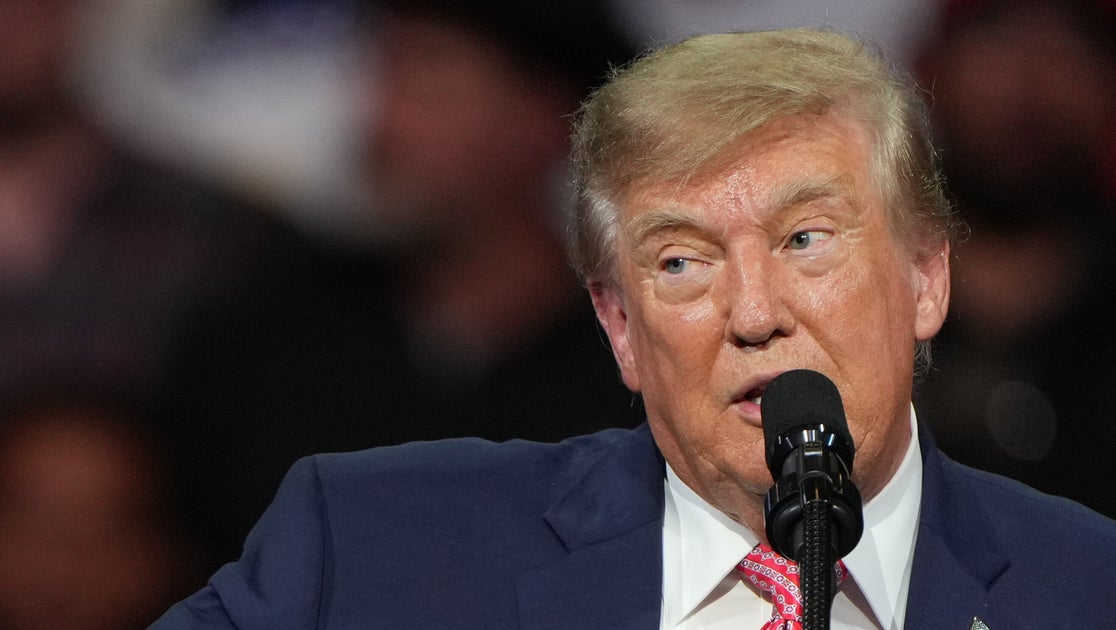
Trump Backs Marshall in Kansas Senate Race Tightened by Farm Costs
President Trump rallied in deep-red Kansas for GOP Sen. Roger Marshall in a competitive race, announcing an $8 billion farm fuel relief program amid high diesel prices. Democrats see an opening to end 94 years of GOP dominance in the state.

Trump Pauses Russia Sanctions Amid Ukraine Tensions and Missile Strikes
Trump waived sanctions on Russia and floated trilateral talks with Putin and Xi as part of ending the Ukraine war, while tensions rose with Zelenskyy over Starlink and arms. Bipartisan senators engaged Zelenskyy amid the shifts.
The Compass
You just read five takes on one story.
What's your take? Find your political shape in a few minutes.
Take the test