
Trump-Pope Feud Over Iran War Ignites Just War Debate
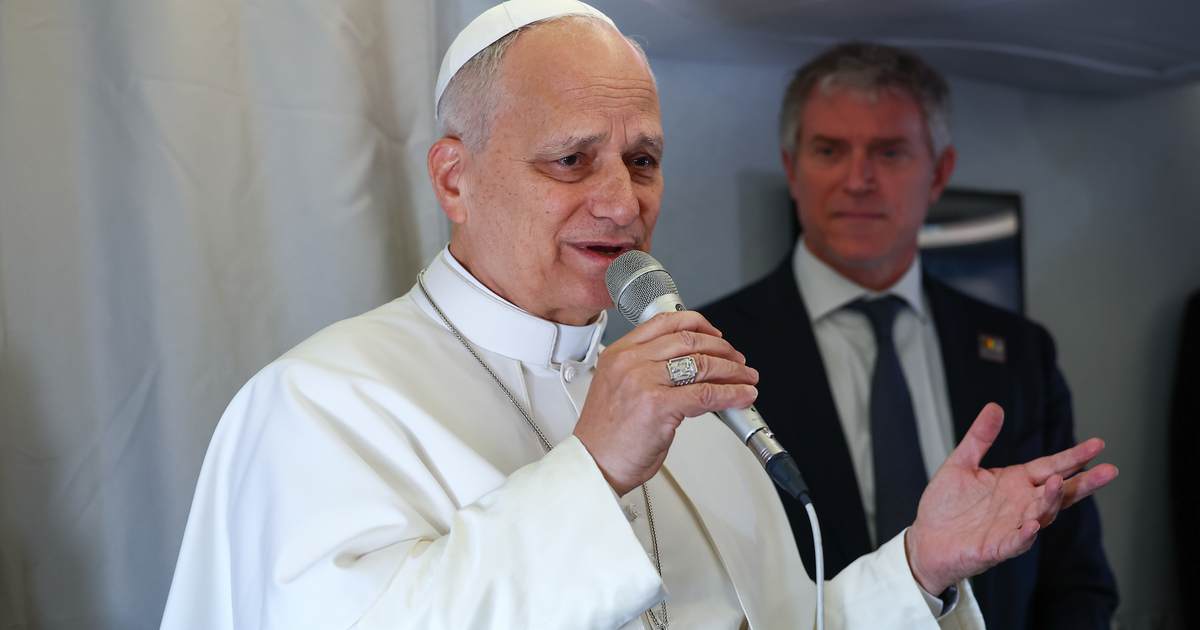
Cover image from townhall.com, which was analyzed for this article
Trump's criticism of Pope Leo, including Jesus memes and theological disputes tied to the Iran war, draws backlash from left-leaning outlets and debate on just war doctrine from conservatives. Allies defend his remarks while reports highlight erratic behavior under pressure. The clash tests loyalty among Christian supporters.
PoliticalOS
Thursday, April 16, 2026 — Politics
The Trump-Pope Leo XIV feud reveals an unresolved tension between Catholic just war doctrine and the administration's view that preemptive force against a nuclear-seeking Iran constitutes legitimate self-defense. With disputed casualty claims, a seven-week-old conflict, and active mediation efforts, readers should recognize that ancient theological principles are being applied to a modern security crisis with no consensus answer. The single most important reality is that this dispute forces American Christians to weigh institutional church guidance against perceived existential threats from a hostile regime.
What outlets missed
Most coverage omitted the precise timeline showing Pope Leo XIV criticized U.S. Iran policy first on March 29, with Trump framing his response as reactive, per PBS transcripts. The February 28 start of hostilities via U.S.-Israeli strikes on nuclear sites after failed talks received little context, yet this timing is central to just war assessments of preemption versus self-defense. Outlets also underplayed disputes over Trump's 42,000 protester death figure, with no consensus across human rights monitors, and skipped broader historical Iranian attacks on U.S. targets that inform the administration's rationale. Finally, ongoing Pakistan-mediated negotiations toward a potential ceasefire were mentioned only in passing, obscuring diplomatic off-ramps that could shift the moral calculus.
Trump Escalates Feud With Pope Leo XIV as Catholic Leaders Challenge US Military Doctrine
President Donald Trump’s public war with Pope Leo XIV has intensified this week, exposing deep tensions between the White House and the Catholic Church over the morality of American military action in Iran and beyond. What began as papal calls for peace has prompted Trump to lash out repeatedly on Truth Social, while Vice President JD Vance and House Speaker Mike Johnson have rushed to defend the administration by invoking and reshaping centuries-old Catholic teachings on just war.
The latest flare-up came after Pope Leo posted on X, formerly Twitter, urging the world to “reject the logic of violence and war, and embrace peace founded on love and justice.” He added, “Enough of war and all the pain it causes.” The statement, consistent with longstanding Vatican positions against unchecked militarism, infuriated Trump, who fired back late Tuesday night. “Will someone please tell Pope Leo that Iran has killed at least 42,000 innocent, completely unarmed, protesters in the last two months, and that for Iran to have a Nuclear Bomb is absolutely unacceptable?” he wrote.
The exchange is not isolated. Pope Leo has repeatedly criticized Trump’s foreign policy, including last year’s military intervention in Venezuela that ousted Nicolás Maduro. Three cardinals who appeared on CBS’s 60 Minutes on Sunday echoed the Pope’s concerns, describing war as hell and appearing to draw moral equivalences between American actions and atrocities committed by adversaries. Conservative critics, including columnist Cal Thomas, accused the church leaders of ignoring the Islamic Republic’s hatred of Christians and Jews and its support for terrorism. Thomas noted that American Catholics have long selectively ignored papal guidance on issues such as abortion, suggesting this latest disagreement fits a pattern.
Yet the ferocity of the administration’s response has startled even some Republican allies. Italian Prime Minister Giorgia Meloni, once viewed as a close Trump partner, has been visibly alienated. Senator Thom Tillis, a North Carolina Republican, has also expressed discomfort with the president’s continued public fixation on the pontiff. The feud has further fueled an emerging debate over just war doctrine, the Catholic framework that lays out strict criteria for when armed conflict can be morally justified, including legitimate authority, just cause, last resort, and the protection of civilians.
Vance, a Catholic convert, waded directly into theological terrain during a Turning Point USA event in Georgia on Tuesday. “I like that the Pope is an advocate for peace. It is certainly one of his roles,” he said. “On the other hand, how can you say that God is never on the side of those who wield a sword? Was God on the side of Americans who liberated France from the Nazis? Was God on the side of Americans who liberated Holocaust camps?” Vance insisted Jesus does not support genocide but advised the Pope to avoid politics and “stay in his lane.” The vice president’s comments appeared aimed at reframing the Iran campaign as a defensive necessity rather than the war of choice critics allege.
Johnson offered a similarly contorted defense, bizarrely citing just war principles to dismiss the Pope’s critique even as reports from the region describe heavy civilian casualties and questions about whether all peaceful options were truly exhausted. The spectacle of senior administration officials lecturing the leader of the Roman Catholic Church on theology has struck many observers as both unusual and revealing. It suggests an expectation that even devoutly religious figures in the president’s orbit must place loyalty to Trump above any higher spiritual authority.
This latest episode coincides with growing private concern among some former Trump allies about the president’s mental state. A lengthy New York Times investigation published this week detailed what multiple ex-advisers describe as a worsening condition, with some comparing his fixation on perceived enemies, including the Pope, to a dangerous obsession. Olivia Troye, a former national security official now running for Congress as a Democrat, told The Daily Blast podcast that Trump’s unfitness is more pronounced in his second term and that enablers are enabling behavior that directly affects Americans’ daily lives, from economic instability tied to global conflict to the normalization of inflammatory rhetoric.
Christopher Hale, who writes the “Letters from Leo” Substack tracking the papacy’s intersection with American politics, described the moment as one in which Trump has finally encountered an adversary he cannot bully, bribe, or bury under scandal. Unlike previous targets, the Pope operates outside the president’s reach of formal power, a reality that appears to frustrate Trump intensely.
The irony is rich. Trump and his allies have long positioned themselves as defenders of religious liberty and traditional values. Yet in demanding that the Pope temper his moral witness to accommodate American foreign policy, they have placed the president atop a hierarchy that many Catholics believe should be occupied by conscience and faith. Just war theory, developed over centuries by thinkers like St. Augustine and St. Thomas Aquinas, was never intended as a blank check for great powers. It demands rigorous scrutiny of motives, methods, and consequences, precisely the kind of scrutiny the Vatican is now attempting to apply.
As the death toll in Iran rises and Trump reportedly eyes further targets, including possible action against Cuba, the moral debate is unlikely to fade. Pope Leo XIV has shown no sign of retreating. His continued insistence on the humanity of all sides, even those the administration deems enemies, stands in contrast to a White House rhetoric that increasingly frames conflict in absolutist, almost messianic terms.
Whether this papal pushback will influence policy remains uncertain. What is clear is that Trump’s inability to let the matter drop has further isolated him from traditional conservative allies abroad and at home, while raising fresh questions about the administration’s willingness to subordinate both faith and facts to the demands of perpetual war. In Leo XIV, the president has met an institution built to outlast empires and their leaders, a reality that appears to vex him more than any theological disagreement alone can explain.
You just read Progressive's take. Want to read what actually happened?
More in Politics

Trump at 32% Approval as Gas Prices Test GOP Midterm Hopes
NYT/Siena polling showed Trump's approval at historic lows around 32 percent with Democrats leading by double digits in key districts. Early voting has surged in battleground states.

Record Early Voting Hits Battlegrounds, Shifting Partisan Shares
AP analysis found hundreds of thousands more early ballots than in 2022 in states including Texas, Ohio, Kansas, Maine, and North Carolina, shifting partisan dynamics.

Trump Backs Marshall in Kansas Senate Race Tightened by Farm Costs
President Trump rallied in deep-red Kansas for GOP Sen. Roger Marshall in a competitive race, announcing an $8 billion farm fuel relief program amid high diesel prices. Democrats see an opening to end 94 years of GOP dominance in the state.

Trump Pauses Russia Sanctions Amid Ukraine Tensions and Missile Strikes
Trump waived sanctions on Russia and floated trilateral talks with Putin and Xi as part of ending the Ukraine war, while tensions rose with Zelenskyy over Starlink and arms. Bipartisan senators engaged Zelenskyy amid the shifts.
The Compass
You just read five takes on one story.
What's your take? Find your political shape in a few minutes.
Take the test