
Trump Proposes Record $1.5 Trillion Defense Budget for 2027

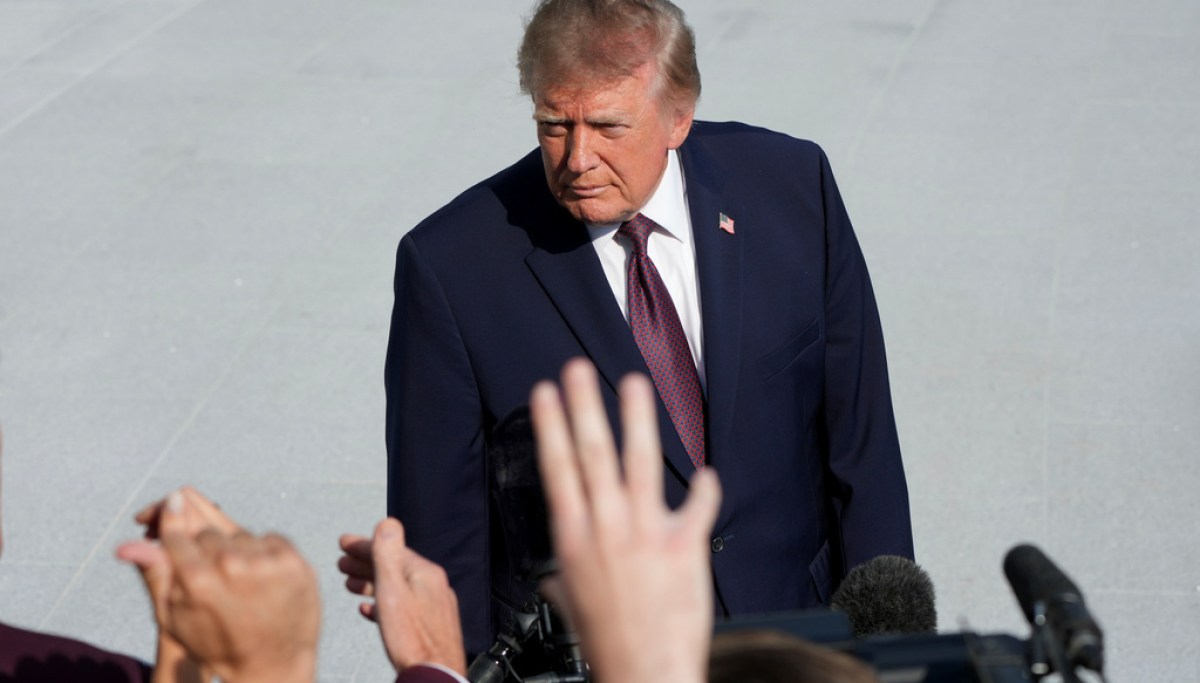
Cover image from theguardian.com, which was analyzed for this article
Trump's budget request seeks the largest-ever defense hike amid Iran tensions, with OMB testimony in Congress. Taxpayers face higher military spending on Tax Day. Outlets debate fiscal priorities in wartime context.
PoliticalOS
Wednesday, April 15, 2026 — Politics
Trump's call for a $1.5 trillion defense budget reflects real costs incurred during the early days of the Iran conflict, yet it intensifies an unresolved argument over national priorities at a time when many households already feel overtaxed and inflation is eroding purchasing power. The $4,049 average military share per tax filing unit is verifiable but must be weighed against the fact that entitlements consume far larger shares of the overall federal budget. Readers should watch congressional negotiations for whether the final figure includes credible offsets or simply locks in higher baseline spending long after the immediate fighting has subsided.
What outlets missed
Both pieces underplayed the fact that national defense has comprised roughly 13 percent of total federal outlays in recent fiscal years, with Social Security, Medicare and net interest claiming significantly larger shares according to Peter G. Peterson Foundation data. The Guardian omitted detailed discussion of the specific readiness shortfalls created by the Iran conflict, including the urgent need to replenish expensive munitions such as Tomahawk missiles that were depleted in the opening phase. National Review's article bypassed the budget proposal entirely, offering no examination of the 40 percent increase, the $441 billion topline growth, or the accompanying 10 percent non-defense cuts. Neither outlet fully explored OMB's congressional testimony on long-term procurement implications or independently verified the status of the April 8 ceasefire and its effect on projected 2027 spending needs. Coverage also gave limited space to how last year's Republican tax changes, including tip-income exemptions, altered effective burdens for different income groups filing in 2026.
Rising Defense Costs Test Taxpayers as Iran Conflict Reshapes Budget Priorities
As Americans met the April 15 tax filing deadline, fresh figures showed the average household contributed $4,049 in federal income taxes to military-related accounts in 2025, up from $3,707 the year before. The increase arrives at a moment when the United States is actively engaged in the US-Israeli war against Iran, a conflict that broke out in February 2026 and quickly demonstrated the steep price of deterrence.
The Institute for Policy Studies, a progressive think tank, produced the analysis that breaks down the 2025 figure. Roughly $1,870 went to Pentagon contractors, $770 supported military personnel, $130 funded nuclear weapons programs, and $57 covered aid to foreign militaries. These numbers do not include the direct costs of the Iran war, which Pentagon briefers told lawmakers had already surpassed $11.3 billion in the first six days of fighting. That sum alone equates to a substantial claim on taxpayer resources before any longer-term expenses are tallied.
The timing is not coincidental. President Trump proposed a roughly 40 percent increase in defense spending earlier this month, paired with 10 percent cuts to many non-defense programs. The move reflects a classic trade-off: resources are finite. Every dollar allocated to one purpose cannot be spent on another. Progressive analysts at the IPS correctly note the opportunity costs, yet those costs run in both directions. Underfunding defense when adversaries test American resolve carries risks that can dwarf routine domestic spending disputes.
The current conflict with Iran underscores this reality. Tehran’s decision to escalate into open warfare placed immediate demands on American air and naval power. Carrier strike groups, fighter squadrons, and missile defense systems do not operate on goodwill. They require trained personnel, maintained equipment, and industrial capacity that cannot be conjured overnight. The $1,870 per household that flowed to contractors last year helped sustain exactly that base. Dismantling it in the name of short-term savings would leave the country less prepared when the next crisis arrives, a pattern familiar from previous drawdowns followed by emergency surges.
Critics of higher Pentagon budgets often treat defense spending as discretionary in the same category as other federal programs. Yet the Constitution assigns the federal government a clear primary duty to provide for the common defense. Domestic entitlements, by contrast, have grown steadily for decades regardless of external threats. The IPS report itself notes that Medicaid alone accounted for $2,492 per average taxpayer in 2025. That figure has risen over time even as military spending fluctuated with world events. The relevant question is not whether $4,049 per household represents too much in absolute terms, but whether the allocation matches the demonstrated dangers.
Trump’s proposed realignment attempts to answer that question by elevating security above other priorities during wartime. Whether Congress will accept the full 40 percent increase remains uncertain. Lawmakers face constituent pressure over household budgets squeezed by inflation and rising costs. Still, the alternative is to fund the war through supplemental appropriations that simply add to the deficit, deferring the bill to future taxpayers. Neither path is painless.
Experience from earlier conflicts offers perspective. The United States learned after the Cold War that peace dividends can prove illusory when new challengers emerge. The Global War on Terror revealed the expense of sustained operations far from home. Today’s confrontation with Iran combines elements of both: a hostile regime pursuing nuclear capabilities and a direct military clash involving American assets. In such circumstances, marginal cuts to defense invite greater long-term costs if they embolden adversaries or erode readiness.
The National Review noted in its coverage of the present moment that serious times require serious analysis grounded in historical precedent rather than reflexive talking points. That observation holds. Taxpayers are right to scrutinize every line of the federal budget. Waste in contracting or bureaucratic overhead deserves exposure and correction. But the data from the IPS report, stripped of its interpretive gloss, shows that military spending remains a significant yet bounded share of what government extracts from citizens. The more pressing issue is whether that share is calibrated to the threats now visible in the Persian Gulf and beyond.
As returns are processed and revenues flow into the Treasury, the numbers reveal more than accounting. They reflect choices about what kind of country America intends to be in a dangerous world. Prioritizing defense during active conflict does not preclude reform of entitlement programs or efforts to reduce overall spending. It simply acknowledges that security is the prerequisite for every other policy goal. Households sending more than four thousand dollars apiece to the Pentagon this year may take little comfort in that fact. Yet the alternative, learning the price of weakness after an attack rather than before, has historically proven far more expensive.
You just read Conservative's take. Want to read what actually happened?
More in Politics

Federal Agents Search Omar Home in Ongoing Immigration Probe
Homeland Security agents searched the Minnesota Democrat's DC residence in a criminal probe, prompting accusations of political intimidation from Omar and Democratic leaders. Coverage spans left-leaning outlets like NPR, BBC, and The Guardian alongside right-leaning criticism from The Federalist and Daily Wire.

Trump Diesel Import Plan Draws Pushback Over Russia Ties
The weekend agreement drew bipartisan congressional pushback and criticism from Ukraine's Zelenskyy, with analysts downplaying US fuel price impacts. Right-leaning outlets like National Review, Dispatch, and Washington Examiner questioned its legality and effectiveness.

Independents Test Voter Appetite for Middle Ground in 2026 Midterms
Nearly 200 independents are running in competitive races as voters weigh ballot measures on housing costs in states like Massachusetts. Left-leaning coverage from NYT, NPR, and Guardian highlights turnout and key races while right outlets focus on GOP strategy.
Trump Rallies in Alaska, Ohio to Bolster GOP Senate Candidates
The president rallied in Wasilla for Sen. Dan Sullivan and faced empty seats at an Ohio event amid midterm concerns. Outlets across the spectrum covered the trips as signals of GOP vulnerability weeks before Election Day.
The Compass
You just read five takes on one story.
What's your take? Find your political shape in a few minutes.
Take the test