
US Targets Iranian Ports in Hormuz Blockade After Nuclear Talks Collapse

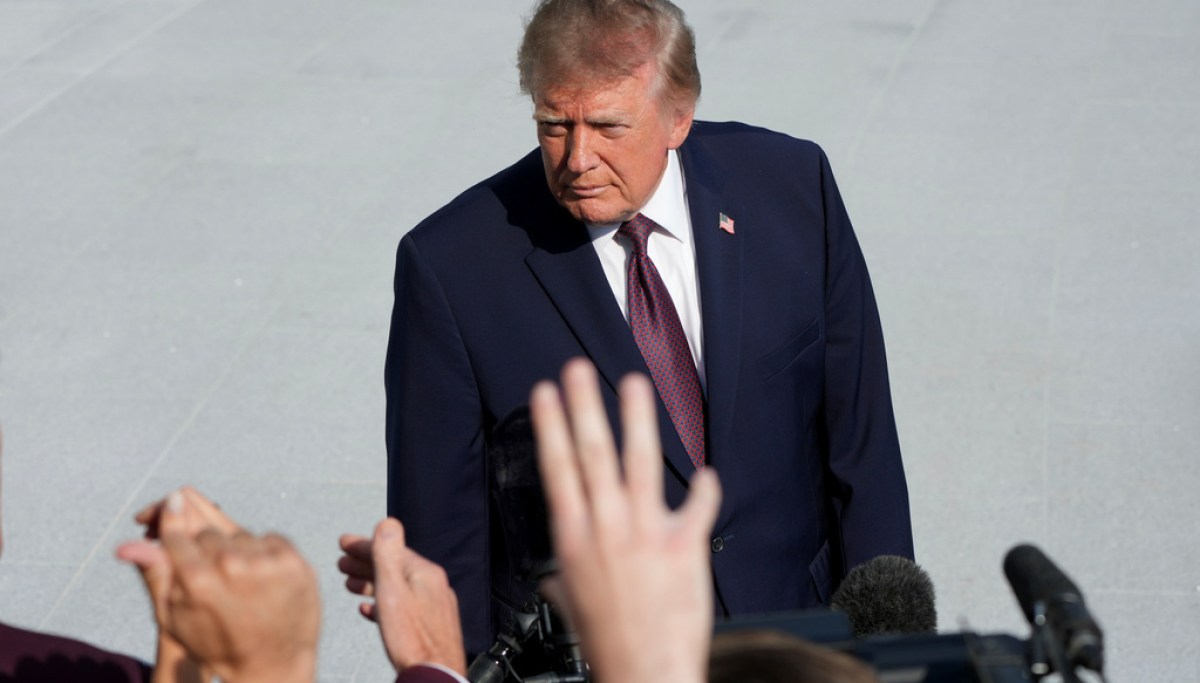
Cover image from thedispatch.com, which was analyzed for this article
President Trump ordered a US naval blockade of Iranian ports along the Strait of Hormuz, warning that Iranian fast-attack vessels will be targeted. Tankers passed through on the first day according to data, but Iran denounced it as piracy. Debates rage on its strategic value, risks, and alternatives amid fears of escalation.
PoliticalOS
Tuesday, April 14, 2026 — Politics
The U.S. naval operation is a targeted effort to cut off revenue from Iranian oil exports after nuclear negotiations failed over the length of an enrichment moratorium, not a total closure of the Strait of Hormuz. Early shipping data shows non-Iranian tankers continue to pass, but the success of this high-stakes gamble depends on whether economic pressure can force concessions without provoking mine attacks, drone strikes or broader energy disruption that would raise costs for consumers worldwide. Readers should recognize that pipeline alternatives fall far short of replacing 20 million barrels per day, allied support is limited, and the central unresolved question is whether Iran’s leadership will accept strict limits on its nuclear program before the fragile ceasefire collapses.
What outlets missed
Most coverage underplayed the precise nuclear proposals exchanged in Islamabad: the U.S. 20-year enrichment moratorium and full stockpile removal versus Iran's 3-5 year freeze and monitored down-blending, details corroborated by The Washington Post, Axios and The Dispatch but rarely synthesized. The exact CENTCOM definition limiting the blockade to Iranian ports and coastal areas, explicitly sparing neutral transit, was often blurred into broader 'Strait blockade' language, obscuring operational nuance. Prior Iranian actions, including mine-laying, attacks on more than a dozen merchant vessels and selective toll demands that reduced traffic by over 90 percent before the U.S. move, received uneven attention and were sometimes omitted entirely. Pipeline capacity shortfalls, Saudi East-West at 7 million barrels per day and UAE's ADCOP at 1.8 million against Hormuz's 20 million, were quantified in only a few specialist reports yet are central to debates over alternatives. Finally, allied reluctance, UK and French refusal to assist plus active Saudi lobbying against the policy, was downplayed outside the Wall Street Journal and Bulwark, masking the increased burden on U.S. forces.
Global energy markets face fresh uncertainty as the United States has moved to choke off Iran's oil exports through one of the world's most vital shipping lanes. With gasoline prices already elevated from six weeks of conflict, the naval operation ordered by President Trump raises immediate questions about retaliation, economic fallout and whether this pressure can finally break a nuclear impasse that has eluded diplomats for years. At its core, the dispute remains what it has been since talks collapsed in Pakistan: Iran insists on retaining uranium enrichment capability it calls a national right; the United States demands a long-term halt and removal of near-weapons-grade material to ensure Tehran can never build a bomb.
The sequence began with failed negotiations in Islamabad over the weekend. U.S. officials, led by Vice President JD Vance, proposed a 20-year moratorium on all Iranian uranium enrichment along with restrictions on centrifuges and the removal of its stockpile of uranium enriched to 60 percent, according to two people familiar with the discussions reported by The Washington Post and Axios. Iranian negotiators countered with a three-to-five-year suspension and offered to dilute rather than fully surrender the material, per accounts corroborated across multiple outlets. No agreement was reached. Trump announced the blockade Sunday night, stating on Truth Social that any Iranian fast-attack vessels interfering with the operation would be "blown to hell."
Implementation began Monday. U.S. Central Command clarified that the measure applies specifically to vessels entering or departing Iranian ports and coastal areas along the Strait of Hormuz and extending to the Gulf of Oman. Neutral shipping not bound for Iran may continue to transit the strait, though vessels could face inspection. Humanitarian aid is permitted after verification. CENTCOM deployed at least 15 warships, including destroyers USS Michael Murphy and USS Frank E. Petersen Jr., which had earlier transited the waterway to address mines previously laid in the area, according to U.S. military statements. The operation relies on interception, diversion and, if necessary, capture rather than a physical line of ships at the chokepoint itself.
Shipping data told a nuanced story on day one. At least three tankers, including two previously sanctioned by the United States for prior Iranian or Russian oil trade, passed through the strait Tuesday bound for non-Iranian destinations such as UAE ports and Iraq, according to trackers from LSEG and Kpler cited by Reuters, Al Jazeera and HuffPost. The Panama-flagged Peace Gulf headed to Hamriyah; the Rich Starry carried methanol; the Murlikishan prepared to load fuel oil. These movements occurred because the vessels were not calling at Iranian facilities. Overall traffic remained far below the pre-war average of roughly 140 vessels daily. Iran, which had already reduced flows to a fraction of normal levels after U.S. and Israeli strikes began Feb. 28, denounced the U.S. action as "piracy" and "dangerous," with a foreign ministry spokesman warning of a "strong and forceful response."
The stakes trace directly to the strait’s geography and economics. Roughly 20 million barrels of oil and petroleum products moved through it daily before the conflict, representing one-fifth of global seaborne trade, according to U.S. Energy Information Administration figures referenced across coverage. Iran’s degraded military, its nuclear sites bombed, its leadership thinned by targeted strikes including the death of Supreme Leader Ali Khamenei, had used threats, mines and selective attacks on merchant vessels to exert leverage during the fighting. Traffic fell more than 90 percent at points. Oil prices climbed toward $100 per barrel. The U.S. move aims to reverse that leverage by halting Iranian exports that have continued selectively, often to China, which purchased more than 80 percent of Iran’s seaborne crude last year.
Alternatives remain limited. Pipeline networks across Saudi Arabia, the UAE and Iraq cannot replace the volume. The Saudi East-West pipeline system tops out near 7 million barrels per day; the UAE’s Abu Dhabi Crude Oil Pipeline handles about 1.8 million. Expansions would require years and billions of dollars, according to analyses from Al Jazeera, the Australian Financial Review and International Crisis Group. National Review noted these shortfalls while arguing that Iran’s other capabilities had been substantially reduced by weeks of airstrikes.
Allied support is lukewarm at best. The United Kingdom and France declined to participate, citing legal and strategic concerns, and joined in calling for a multinational summit on safe passage. Saudi Arabia has pressed Washington to reconsider, worried about retaliation risks to its own facilities and further price volatility, per Wall Street Journal reporting. China labeled the operation "irresponsible" and warned it endangers the fragile ceasefire. Domestically, experts diverge. Christine Wormuth, head of the Nuclear Threat Initiative, told The Washington Post that sustained pressure might convince Iran its nuclear program is a necessity rather than a bargaining chip, citing the leadership’s high pain tolerance forged in the Iran-Iraq war. Others, including analysts at the Foundation for Defense of Democracies, argue the revenue cutoff could force hard choices once storage fills.
The central tension is unresolved. Can a targeted blockade on Iranian ports, enforced at distance with superior naval assets, generate enough economic pain to extract nuclear concessions without triggering mine deployments, drone swarms or attacks on neutral tankers that would spike prices further and test the ceasefire? Early transits suggest the strait has not been sealed entirely. Yet Iran’s history of asymmetric warfare, its remaining fast-attack craft and its declared intent to resist indicate the operation could stretch U.S. forces and test political will. Trump has reiterated openness to further talks, with Pakistani officials signaling readiness to host another round. Whether diplomacy resumes before escalation determines if this becomes a decisive lever or another chapter in prolonged confrontation. A reader following only initial headlines might see either triumph or recklessness; the record shows a narrower, risk-laden tool applied after exhaustive talks failed over the same core disagreement that has defined U.S.-Iran relations for two decades.
More in Politics

Federal Agents Search Omar Home in Ongoing Immigration Probe
Homeland Security agents searched the Minnesota Democrat's DC residence in a criminal probe, prompting accusations of political intimidation from Omar and Democratic leaders. Coverage spans left-leaning outlets like NPR, BBC, and The Guardian alongside right-leaning criticism from The Federalist and Daily Wire.

Trump Diesel Import Plan Draws Pushback Over Russia Ties
The weekend agreement drew bipartisan congressional pushback and criticism from Ukraine's Zelenskyy, with analysts downplaying US fuel price impacts. Right-leaning outlets like National Review, Dispatch, and Washington Examiner questioned its legality and effectiveness.

Independents Test Voter Appetite for Middle Ground in 2026 Midterms
Nearly 200 independents are running in competitive races as voters weigh ballot measures on housing costs in states like Massachusetts. Left-leaning coverage from NYT, NPR, and Guardian highlights turnout and key races while right outlets focus on GOP strategy.
Trump Rallies in Alaska, Ohio to Bolster GOP Senate Candidates
The president rallied in Wasilla for Sen. Dan Sullivan and faced empty seats at an Ohio event amid midterm concerns. Outlets across the spectrum covered the trips as signals of GOP vulnerability weeks before Election Day.
The Compass
You just read five takes on one story.
What's your take? Find your political shape in a few minutes.
Take the test