
US Targets Iranian Ports in Hormuz Blockade After Nuclear Talks Collapse

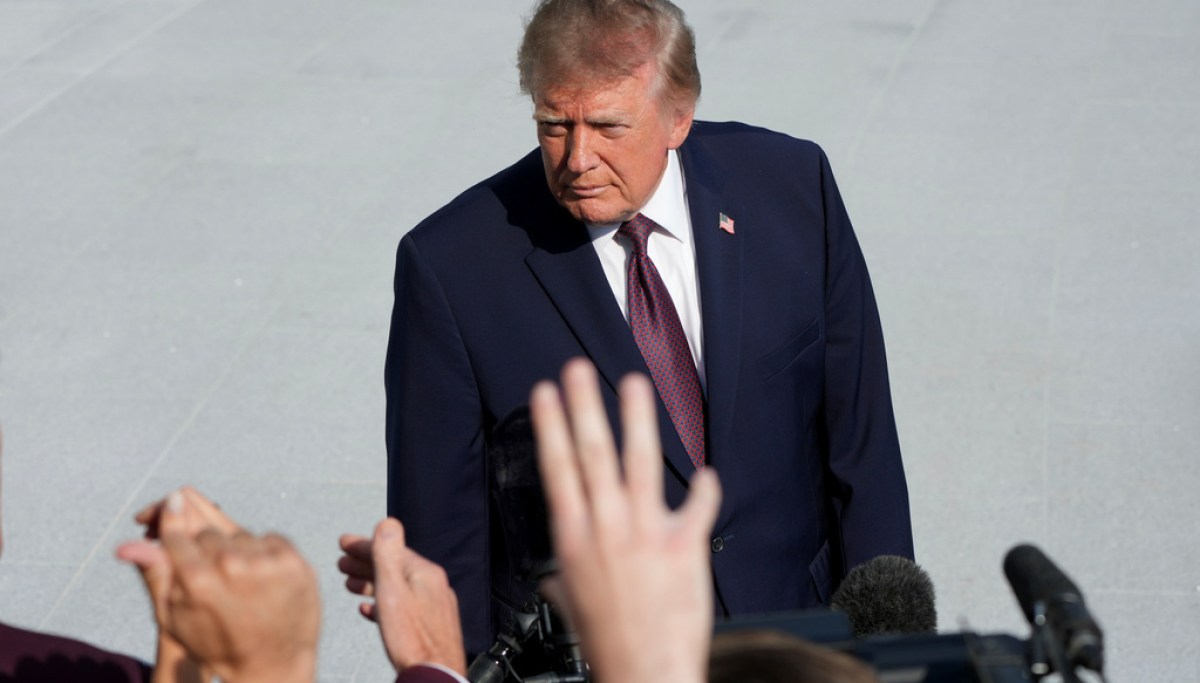
Cover image from thedispatch.com, which was analyzed for this article
President Trump ordered a US naval blockade of Iranian ports along the Strait of Hormuz, warning that Iranian fast-attack vessels will be targeted. Tankers passed through on the first day according to data, but Iran denounced it as piracy. Debates rage on its strategic value, risks, and alternatives amid fears of escalation.
PoliticalOS
Tuesday, April 14, 2026 — Politics
The U.S. naval operation is a targeted effort to cut off revenue from Iranian oil exports after nuclear negotiations failed over the length of an enrichment moratorium, not a total closure of the Strait of Hormuz. Early shipping data shows non-Iranian tankers continue to pass, but the success of this high-stakes gamble depends on whether economic pressure can force concessions without provoking mine attacks, drone strikes or broader energy disruption that would raise costs for consumers worldwide. Readers should recognize that pipeline alternatives fall far short of replacing 20 million barrels per day, allied support is limited, and the central unresolved question is whether Iran’s leadership will accept strict limits on its nuclear program before the fragile ceasefire collapses.
What outlets missed
Most coverage underplayed the precise nuclear proposals exchanged in Islamabad: the U.S. 20-year enrichment moratorium and full stockpile removal versus Iran's 3-5 year freeze and monitored down-blending, details corroborated by The Washington Post, Axios and The Dispatch but rarely synthesized. The exact CENTCOM definition limiting the blockade to Iranian ports and coastal areas, explicitly sparing neutral transit, was often blurred into broader 'Strait blockade' language, obscuring operational nuance. Prior Iranian actions, including mine-laying, attacks on more than a dozen merchant vessels and selective toll demands that reduced traffic by over 90 percent before the U.S. move, received uneven attention and were sometimes omitted entirely. Pipeline capacity shortfalls, Saudi East-West at 7 million barrels per day and UAE's ADCOP at 1.8 million against Hormuz's 20 million, were quantified in only a few specialist reports yet are central to debates over alternatives. Finally, allied reluctance, UK and French refusal to assist plus active Saudi lobbying against the policy, was downplayed outside the Wall Street Journal and Bulwark, masking the increased burden on U.S. forces.
Trump Enforces Naval Blockade of Strait of Hormuz After Iran Rejects Nuclear Concessions
The United States began enforcing a naval blockade of the Strait of Hormuz on Monday, preventing vessels from calling at Iranian ports in a direct response to the collapse of weekend peace talks in Islamabad and Tehran's continued refusal to abandon its nuclear capabilities. Two Navy destroyers, the USS Frank E. Petersen Jr. and the USS Michael Murphy, transited the narrow waterway while clearing sea mines previously deployed by Iran's Islamic Revolutionary Guard Corps, signaling that the vital passage for one-fifth of global oil shipments would no longer serve as leverage for the Iranian regime.
The move follows more than a month of conflict in which American and allied strikes severely degraded Iran's military capacity, eliminated key leaders including Supreme Leader Ayatollah Ali Khamenei, dismantled much of its proxy network, and crippled its nuclear infrastructure. Despite these setbacks, Iran had used its geographic position to close the strait, disrupting roughly 20 million barrels of daily oil transit and driving up global energy prices. President Trump made clear that such economic extortion would not stand. "We can't let a country blackmail or extort the world," he said, noting that the blockade had already halted Iranian maritime commerce.
Negotiations in Pakistan exposed the core impasse. Vice President JD Vance, leading the American side, demanded a 20-year moratorium on all Iranian uranium enrichment and the elimination of advanced centrifuges that could enable a rapid breakout to weapons capability. Iranian representatives countered with a three-to-five-year pause, while repeating longstanding claims that their program served only civilian purposes. Talks ended without agreement. Tehran has long maintained it has no intention of building a bomb, citing a religious fatwa, yet it has preserved the industrial infrastructure that could produce one. The American position reflects a recognition that intentions can shift with regime priorities, and that verification requires more than declarations.
Early shipping data Tuesday showed limited tanker traffic continuing through the strait, but only for vessels not bound for or departing from Iranian ports. Three ships, including two previously sanctioned by the United States for Iranian dealings, made passages carrying naphtha, fuel oil, and methanol. These movements underscore the blockade's targeted nature: neutral commerce may proceed, while Iran's ability to earn hard currency through oil exports is curtailed. Humanitarian shipments are permitted after inspection. Iranian officials denounced the action as "piracy" and threatened a "strong and forceful response," though the IRGC navy stood down as American destroyers passed.
Military analysts note the strait represents decisive terrain in this conflict. Control of the chokepoint determines whether Iran can sustain its economy or must confront internal pressures from a population already strained by decades of mismanagement, corruption, and sanctions. Previous American strategies that relied on multilateral agreements and sanctions relief had allowed Iran to expand its enrichment program and fund proxies across the region. The current approach alters the incentive structure. By denying revenue while Iran's conventional forces lie weakened, the blockade aims to make continued defiance more costly than compliance.
The economic risks are real. Oil markets have seen volatility, and any Iranian retaliation against Gulf energy infrastructure could delay recovery of production lost during the fighting. More than 80 energy facilities across the Persian Gulf sustained damage in the conflict. Yet experience with similar measures against Venezuela and Cuba suggests that isolating a regime's oil income can constrain its options, even if short-term pain extends beyond its borders. The United States, as the world's top oil producer, remains exposed to global price signals, but policymakers appear to have calculated that allowing Iran to dictate terms through disruption carried greater long-term danger.
Critics of the policy warn that escalation could follow. Iran's history of attacking shipping, including during the Tanker War of the 1980s, provides precedent. However, its current depleted state, loss of leadership, and diminished proxy capabilities limit its menu of effective responses. The Revolutionary Guard's naval forces, once a credible threat in asymmetric warfare, now face American destroyers equipped for air and missile defense in waters where the United States maintains clear superiority.
The blockade also highlights enduring realities about power and geography. The Strait of Hormuz is not merely a shipping lane but a strategic artery whose closure imposes costs on every oil-importing nation. Past efforts to accommodate Iran's regional ambitions through diplomacy assumed goodwill or rational restraint that evidence did not support. By contrast, the current policy rests on demonstrated consequences: a degraded Iranian military cannot easily defend its own coastline, much less project power to close critical waterways against determined opposition.
What emerges is a contest of endurance. Iran must decide whether preserving its enrichment infrastructure justifies further isolation and economic collapse. The United States has signaled it will not accept partial measures or temporary pauses that allow the regime to regroup. As the destroyers maintain presence in the Arabian Gulf, the question is whether Iran's leadership will recognize that its ace has been trumped or will double down on a strategy that has already cost it dearly in lives, treasure, and influence.
For a regime that has defined itself through confrontation with the West, the blockade presents an uncomfortable choice between ideological purity and survival. History suggests such choices often resolve in favor of pragmatism when the material base of power erodes. Whether that occurs before further escalation depends on whether Tehran concludes, as others have before it, that the price of defiance has grown too high.
You just read Conservative's take. Want to read what actually happened?
More in Politics

Federal Agents Search Omar Home in Ongoing Immigration Probe
Homeland Security agents searched the Minnesota Democrat's DC residence in a criminal probe, prompting accusations of political intimidation from Omar and Democratic leaders. Coverage spans left-leaning outlets like NPR, BBC, and The Guardian alongside right-leaning criticism from The Federalist and Daily Wire.

Trump Diesel Import Plan Draws Pushback Over Russia Ties
The weekend agreement drew bipartisan congressional pushback and criticism from Ukraine's Zelenskyy, with analysts downplaying US fuel price impacts. Right-leaning outlets like National Review, Dispatch, and Washington Examiner questioned its legality and effectiveness.

Independents Test Voter Appetite for Middle Ground in 2026 Midterms
Nearly 200 independents are running in competitive races as voters weigh ballot measures on housing costs in states like Massachusetts. Left-leaning coverage from NYT, NPR, and Guardian highlights turnout and key races while right outlets focus on GOP strategy.
Trump Rallies in Alaska, Ohio to Bolster GOP Senate Candidates
The president rallied in Wasilla for Sen. Dan Sullivan and faced empty seats at an Ohio event amid midterm concerns. Outlets across the spectrum covered the trips as signals of GOP vulnerability weeks before Election Day.
The Compass
You just read five takes on one story.
What's your take? Find your political shape in a few minutes.
Take the test